
![Why Does My Turtle’s Water Look Oily [Dirty Tank Signs]](https://reptilesinfo.com/wp-content/uploads/2026/06/Why-Does-My-Turtles-Water-Look-Oily-Dirty-Tank-Signs.jpg)
Even when you try to keep your turtle aquarium clean, you may sometimes notice a thin oily layer or shiny film floating on the water surface. This can look worrying, especially if you do not know where it came from or how to remove it.
So, why does your turtle’s water look oily? The most common reasons include natural oils from your hands, leftover turtle food, waste buildup, problems with the filter or pump, and poor tank water quality. In most cases, this issue is easy to fix with proper aquarium maintenance and regular cleaning.
Common Reasons for Oily Water in a Turtle Aquarium
There are several reasons why your turtle tank water may develop an oil slick. Most of them are not dangerous if handled quickly, but they can make the tank look dirty and may affect the overall aquarium environment.
One common cause is oil from your hands. When you place your hands inside the tank, natural skin oils, lotions, soap residue, or other products can transfer into the water. These oils can spread across the top and create a thin surface film.
The easiest way to prevent this is to wash and rinse your hands well before and after touching anything inside your turtle habitat. Make sure there is no soap, cream, or chemical residue left on your skin. For extra protection, you can also use aquarium-safe gloves. These gloves help stop skin oils from entering the water and keep your turtle’s tank cleaner for longer.
Keeping the water surface, filter system, and overall tank setup clean will help reduce oily buildup and support a healthier space for your turtle.
Turtle Waste Can Create an Oily Surface
Turtles are naturally messy pets, and they produce a lot of waste in their aquarium water. When your turtle passes feces, small amounts of oil and organic matter can rise to the water surface and form a thin oily film.
This is more common in a new tank because the filter system needs time to grow enough beneficial bacteria. These helpful bacteria break down harmful waste and support a healthy nitrogen cycle. Until the tank fully cycles, the water may look cloudy, dirty, or slightly oily.
In most cases, this is not a serious problem if your turtle tank, filter, and water setup are working properly. You may only need to wait a few days or a few weeks for the tank to cycle naturally. Some pet stores also sell water treatment drops that help reduce waste buildup and improve water quality.
Fatty Turtle Food Can Leave a Film
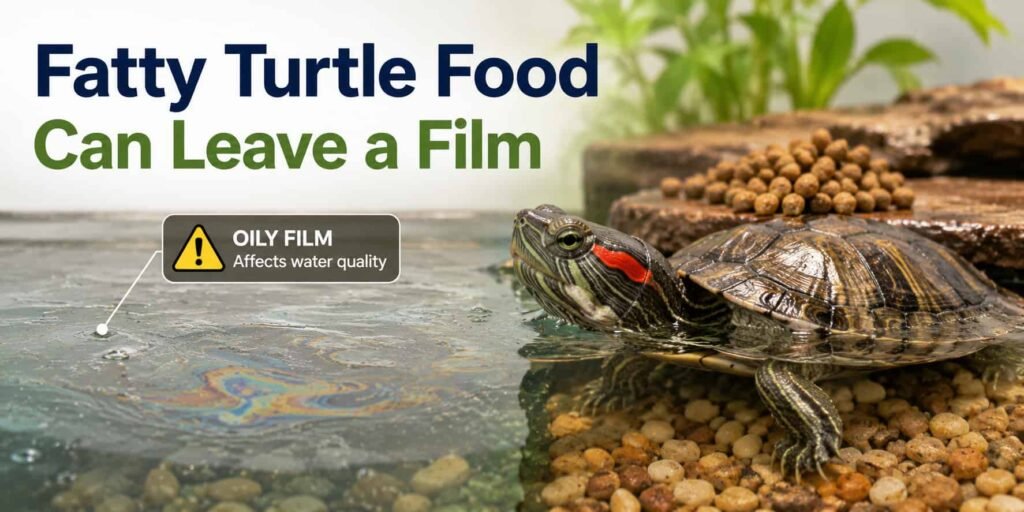
Some types of turtle food contain fats, proteins, and oils. When uneaten food breaks apart in the water, these substances can float to the top and create a shiny oil slick.
If this happens often, your turtle may be getting too much food. Overfeeding can leave extra food in the tank, which breaks down and adds more organic waste to the water. This can make the tank smell bad and reduce overall aquarium cleanliness.
To prevent this, feed your turtle the right amount and remove any leftover food after feeding. You can also feed your turtle in a separate container outside the main tank. This helps keep the turtle habitat cleaner and reduces oily buildup on the water surface.
Read Also Bearded Dragon Acting Weird? [Lip Smacking]New Filters or Pumps May Leave Oil Behind
A filter or pump is supposed to keep your turtle aquarium clean, but sometimes a new one can cause a thin oily film on the water surface. This happens because new aquarium equipment may have small traces of lubricant, oil, or factory residue on its moving parts.
Before adding a new filter system or water pump to your turtle’s tank, rinse and clean it properly with safe water. This helps remove any leftover manufacturing residue and reduces the chance of an oil slick forming in the tank.
The Tank Location Can Affect Water Quality
Sometimes the problem is not inside the tank but around it. If your turtle tank is placed near a kitchen, tiny particles of cooking grease can settle on the water and create a shiny surface film. Products like aerosol sprays, perfumes, air fresheners, and cleaning sprays can also enter the tank and affect the aquarium environment.
To prevent this, keep your turtle’s aquarium away from kitchens, strong smells, smoke, sprays, and other contaminants. A clean and stable location helps protect the water quality and keeps your turtle’s habitat healthier.
Is Oily Water Harmful to Turtles?
A small amount of oil on the water does not always mean danger, so there is no need to panic. However, it should not be ignored. An oily layer can reduce surface movement, trap dirt, and make the tank less healthy over time.
The best approach is to remove the oil, find the cause, and improve your regular tank maintenance routine. Clean water supports your turtle’s health, comfort, and overall aquarium hygiene.
Simple Ways to Keep a Turtle Tank Clean
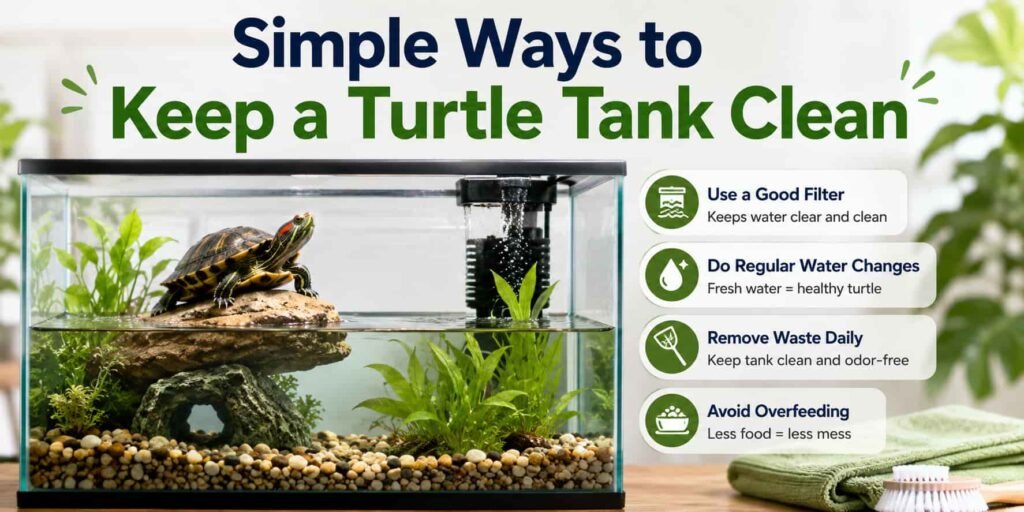
Regular partial water changes are one of the best ways to maintain clean turtle tank water. You do not need to replace all the water every time. Instead, remove part of the old water and add fresh, safe water at least once a week. This helps control waste buildup, bad smells, and poor water conditions.
A water testing kit is also helpful. These kits usually check ammonia, nitrite, and nitrate levels. If these levels become too high, the water may be unsafe, and a larger water change may be needed.
You should also be careful with chlorine in tap water. Most turtles can handle small amounts, but too much chlorine can disturb the beneficial bacteria that break down waste. Using a safe water conditioner can help remove chlorine and protect the tank’s natural balance.
A larger aquarium can also make water care easier. In a bigger tank, oil, food particles, and turtle waste are less concentrated, so the water usually stays cleaner for longer.
Finally, choose a strong aquarium filter. For turtles, it is better to use a filter rated for two to three times the size of the tank. A good multi-stage filtration system can remove solid waste, leftover food, harmful chemicals, and other organic byproducts, helping the water stay clear and healthy.
Read Also Why Is My Ball Python Trying to Escape? [Fix It Fast]Easy Ways to Remove Oil From a Turtle Tank
A thin oily film on the water surface can usually be removed with simple cleaning steps. Some methods work as a quick fix, while others help prevent the problem from coming back. The main goal is to improve water circulation, reduce organic waste, and keep the turtle aquarium clean.
Use Paper Towels for Quick Oil Removal
If you want to remove the oil slick quickly, clean paper towels can help. First, turn off anything that moves the water, such as the filter, pump, or powerhead. This keeps the surface still and makes it easier to collect the oil.
Next, gently place one or two paper towels on top of the water for a few seconds. The oily layer should stick to the paper towel. Then remove the paper towel carefully and throw it away. If your turtle tank is large or the oil is spread across the whole surface, repeat this process until the water looks clear again.
Improve Water Movement to Prevent Oil Buildup
Good water circulation is one of the best ways to stop oil from collecting on the surface. When the water moves properly, small amounts of oil, food particles, and waste are spread through the tank instead of staying in one place. These substances can then be reduced through partial water changes and regular filter cleaning.
You can improve circulation by adding a powerhead, using a spray bar, or pointing the filter nozzle toward the surface of the water. This creates gentle movement and helps break up the surface film.
If oil keeps appearing in one small area, that spot may be a dead zone where water is not moving well. Adjust the filter direction or tank setup so the water flows around the entire aquarium. Better circulation helps maintain cleaner turtle tank water and a healthier aquatic habitat.
Use a Surface Skimmer for Regular Oil Control
If oil slicks keep appearing in your turtle tank, a surface skimmer can be a useful long-term solution. You can attach it to the filter intake so it pulls the thin oily film from the top of the water surface. In many cases, the surface looks clearer within a few minutes.
It is important to choose the right equipment. A surface skimmer removes oil, floating waste, and debris from the top of the water. A protein skimmer, however, is mainly designed to remove dissolved organic material from the water and is more commonly used in marine setups. For a turtle aquarium, a surface skimmer is usually the better choice for removing visible surface buildup.
Read Also Why Is My Bearded Dragon Smacking His Lips? [Vet Tips]Final Thoughts on Oily Turtle Tank Water
An oily layer on your turtle’s water can happen for several reasons. Common causes include skin oils from your hands, turtle waste, leftover food particles, fats and proteins from turtle food, poor water circulation, nearby airborne contaminants, or residue from a new filter or pump.The problem is usually easy to manage with the right aquarium care routine. You can remove oil quickly with paper towels, improve water movement, clean your filter system, or use a surface skimmer. To prevent the issue from returning, perform weekly partial water changes, check chlorine levels, use a water conditioner when needed, and test the water regularly for ammonia, nitrite, and nitrate.Clean, well-filtered water helps protect your turtle’s health and keeps the aquatic habitat safer, clearer, and more comfortable.
FAQS: Why Does My Turtle’s Water Look Oily? [Dirty Tank Signs]
Can a turtle survive in dirty water?
A turtle may stay alive in dirty water for a short time, but it is not safe or healthy. Poor water quality can quickly cause skin infections, shell rot, eye problems, and respiratory illness. Turtles need clean water, good filtration, and regular tank maintenance to stay healthy in both aquariums and natural habitats.
Why does my aquarium water feel oily?
Aquarium water may feel oily when a thin surface film forms on top of the tank. This can happen because of fish food, fish waste, natural oils from your hands, dirty equipment, or dust from the surrounding air. To fix it, gently remove the oil slick with a paper towel or cup, then improve water filtration, clean the tank regularly, and avoid overfeeding.
What are the signs of a stressed turtle?
A stressed turtle may show clear changes in its normal behavior and daily routine. Common signs include loss of appetite, lethargy, constant hiding, restlessness, and frantic swimming against the glass. If you notice wheezing, swollen eyes, nasal bubbles, or trouble breathing, the stress may have turned into a serious health problem, and the turtle should be checked by a reptile vet.
Why is my turtle’s water so dirty?
Your turtle’s water gets dirty fast because turtles create a lot of waste and are messy eaters. Leftover food particles, feces, and organic matter break down in the tank, which can cause cloudy water, bad smells, algae growth, and poor water quality. Regular filter cleaning, water changes, and removing uneaten food can help keep the tank cleaner.
Can a turtle survive in dirty water?
A turtle may stay alive for a short time in dirty water, but it is not safe or healthy. Poor water quality can quickly lead to serious skin infections, shell problems, eye irritation, and respiratory illness. Turtles need clean water, proper filtration, and regular tank maintenance to stay healthy in both wild habitats and captivity.


![Why Does My Snake Pee on Me [Owner Guide]](https://reptilesinfo.com/wp-content/uploads/2026/06/Why-Does-My-Snake-Pee-on-Me-Owner-Guide.jpg)
![Are Ball Pythons Active After Eating [Must Know]](https://reptilesinfo.com/wp-content/uploads/2026/06/Are-Ball-Pythons-Active-After-Eating-Must-Know.jpg)
![Why Is My Crested Gecko Going Crazy [Stress Alert]](https://reptilesinfo.com/wp-content/uploads/2026/06/Why-Is-My-Crested-Gecko-Going-Crazy-Stress-Alert.jpg)
![Why Is My Leopard Gecko Not Moving [Stress Alert]](https://reptilesinfo.com/wp-content/uploads/2026/06/Why-Is-My-Leopard-Gecko-Not-Moving-Stress-Alert.jpg)
![Why Is My Crested Gecko’s Mouth White [Danger Signs]](https://reptilesinfo.com/wp-content/uploads/2026/06/Why-Is-My-Crested-Geckos-Mouth-White-Danger-Signs.jpg)