
![Why Is My Bearded Dragon Smacking His Lips [Vet Signs]](https://reptilesinfo.com/wp-content/uploads/2026/06/Why-Is-My-Bearded-Dragon-Smacking-His-Lips-Vet-Signs-2.jpg)
This behavior is usually normal and may happen when your bearded dragon is smelling, tasting, checking new surroundings, marking territory, or looking for a possible mate. Male bearded dragons may do this more often, especially during breeding season or when they sense another reptile nearby.
However, frequent lip smacking, unusual mouth movements, repeated licking, or signs of stress, aggression, or discomfort should not be ignored. Your bearded dragon may also lick unsafe surfaces, dirty objects, loose substrate, chemicals, or spoiled food, which can cause health problems.
In this article, we will explain why bearded dragons lick their lips, how they use their Jacobson’s organ, how to protect them from licking harmful things, and how to tell whether the behavior is normal exploration or a sign of distress, fear, or aggression..
Lip Smacking While Tasting Objects
A bearded dragon may smack its lips or use its tongue when it wants to taste and understand something nearby. When the tongue touches an object, your beardie collects information about its taste, smell, texture, and whether it may be safe or suitable to eat.
A bearded dragon’s tongue is slightly sticky, which also helps it catch live prey such as insects. This is why tongue flicking, licking, and lip smacking are natural parts of its feeding behavior and environmental exploration.
Bearded dragons often lick new items inside their tank, around their enclosure, or in a new area when they are outside the habitat. This helps them check their surroundings, recognize unfamiliar objects, and detect possible danger, predators, or changes in their environment.
Your bearded dragon may even lick you sometimes. This does not always mean strong affection in the same way mammals show it, but it may suggest curiosity, comfort with your scent, or interest in learning more about you. Some owners see this as a gentle sign of bonding, especially when the bearded dragon is calm and relaxed.
Read Also Can Ball Pythons Drown? [Safety Alert]Lip Smacking to Understand the Surroundings
A bearded dragon may smack its lips, lick the air, or flick its tongue when it is checking the area around it. In the wild, bearded dragons live in the Australian desert, where they must stay alert for predators, food, territory changes, and possible danger.
This behavior helps them collect sensory information from the air and nearby objects. When a bearded dragon enters a new habitat, unfamiliar enclosure, or strange environment, it may lick more often because it is trying to understand what is safe, what is new, and what could be a threat.
Bearded dragons are also naturally curious reptiles. Young bearded dragons, especially those under two or three years old, may show more tongue flicking, air licking, and lip smacking than mature adult dragons. This is because younger beardies are still learning about their surroundings and exploring everything around them.
Some bearded dragons may even move their tongue while sleeping. In rare cases, they may also make sudden mouth movements or bite during sleep. This can be linked to natural sleep behavior, reflexes, or a mild defensive response, but it is usually not a concern unless it happens often or comes with signs of stress, illness, or discomfort.
Lip Smacking as Territorial Behavior
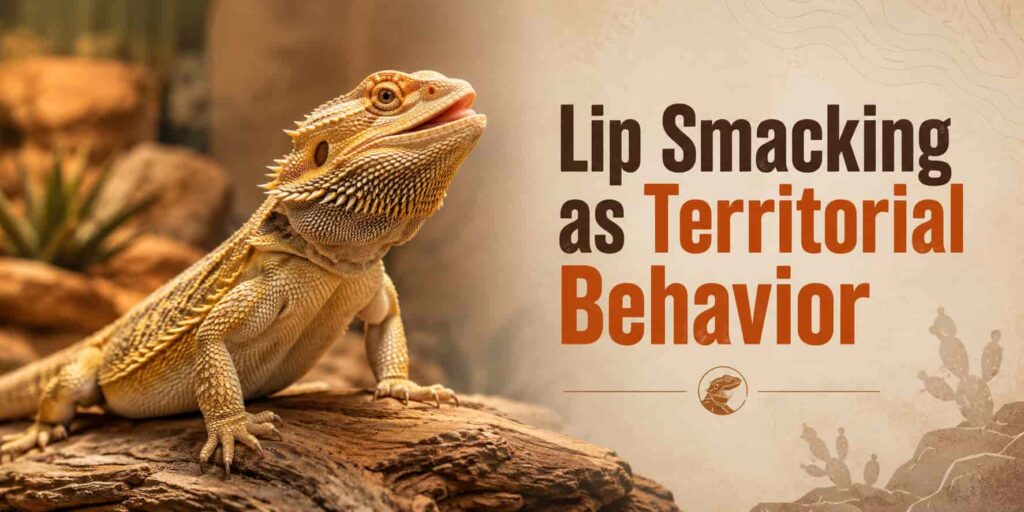
A bearded dragon may also smack its lips, lick surfaces, or flick its tongue when it is trying to understand or claim its territory. This behavior is more common in male bearded dragons, especially when they sense another reptile nearby.
In captivity, this type of territorial behavior may not happen often because most pet bearded dragons live alone and do not face much competition. However, if more than one beardie is kept in the same terrarium or enclosure, you may notice more licking, lip smacking, head bobbing, or other dominance-related actions.
This behavior can be a way for your bearded dragon to collect scent information, recognize another dragon’s presence, and respond to possible territorial stress. For safety, bearded dragons are usually best housed separately, as shared spaces can lead to dominance issues, aggression, stress, or injury.
How Bearded Dragons Use Their Tongue to Read Their Surroundings
A bearded dragon uses tongue flicking, licking, and sometimes lip smacking to understand what is happening around it. This behavior is connected to a special sensory organ called the Jacobson’s organ, also known as the vomeronasal organ.
The Jacobson’s organ is found in many reptiles, including lizards, snakes, and bearded dragons. It sits near the roof of the mouth. When your beardie flicks its tongue, tiny scent particles, taste particles, and chemical signals stick to it. When the tongue goes back into the mouth, these particles are sent to the vomeronasal organ for analysis.
This organ then sends signals to the brain, helping the bearded dragon understand its environment. Through this process, it can identify food, predators, people, objects, other reptiles, and possible changes in its surroundings.
Some particles may come from skin oils, sweat, liquids, or pheromones. Pheromones are especially important during breeding season, mating behavior, and social interaction.
Because of the Jacobson’s organ, a bearded dragon can explore safely, recognize familiar scents, detect possible danger, and respond to other animals. In simple terms, your beardie’s tongue works like a powerful tool that helps it “read” the world around it.
![Do Bearded Dragons Need Belly Heat [Care Tips]](https://reptilesinfo.com/wp-content/uploads/2026/05/Do-Bearded-Dragons-Need-Belly-Heat-Care-Tips.jpg)
How a Bearded Dragon’s Tongue Helps It Sense the World
A bearded dragon uses tongue flicking, licking, and sometimes lip smacking to learn about its surroundings. This natural behavior is linked to a special sensory organ called the Jacobson’s organ, also known as the vomeronasal organ.
This organ is found in many reptiles, including lizards, snakes, and bearded dragons. It is located near the roof of the mouth. When your beardie flicks its tongue, tiny scent particles, taste particles, and chemical signals stick to it. As the tongue moves back into the mouth, these particles are carried to the vomeronasal organ, where they are examined.
After processing the information, the organ sends signals to the brain. This helps the bearded dragon understand its environment and recognize food, predators, people, objects, other reptiles, and any changes around it.
Some of these particles may come from skin oils, sweat, liquids, or pheromones. Pheromones are especially important during breeding season, mating behavior, and social communication.
Because of the Jacobson’s organ, your bearded dragon can explore more safely, notice possible danger, recognize familiar smells, and respond to other animals. Simply put, its tongue works like a smart sensory tool that helps it “read” the world.
Possible Risks of Bearded Dragon Lip Smacking
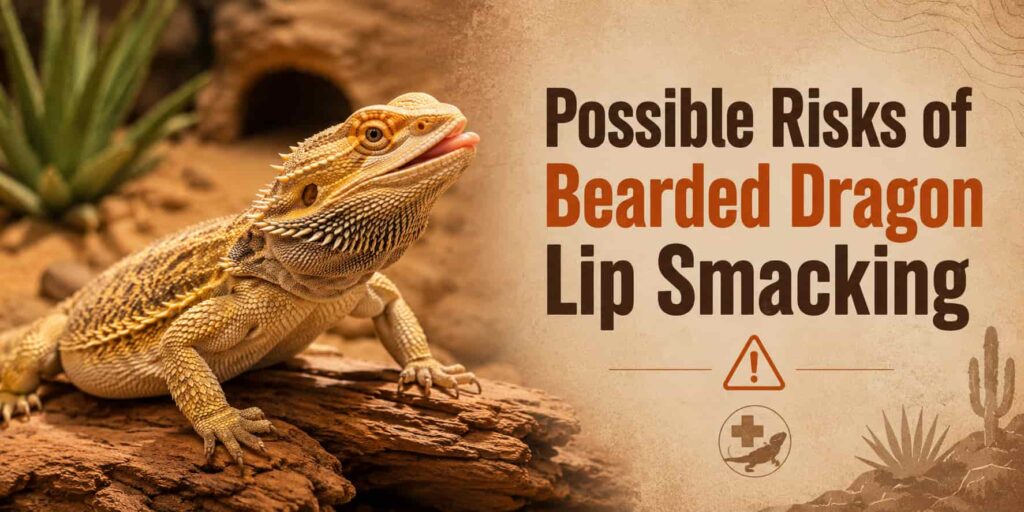
Lip smacking, tongue flicking, and licking are usually normal behaviors in a bearded dragon, but they can become risky if your pet starts licking unsafe materials. Since bearded dragons explore with their tongue, they may accidentally swallow things that can harm their digestive system.
One common danger is loose substrate inside the enclosure. Materials such as sand, wood chips, bark, gravel, or small bedding pieces can be dangerous if your beardie licks or eats them. Swallowing these materials may lead to impaction, which means the digestive tract can become blocked.
Baby and juvenile bearded dragons need extra care because they are more curious and more likely to lick or swallow small objects. To keep them safe, remove any loose particles, sharp items, dirty objects, or harmful materials from the tank.
The same rule applies when you take your bearded dragon out of its habitat to explore. Always check the area first and make sure there are no tiny objects, chemicals, dust, food crumbs, or unsafe materials nearby. A clean and safe space helps protect your beardie’s health, wellbeing, and overall reptile care.
When Lip Smacking May Signal a Problem
Lip smacking, tongue flicking, and licking are often normal for a bearded dragon, but sometimes these behaviors can point to discomfort, stress, or an unsafe environment. If your beardie’s tongue stays out, the licking looks unusual, or it starts panting, it may be too hot.
Check the basking spot temperature right away. It should not be higher than 110°F / 43°C. If your bearded dragon seems thirsty, you can gently place a few drops of water on its snout using a dropper or water dispenser.
Read Also Why Beardies Jump When Held [Handling Mistakes]A strong sense of smell can also make your beardie uncomfortable. If there is poop in the tank or enclosure, the smell may stress it out. Some bearded dragons may even scratch the glass as if they are trying to escape the odor. Clean the enclosure quickly after your beardie poops to protect its health, comfort, and reptile hygiene.
Some bearded dragons may hold their poop until they are placed in a bath or taken out of the enclosure. For this reason, it is important to watch their bathroom habits and keep their living space clean.
If your bearded dragon keeps its mouth open, puffs up its beard, makes sounds, or acts defensive, this may be a sign of aggression, fear, or distress. This can happen around strangers, other animals, new pets, loud noises, or sudden changes in the environment. Try to find the cause of the stress and make the area calm, quiet, and safe again.
Final Thoughts on Bearded Dragon Lip Smacking
If you see your bearded dragon smacking its lips, licking, or flicking its tongue, it is usually nothing to worry about. In most cases, this is normal reptile behavior and simply means your beardie is exploring its environment, checking different smells, tasting nearby objects, or learning more about its surroundings.During breeding season, lip smacking may also be linked to mating behavior, especially if your bearded dragon is showing other signs such as beard puffing, arm waving, or increased activity.However, you should always make sure your beardie is safe. Remove anything harmful from the enclosure, especially loose substrate, sand, wood chips, small objects, chemicals, or dirty materials that could be licked or swallowed.
FAQs: Why Is My Bearded Dragon Smacking His Lips? [Vet Signs]
What are the signs of calcium deficiency in bearded dragons?
Signs of calcium deficiency in bearded dragons may include weak legs, shaking or tremors, a soft or swollen jaw, difficulty climbing, low energy, and unusual walking. This problem is often linked to poor calcium intake, lack of proper UVB lighting, or an unbalanced diet. If these symptoms appear, metabolic bone disease may be a concern, so a reptile veterinarian should check your bearded dragon as soon as possible..
What are signs of stress in a bearded dragon?
Signs of stress in a bearded dragon may include dark stress marks, loss of appetite, glass surfing, hiding, aggressive behavior, head bobbing, constant puffing, or trying to escape the enclosure. These reptile stress signs may seem small at first, but they can show that your bearded dragon feels unsafe, uncomfortable, or disturbed by its environment, temperature, handling, or habitat setup.
How do I bond with my dragon?
You can bond with your bearded dragon by spending quiet time near its enclosure, speaking in a soft voice, and letting it slowly get used to your presence. Use gentle handling, avoid sudden movements, and offer safe hand-fed treats to build trust. With regular, calm interaction, your dragon can begin to feel more comfortable and connect you with positive experiences.
How intelligent are bearded dragons?
Bearded dragons are more intelligent than many people realize. They cannot talk, but they are very observant reptiles and often watch what happens around them. They can notice movement, recognize familiar people, learn simple routines, and respond to regular handling. Their “third eye,” called the parietal eye, helps them sense changes in light and movement above their head, which supports their natural survival instincts.
What can bearded dragons eat daily?
Bearded dragons are omnivores, which means they eat both live insects and plant-based foods. For daily meals, they can have safe leafy greens such as watercress, rocket, chicory, cress, dandelion leaves, clover, and plantain leaves. They can also eat small amounts of grated butternut squash. A healthy bearded dragon diet should include fresh vegetables, suitable greens, and age-appropriate live food to support proper nutrition, growth, and digestion.


![Why Does My Snake Pee on Me [Owner Guide]](https://reptilesinfo.com/wp-content/uploads/2026/06/Why-Does-My-Snake-Pee-on-Me-Owner-Guide.jpg)
![Are Ball Pythons Active After Eating [Must Know]](https://reptilesinfo.com/wp-content/uploads/2026/06/Are-Ball-Pythons-Active-After-Eating-Must-Know.jpg)
![Why Is My Crested Gecko Going Crazy [Stress Alert]](https://reptilesinfo.com/wp-content/uploads/2026/06/Why-Is-My-Crested-Gecko-Going-Crazy-Stress-Alert.jpg)
![Why Is My Leopard Gecko Not Moving [Stress Alert]](https://reptilesinfo.com/wp-content/uploads/2026/06/Why-Is-My-Leopard-Gecko-Not-Moving-Stress-Alert.jpg)
![Why Is My Crested Gecko’s Mouth White [Danger Signs]](https://reptilesinfo.com/wp-content/uploads/2026/06/Why-Is-My-Crested-Geckos-Mouth-White-Danger-Signs.jpg)