
![Do Bearded Dragons Need Belly Heat [Care Tips]](https://reptilesinfo.com/wp-content/uploads/2026/05/Do-Bearded-Dragons-Need-Belly-Heat-Care-Tips.jpg)
Bearded dragons are cold-blooded reptiles, which means they depend on outside heat sources to control their body temperature. However, they do not feel heat on every part of their body in the same way.
A bearded dragon’s belly has fewer nerve endings than other sensitive areas of the body. Because of this, your beardie may not quickly notice when its stomach is getting too hot. This can be dangerous because it increases the risk of belly burns, especially from unsafe heating items like hot rocks or overheated surfaces.
Safe Heat Sources for Bearded Dragons
The safest way to warm a bearded dragon is by using overhead basking lamps, UVB lighting, and properly controlled ceramic heat emitters if needed. These heat sources are more natural because bearded dragons usually receive warmth from above, like sunlight in the wild.
Avoid using hot rocks, direct under-tank heaters, or any heating device that can make the floor too hot. Since beardies may not feel belly heat quickly, they can stay on a hot surface long enough to get injured.
Preventing Burns in Bearded Dragons
To protect your pet, always check the surface temperature of the basking area with a reliable digital thermometer or temperature gun. Watch for signs of burns, such as red skin, dark patches, swelling, blisters, or unusual behavior.
If you think your bearded dragon has a burn, remove the unsafe heat source and contact a reptile vet as soon as possible.
How Bearded Dragons Find a Heat Source
Bearded dragons do not locate warmth in the same way humans do. Instead of mainly feeling heat through their skin, they use a special light-sensitive organ on top of their head called the parietal eye. This is also known as the third eye, solar eye, or pineal eye.
The parietal eye is found in the middle of the head and may look like a small unusual scale with a gray spot. It does not see clear images like normal eyes. Instead, it detects light, sunlight, and changes in brightness.
This organ helps a bearded dragon with thermoregulation, which means controlling its body temperature. When a heat source gives off light, such as a basking lamp, the bearded dragon can sense that light and move toward it to warm up.
However, beardies do not strongly feel heat on their belly area because they have fewer nerve endings there. This is why unsafe heating products, such as hot rocks, under-tank heaters, or overheated tank decorations, can cause belly burns before the reptile realizes the surface is too hot.
Safest Heating Option for Bearded Dragons
The safest heat source for bearded dragons is usually a properly installed ceramic heat emitter. However, any heating device can cause burns if it is placed too close to your beardie or used without proper temperature control.
Bearded dragons commonly get injured by unsafe heating products such as heat mats and hot rocks. These can become very hot and may burn the reptile’s belly, especially because beardies do not feel heat well through their stomach area.
Ceramic Heat Emitters
A ceramic heat emitter is a good choice because it produces warmth without giving off light. This helps keep the enclosure temperature stable, especially at night, without disturbing your bearded dragon’s natural day and night cycle.
A ceramic heater should always be placed outside the cage or safely above the enclosure. It should never be placed inside the tank where your beardie can touch it. Keeping the heater at a safe distance is important to prevent thermal burns.
This type of heater also works in a more natural way because the heat comes from above, similar to the warmth of the sun in the wild. For this reason, ceramic heat emitters are considered one of the safest heating options when they are used correctly with a thermostat, digital thermometer, or temperature gun.
Read Also Why Beardies Jump When Held [Handling Mistakes]Heat Mats for Bearded Dragons
Heat mats can be used as an extra heat source for bearded dragons, but they are usually not the safest option. They can easily overheat and may cause belly burns, especially because beardies do not feel heat well through the stomach area.
If a heat mat is used, there should always be a safe barrier, such as proper substrate, between the mat and your beardie. This helps reduce direct contact with the hot surface and lowers the risk of thermal injury.
Safe Use of Heat Mats
A heat mat should never cover the full bottom of the enclosure. It should only cover about half of the tank floor, so your bearded dragon can move away from the warmth when needed. This is important for thermoregulation, which means your beardie can control its body temperature by moving between warmer and cooler areas.
When Heat Mats May Help
In some situations, a heat mat can be useful as a backup heating option. During winter or colder weather, it may become harder to keep the tank at the correct temperature range. In that case, a carefully controlled heat mat placed under part of the cooler side of the enclosure may help maintain safe reptile heating conditions.
Hot Rocks Are Unsafe for Bearded Dragons
Hot rocks or heat rocks are not safe for bearded dragons and should be avoided. They are also risky for many other reptiles. Even though some products are sold as safe reptile heating accessories, they can heat unevenly and create dangerous hot spots.
These hot areas can quickly burn your beardie’s belly, especially because bearded dragons do not feel heat well through the stomach area. For this reason, hot rocks should not be used inside a bearded dragon enclosure.
Correct Temperature Control
No matter which heat source you use, proper temperature control is very important. A thermostat helps keep the enclosure within a safe range and prevents overheating. It is also helpful to use reliable digital thermometers or a temperature gun to check both the air temperature and surface temperature.
Ideal Enclosure Temperature Range
A healthy bearded dragon tank needs a proper thermal gradient. This means one side of the enclosure should be cooler, while the other side should have a warm basking area.
The cooler side should usually stay between 75°F and 85°F, while the basking spot should be around 95°F to 105°F. This setup allows your bearded dragon to move between warm and cool areas for natural thermoregulation.
What to Do if Your Bearded Dragon Has a Belly Burn
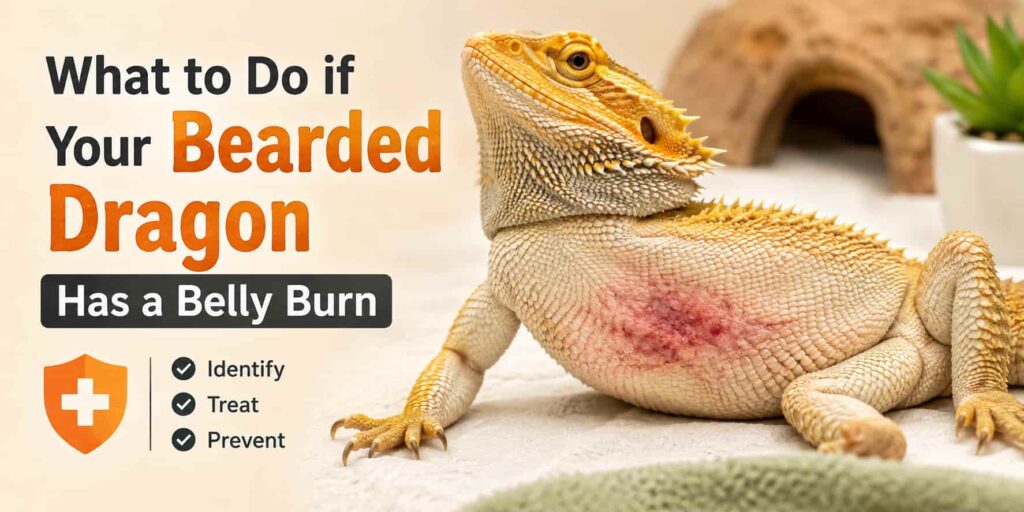
If your bearded dragon has a burn on its belly, the first step is to check how serious the injury looks. A mild thermal burn may sometimes be managed at home with careful cleaning and safe enclosure changes. However, deep burns, open wounds, swelling, infection, or black damaged skin need urgent help from a reptile vet. In severe cases, your beardie may need antibiotics, pain relief, or treatment to remove damaged tissue.
Remove the Heat Problem First
Before treating the burn, find out what caused it. Common causes include unsafe hot rocks, overheating heat mats, poorly placed ceramic heat emitters, or tank surfaces that became too hot.
If the burn came from a ceramic heat emitter placed inside the enclosure, move it safely outside or above the tank where your beardie cannot touch it. If a heat mat is overheating or producing uneven heat, replace it with a safer reptile heat source or use it only with a reliable thermostat.
Check the Enclosure Conditions
After removing the danger, check the full bearded dragon enclosure. Use a digital thermometer or temperature gun to measure the basking area, cool side, and surface temperatures. A safe temperature gradient helps your beardie move between warm and cool areas for proper thermoregulation.
Cleaning a Minor Bearded Dragon Burn with Povidone-Iodine
For a small belly burn, minor blister, or light open wound, a diluted povidone-iodine soak may help keep the area clean. However, if the burn looks deep, swollen, infected, black, bleeding, or painful, your bearded dragon should be seen by a reptile vet.
To clean the injury, mix povidone-iodine with warm water until the water looks like weak tea. Place your beardie in a shallow tub with the water level no higher than its shoulders. Let it soak for about 15 to 30 minutes, while watching it closely the entire time.
After the soak, gently dry your bearded dragon with a clean towel. Then apply a thin layer of a reptile-safe antibiotic ointment, such as plain Polysporin, if recommended by a vet. Avoid creams with pain relievers, alcohol, or harsh chemicals, as these can harm reptiles.
Read Also Orange Beard in Bearded Dragons [Hidden Signs]When a Bearded Dragon Burn Needs a Vet
If your bearded dragon has a large open wound, infected blister, deep belly burn, swelling, pus, dark damaged skin, or a bad smell from the injured area, you should take it to a reptile vet as soon as possible.
Serious burns can easily lead to bacterial infections or fungal infections, especially if the skin is broken. These infections can spread quickly and make your beardie very sick if they are not treated properly.
A veterinarian can examine the wound, clean the damaged skin safely, and provide the right antibiotics, pain relief, and burn treatment. If your bearded dragon is weak, not eating, or dehydrated, the vet may also suggest safe feeding support and hydration care.
How to Protect Your Bearded Dragon From Burns
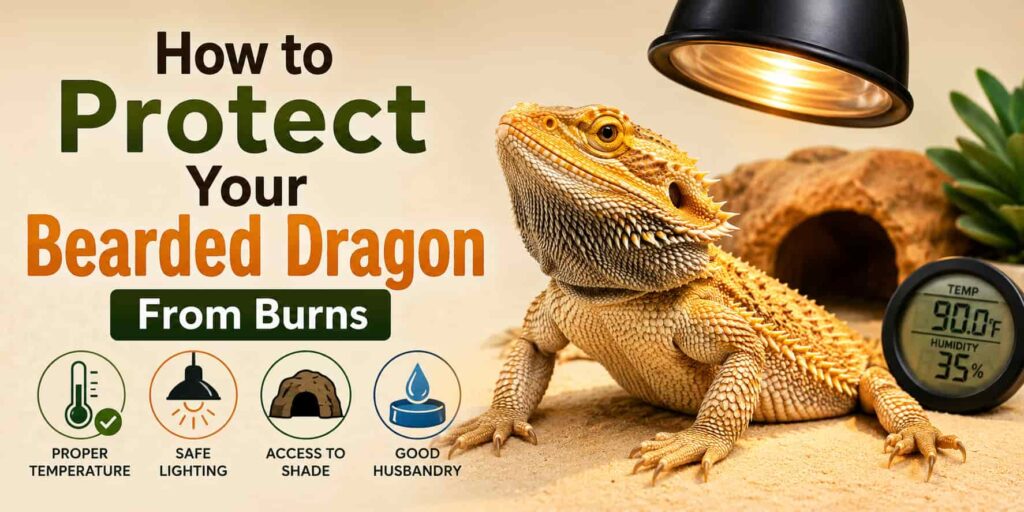
You can prevent burns by making your bearded dragon enclosure safe, controlled, and properly heated. Since beardies may move toward bright or warm areas, every heat source should be placed carefully and checked often.
Use a Safe Barrier
Place a strong wire mesh screen cover over the enclosure. This creates a safe barrier between your beardie and the basking lamp, ceramic heat emitter, or other heating equipment. Your pet should never be able to touch the heat source directly.
Be Careful With Hot Lamps
Avoid using unsafe or poorly placed halogen lamps. These bulbs can stay hot even after they are switched off, which may cause thermal burns if your bearded dragon can reach them. Always position lamps outside the tank or in a secure area.
Make the Room Safe During Exercise
When your beardie comes out of the tank, make sure the room is lizard-proof. Remove or block dangerous items such as candles, wax warmers, radiators, space heaters, and fireplaces. A bearded dragon’s parietal eye detects light, so it may move toward a bright heat source even if it is unsafe.
Choose the Right Heating Equipment
Match the heat bulb or heating device to the size of the reptile enclosure. A bulb that is too strong can overheat the tank, while a weak bulb may not create a proper basking area. A safe setup should include a correct temperature gradient, with one warm side and one cooler side.
Read Also Beardie Lamp Burning Out Again? [Avoid This]Check Heating Devices Regularly
Before using any reptile heating equipment, inspect it carefully. Do not use lamps, wires, plugs, or heaters that look damaged. Faulty wiring can cause overheating, burns, or even fire risks.
Final Thoughts on Bearded Dragon Belly Burns
Bearded dragons are not very sensitive to heat from below because their belly area has fewer nerve endings. This means they may not quickly notice when a surface is too hot, which can lead to belly burns or thermal injuries.Instead of sensing heat mainly through their stomach, beardies use a special organ called the parietal eye, also known as the third eye. This light-sensitive organ helps them detect sunlight, locate heat sources, and support natural thermoregulation.Because their bellies do not feel heat well, unsafe heating products such as heat mats, heat pads, and hot rocks can be dangerous. These items may overheat or create uneven hot spots, increasing the risk of burns.
FAQs: Do Bearded Dragons Need Belly Heat? [Care Tips]
Can bearded dragons feel heat on their belly?
Yes, bearded dragons can absorb some heat through their belly when they rest on a warm surface. This is called thigmothermy, which means gaining warmth through direct contact. However, their main and safest way to warm up is through overhead basking heat, like natural sunlight or a proper basking lamp.
Heat from below, such as hot rocks or poorly controlled heat mats, can be risky because it may cause belly burns if the surface becomes too hot. For safety, bearded dragons should mainly receive heat from above, with a proper temperature gradient inside the enclosure.
Does my beardie need heat at night?
Most bearded dragons do not need extra nighttime heat if their enclosure temperature stays within a safe range. A slight temperature drop at night is natural for reptiles and may support healthy thermoregulation and normal sleep. If daytime basking temperatures are correct, a healthy beardie can usually tolerate cooler nights, but extra heat may be needed if the tank becomes too cold. Use a ceramic heat emitter instead of a light-producing bulb, because darkness helps maintain a proper day and night cycle.
Do beardies recognize their owners?
Yes, bearded dragons can recognize their owners over time. They may learn familiar smells, voices, feeding routines, and daily handling patterns. With gentle care and regular interaction, a beardie may become calmer around its owner and may show trust through relaxed body language. Some also respond with natural reptile behaviors such as head bobbing, arm waving, or moving toward familiar people. However, they do not bond exactly like dogs or cats; their recognition is mainly based on routine, scent, sound, and repeated positive experiences.
What stresses a bearded dragon out?
A bearded dragon can become stressed when it feels unsafe, sees a possible threat, or notices something unfamiliar in its environment. Common stress triggers include loud noise, sudden handling, new surroundings, other pets, poor tank conditions, incorrect temperature, or lack of hiding space. Signs of stress may include aggression, biting, a dark beard, hiding, glass surfing, loss of appetite, or trying to escape. Even a calm beardie may act defensive if it feels scared or in danger.
Do bearded dragons like to watch TV?
Yes, some bearded dragons may enjoy watching TV, especially if the screen shows movement, bright colors, or fast action. Beardies are naturally curious reptiles, so moving images can provide mental enrichment and keep them interested. However, every beardie is different. Some may watch calmly, while others may ignore the screen or become stressed by loud sounds or sudden movement. Keep the volume low and watch your pet’s body language to make sure it feels safe and relaxed.


![Why Does My Snake Pee on Me [Owner Guide]](https://reptilesinfo.com/wp-content/uploads/2026/06/Why-Does-My-Snake-Pee-on-Me-Owner-Guide.jpg)
![Are Ball Pythons Active After Eating [Must Know]](https://reptilesinfo.com/wp-content/uploads/2026/06/Are-Ball-Pythons-Active-After-Eating-Must-Know.jpg)
![Why Is My Crested Gecko Going Crazy [Stress Alert]](https://reptilesinfo.com/wp-content/uploads/2026/06/Why-Is-My-Crested-Gecko-Going-Crazy-Stress-Alert.jpg)
![Why Is My Leopard Gecko Not Moving [Stress Alert]](https://reptilesinfo.com/wp-content/uploads/2026/06/Why-Is-My-Leopard-Gecko-Not-Moving-Stress-Alert.jpg)
![Why Is My Crested Gecko’s Mouth White [Danger Signs]](https://reptilesinfo.com/wp-content/uploads/2026/06/Why-Is-My-Crested-Geckos-Mouth-White-Danger-Signs.jpg)