
![Can Bearded Dragons Hold Food in Beard [Explained]](https://reptilesinfo.com/wp-content/uploads/2026/06/Can-Bearded-Dragons-Hold-Food-in-Beard-Explained.jpg)
Many owners notice their bearded dragons eating large pieces of food and wonder how it fits so much into its mouth. Sometimes, a beardie may also seem to hold food around its beard area, which can look unusual if you have never seen it before.
Yes, bearded dragons can temporarily hold food in their beard, but this is not meant for long-term food storage. Their beard has several natural uses, including showing aggression, attracting a mate, helping during shedding, and reacting to stress or excitement. In some cases, they may also keep food there for a short time while eating.
Why Do Bearded Dragons Use Their Beard?
A bearded dragon’s beard is an important part of its body language. It may puff up when the reptile feels threatened, stressed, excited, or ready to mate. The beard can also turn black, which usually shows stress, dominance, fear, or a strong emotional response.
Is It Normal or Dangerous?
Holding food in the beard for a short time can be normal, but owners should still be careful. Large food pieces can increase the risk of choking, especially if the food is too big, hard, or not properly chewed. To keep your beardie safe, offer properly sized insects, vegetables, and fruits based on your pet’s age and size
Can Bearded Dragons Keep Food in Their Beard?
Yes, bearded dragons can sometimes hold small pieces of food in their beard area for a short time. However, they do not use their beard as a permanent food storage pouch. A beardie may keep part of a meal, such as berries, insects, or other small food items, and eat it later.
Many bearded dragon owners notice a small bulge under their pet’s beard after feeding. In some cases, this happens because the dragon is temporarily holding food there. This behavior can be normal, but it should still be watched carefully because large or hard food pieces may cause choking or feeding problems.
In simple words, a bearded dragon’s beard has many uses, including communication, defense, stress display, and sometimes short-term food holding. It is not meant for storing food for a long time.
Can Stored Food Make a Bearded Dragon Choke?
Yes, a bearded dragon can choke on food it holds in its beard. While this behavior can happen naturally, it is not completely safe. Food trapped in the beard area may move the wrong way, especially if the pieces are too large, hard, or difficult to swallow.
Because of this, owners should try to prevent food storage, overfeeding, and oversized meals. Always give your beardie properly sized insects, vegetables, and fruits. A good rule is to offer food pieces no bigger than the space between the dragon’s eyes.
In simple words, holding food in the beard may look normal, but it can increase the risk of choking, breathing problems, and feeding issues. Watching your bearded dragon during meals is the safest way to protect its health and well-being.
Read Also Why Is My Bearded Dragon Smacking His Lips? [Vet Signs]How to Lower Choking Risk in Bearded Dragons
To help prevent choking, avoid overfeeding your bearded dragon and make sure every food item is the right size. Large pieces of food, hard vegetables, or oversized feeder insects can be difficult for your beardie to swallow safely.
Before feeding, cut vegetables, fruits, and other foods into small, soft pieces. Offer food slowly instead of giving too much at once. This makes it easier for your bearded dragon to chew, swallow, and digest its meal without stress.
A helpful rule is to choose feeder insects that are no bigger than the space between your bearded dragon’s eyes. This size guide can reduce the chance of food blockage, swallowing problems, and choking hazards.
Some insects, such as grasshoppers, can be riskier because their legs may get stuck while your pet is eating. To make them safer, remove the back legs before offering them to your beardie.
In simple words, safe feeding means using small food pieces, avoiding too much food, choosing properly sized insects, and watching your bearded dragon during meals. This helps protect its health, digestion, and overall well-being.
What Should You Do if Your Bearded Dragon Is Choking?
If your bearded dragon is still breathing, moving, and alert, stay calm and watch it closely. Sometimes a beardie may cough, gag, or stretch its neck while trying to swallow food. However, if your pet is repeatedly coughing, gagging, struggling to breathe, or cannot clear the food, it may be choking.
The first step is to check the mouth gently. If you can clearly see the food and remove it safely, try to clear the throat without pushing the item deeper. It is helpful to have another person gently hold your bearded dragon while you inspect the mouth.
You can also keep your pet in a slightly upright position and gently support its body. Avoid shaking it or using force, because this can cause injury. If the food does not come out quickly, contact a reptile vet as soon as possible.
If the food seems stuck but your bearded dragon is still breathing, you may offer a small amount of water and gently stroke the beard and throat area to help it swallow. Some owners use a tiny drop of olive oil or vegetable oil, but this should be done carefully and only in very small amounts.
After the choking risk has passed, give your beardie time to relax. A warm, shallow bath may help reduce stress. The water should be warm, not hot, and no higher than the shoulders. Let your bearded dragon soak for about 20–30 minutes, then dry it gently and place it back under the heat lamp in its vivarium. Proper warmth helps support digestion, recovery, and overall reptile health.
In simple words, stay calm, check the mouth carefully, avoid force, help your bearded dragon swallow if it is safe, and call a reptile veterinarian if breathing looks difficult or the food remains stuck.
Why Do Bearded Dragons Puff Up Their Beard?
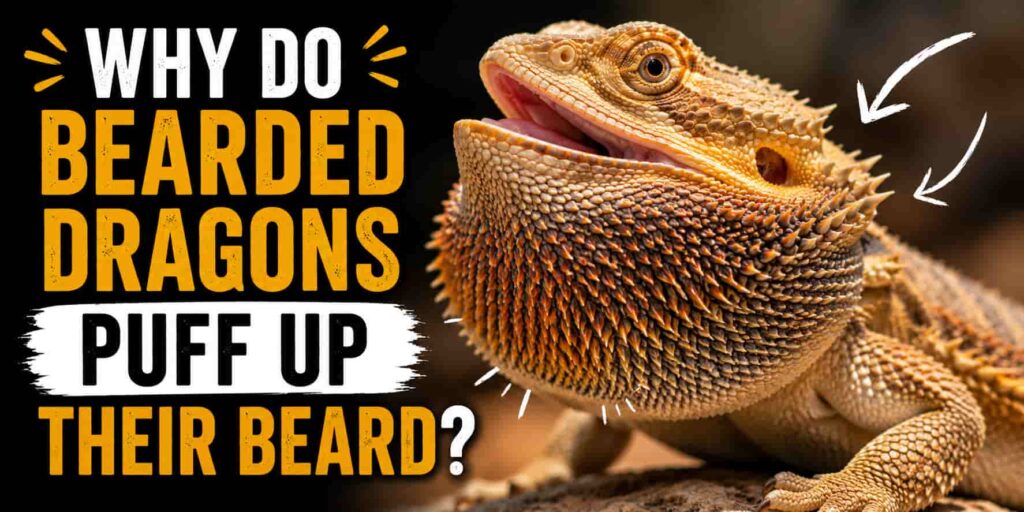
rded dragon’s beard is not only used for holding food. It is also an important part of the reptile’s body language, communication, and defense behavior.
One common reason a bearded dragon puffs up its beard is to show aggression or protect itself. When it feels threatened by a predator, another reptile, or something unfamiliar, it may try to look bigger and more dangerous. To do this, it can puff out its beard, open its mouth wide, and move its head in a head-bobbing motion.
This behavior can also happen when a beardie wants to show dominance or claim its territory. In simple words, a puffed-up beard is often your bearded dragon’s way of saying, “Stay away” or “This space is mine.”
So, besides short-term food holding, the beard helps a bearded dragon with self-defense, territorial behavior, dominance display, and communication with other animals.
How the Beard Helps With Mating and Shedding
A bearded dragon’s beard also plays an important role in mating behavior and shedding. During the breeding season, male bearded dragons may puff up their beard to look stronger, healthier, and more attractive to a potential female mate. If the female is interested, she may respond with head bobbing or other reptile body language.
Bearded dragons may also puff out their beard during the shedding process. This helps stretch the skin around the throat and neck area, making it easier for the old skin to loosen and come off. In simple words, beard puffing can help your beardie remove stuck old skin more naturally.
So, besides food holding, the beard supports courtship, communication, breeding signals, and skin shedding. This makes it an important part of a bearded dragon’s natural behavior, health, and daily life.
Read Also Can Ball Pythons Drown? [Safety Alert]Beard Puffing as a Sign of Stress or Stretching
A bearded dragon may puff up its beard when it feels stressed, scared, or threatened. This behavior is more common in baby bearded dragons and juveniles because they can feel nervous more easily than adults.
Most stress problems are linked to the enclosure environment. If your beardie keeps puffing its beard, check the temperature, humidity, lighting, UVB setup, basking area, hide spots, and overall tank conditions. A poor setup can make your pet feel unsafe, uncomfortable, or unhealthy.
However, beard puffing is not always a warning sign. Sometimes, a bearded dragon may puff out its beard simply to stretch its throat and body. Expanding the throat can also help it adjust pressure around the ears, almost like “popping” them.
In simple words, a puffed-up beard can mean stress, fear, environmental discomfort, or just normal stretching behavior. If it happens often, review your bearded dragon’s habitat, care routine, and reptile health needs.
Can a Bearded Dragon’s Beard Turn Black?
Yes, bearded dragons can change the color of their beard, and it often turns black when they are reacting to something. A black beard is usually a sign of stress, fear, illness, aggression, mating behavior, or discomfort in their environment.
Common Reasons for a Black Beard
1. Poor Enclosure Conditions
A bearded dragon may turn its beard black if something is wrong with its husbandry. This can include incorrect temperature, low humidity, poor UVB lighting, a dirty vivarium, or an unsuitable diet. These problems can make your beardie feel stressed and unsafe.
2. Sickness or Health Problems
A black beard can also be a sign that your beardie is not feeling well. Common health issues in bearded dragons include dehydration, vitamin deficiency, parasites, metabolic bone disease, respiratory infection, egg binding, and prolapse. If your pet seems weak, refuses food, breathes strangely, or acts unusual, contact a reptile veterinarian quickly.
3. Anger, Fear, or Aggression
When a bearded dragon feels angry, scared, or territorial, its beard may turn black and puff up. Other warning signs can include mouth gaping, hissing, fast head bobbing, glass surfing, and biting. In this situation, give your pet space and avoid handling it until it calms down.
4. Mating Behavior
Male bearded dragons may darken their beard during the breeding season. A black beard can help them look stronger and more attractive to a potential mate. This is a normal part of reptile body language.
5. Cold Temperatures
If the vivarium temperature is too low, your beardie may turn its beard black. The cool side should usually stay around 75–80°F, while the basking area should be around 95–100°F. Proper warmth is important for digestion, comfort, and overall reptile health.
6. Discomfort or Big Changes
Moving to a new enclosure, changing the tank setup, loud noises, too much handling, or other pets nearby can make a bearded dragon feel uncomfortable. This stress may cause a black beard.
7. Brumation
During or after brumation, which is a low-activity winter period similar to hibernation, some bearded dragons may show a darker beard. This can happen as they wake up and return to normal activity.
Final Thoughts on Bearded Dragon Beard Behavior
A bearded dragon’s beard has many important uses. In some cases, a beardie may temporarily hold food in its beard, but this should not be encouraged because it can increase the risk of choking. To keep your pet safe, always prepare meals properly, offer small food pieces, avoid overfeeding, and choose suitable feeder insects.Bearded dragons also puff up their beard for several natural reasons. This behavior may show aggression, dominance, stress, fear, or territorial behavior. They may also puff their beard during mating season, while shedding, or simply when they are stretching.
FAQs: Can Bearded Dragons Hold Food in Beard? [Explained]
Do bearded dragons store food in their beards?
Yes, bearded dragons may sometimes hold or get food stuck around their beard, chin, or throat area, especially when eating large insects, leafy greens, or bigger food pieces. Some beardies may keep food there for a short time and swallow it later, but this should not happen often. If food stays stuck, it may cause choking, mouth discomfort, or feeding problems, so meals should be cut into safe, small pieces.
Do bearded dragons switch genders?
Yes, some Australian bearded dragons can experience sex reversal during early development. They have sex chromosomes, but very high incubation temperatures can override their genetic sex and cause genetically male dragons to develop as functional females. This does not mean an adult bearded dragon suddenly changes gender; it happens while the embryo is developing inside the egg.
Can lizards hear you talk to them?
Yes, most lizards can hear sounds, including human voices. Their hearing is usually strongest between 400 and 1,500 hertz, which means they may notice your voice, vibrations, and nearby sound waves. Many lizards have an outer tympanum, or eardrum, along with a tympanic cavity and eustachian tube that help them detect sound. However, they do not understand words like humans do; they mainly respond to tone, movement, and repeated sounds.
Do beardies recognize their owners?
Yes, bearded dragons can often recognize their owners through regular feeding, familiar smell, voice, and daily handling routines. They may learn patterns, remember positive experiences, and become calmer around people they trust. Some beardies also show social behaviors such as head bobbing, arm waving, or relaxed cuddling, which can suggest comfort and recognition.
Do bearded dragons feel pleasure?
Yes, bearded dragons can experience basic feelings and emotional responses. They may show signs of pleasure, comfort, excitement, fear, or anger through their body language, behavior, and reactions to their environment. A relaxed beardie may enjoy gentle handling, warmth, food, and familiar routines, but their emotions are simpler than human emotions.


![Why Does My Snake Pee on Me [Owner Guide]](https://reptilesinfo.com/wp-content/uploads/2026/06/Why-Does-My-Snake-Pee-on-Me-Owner-Guide.jpg)
![Are Ball Pythons Active After Eating [Must Know]](https://reptilesinfo.com/wp-content/uploads/2026/06/Are-Ball-Pythons-Active-After-Eating-Must-Know.jpg)
![Why Is My Crested Gecko Going Crazy [Stress Alert]](https://reptilesinfo.com/wp-content/uploads/2026/06/Why-Is-My-Crested-Gecko-Going-Crazy-Stress-Alert.jpg)
![Why Is My Leopard Gecko Not Moving [Stress Alert]](https://reptilesinfo.com/wp-content/uploads/2026/06/Why-Is-My-Leopard-Gecko-Not-Moving-Stress-Alert.jpg)
![Why Is My Crested Gecko’s Mouth White [Danger Signs]](https://reptilesinfo.com/wp-content/uploads/2026/06/Why-Is-My-Crested-Geckos-Mouth-White-Danger-Signs.jpg)