
![Full-Grown Beardie Size [Male vs Female]](https://reptilesinfo.com/wp-content/uploads/2026/06/Full-Grown-Beardie-Size-Male-vs-Female.png)
A bearded dragon grows a lot from a small hatchling into a full-grown adult reptile. Its final beardie size can be different for each dragon because growth depends on genetics, diet, health, care, and living conditions.
As a bearded dragon owner, watching this growth process is very interesting. A healthy dragon needs proper nutrition, enough space, correct temperature, good lighting, and regular care to reach its natural adult size.
In this guide, we will look at the main factors that affect a full-grown bearded dragon’s size. I will also share useful care tips and personal experience to help owners support healthy growth and development from the baby stage to adulthood.
Bearded Dragon Growth by Age
A bearded dragon size chart is a useful way to understand how these reptiles grow from a small hatchling into a full-grown adult bearded dragon. Although every dragon grows at its own pace, age-based size guidelines can help owners track normal growth and development.
These measurements are general estimates. A bearded dragon’s final size can depend on genetics, diet, nutrition, health, UVB lighting, temperature, and overall reptile care.Why Bearded Dragon Sizes Can DifferThese size ranges are only general estimates. Each bearded dragon may grow differently depending on important factors such as genetics, diet, nutrition, overall health, and quality of reptile care. Some dragons may become slightly smaller or larger, even when they are healthy.
Typical Adult Bearded Dragon Length
A full-grown bearded dragon usually reaches an average length of 18 to 24 inches from head to tail. In most cases, the tail makes up more than half of the dragon’s total body length. For example, my bearded dragon, Spike, is about 22 inches long, which falls within the normal size range for a healthy adult bearded dragon.
Main Reasons Bearded Dragons Grow Differently
A bearded dragon’s size can be affected by several important factors. These include genetics, diet, environment, and overall health. Each dragon grows at its own pace, but proper care can support healthy growth and development.
Genetics: Some bearded dragons are naturally bigger or smaller because of their inherited traits.
Diet and nutrition: A balanced bearded dragon diet with the right amount of protein, vitamins, and minerals is important for strong and healthy growth. Both underfeeding and overfeeding can cause size problems and health issues.
Habitat and lighting: A proper reptile habitat should include the right temperature gradient and UVB lighting. These help a bearded dragon digest food, absorb nutrients, and grow properly.
Health condition: Parasites, infections, illness, or poor care can slow down a bearded dragon’s growth and affect its adult size.
Read Also Fake Plants in a Tortoise Enclosure? [Pros & Cons]Measuring a Bearded Dragon Correctly
Measuring a bearded dragon’s size is easy if the dragon is calm and lying flat. Place your dragon gently on a safe, flat surface, then use a soft or flexible measuring tape. Measure from the tip of the nose to the end of the tail to get the full body length.
For a more accurate result, measure your bearded dragon more than once. This is helpful because bearded dragons may stretch, move, or slightly pull in their bodies during measuring. Taking a few readings can help you record a more reliable bearded dragon length and track healthy growth and development over time.
Male and Female Bearded Dragon Size Differences
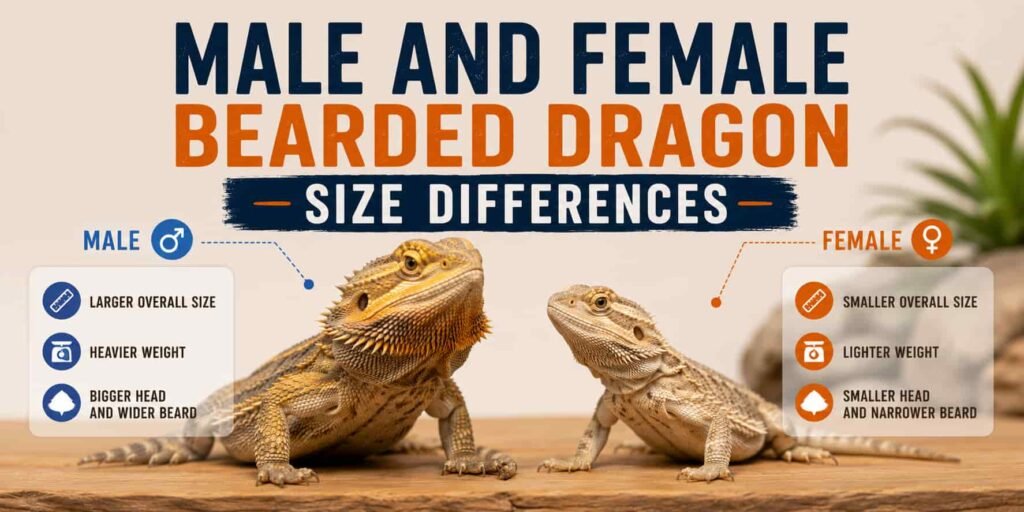
Male and female bearded dragons can have slight differences in size and appearance. In many cases, male bearded dragons are a little larger, with broader heads and more noticeable femoral pores. However, these features are not always easy to see, especially in younger dragons.
Because the differences can be small, size alone should not be used to determine a bearded dragon’s gender. A closer look at body structure, tail base, and other physical signs is usually needed for more accurate identification.
Bearded Dragon Growth Timeline
Most bearded dragons reach their full adult size between 12 and 18 months of age. However, growth can vary from one dragon to another. Some adult bearded dragons may continue to grow slowly until they are about 2 years old, depending on their genetics, diet, health, and overall reptile care.
Even after the main growth stage ends, proper nutrition, UVB lighting, temperature, and a healthy habitat remain important for maintaining a strong and active bearded dragon.
Size-Related Health Problems in Bearded Dragons
A bearded dragon’s size can sometimes show signs of health problems. If a dragon becomes too large, too small, or stops growing too early, it may be linked to diet, UVB lighting, calcium intake, stress, or overall reptile health.
Obesity: Overfeeding or giving too many high-fat foods can cause obesity. An overweight bearded dragon may become less active and face other health issues.
Metabolic Bone Disease: Metabolic Bone Disease, also called MBD, can happen when a bearded dragon does not get enough calcium or proper UVB exposure. This condition may cause weak bones, body deformities, and stunted growth.
Stress and poor environment: A stressful habitat, incorrect temperature, overcrowding, or poor care can slow a bearded dragon’s growth and affect its general well-being.
Read Also Types of Turtles in Washington [Rare Finds]Helping Your Bearded Dragon Reach a Healthy Size
A bearded dragon needs proper care to grow into a healthy adult. Good nutrition, the right habitat setup, proper UVB lighting, and regular health checks all play an important role in normal growth and development.
Feed your bearded dragon a balanced diet that includes suitable insects, fresh vegetables, protein, vitamins, and minerals. Make sure the enclosure has the correct temperature gradient and strong UVB exposure to support digestion, calcium absorption, and bone health.
Keep the reptile enclosure clean, safe, and stress-free. A calm environment helps reduce stress and supports better overall reptile health. Regular visits to a qualified reptile veterinarian can also help detect health problems early and keep your bearded dragon growing properly.
Final Thoughts on Full-Grown Bearded Dragon Size
The size of a full-grown bearded dragon can differ from one dragon to another. Factors such as genetics, diet, nutrition, UVB lighting, temperature, habitat setup, and overall reptile health all play an important role in healthy growth.With proper bearded dragon care, a balanced diet, and a clean, safe environment, your dragon can grow toward its natural adult size. Regularly tracking your bearded dragon’s growth and development can help you notice any unusual changes early.
FAQS: Full-Grown Beardie Size [Male vs Female]
What fruit can bearded dragons not eat?
Bearded dragons should not eat citrus fruits like oranges, lemons, limes, and grapefruit because they are too acidic and may upset their stomach. Bananas should only be avoided or given rarely because their high phosphorus level can reduce calcium absorption. Fruits with large seeds, pits, or stones should also be prepared carefully, as these can cause choking or digestive blockage.
Why can’t you kiss a bearded dragon?
You should not kiss a bearded dragon because it may carry Salmonella bacteria, even when it looks healthy. These germs can spread to your mouth and cause stomach cramps, diarrhea, fever, and infection. For safety, always keep your reptile away from your face and wash your hands after handling it.
Can beardies eat scrambled eggs?
Yes, bearded dragons can eat scrambled eggs, but only as a rare treat. The egg should be fully cooked and completely plain, with no milk, butter, oil, salt, pepper, or seasonings. A small portion, about half an egg, is enough and should not be given more than once a month.
How often should bearded dragons be bathed?
Most bearded dragons can be bathed about three times a week to help keep them clean and support hydration. If your dragon dislikes bath time, once a week may be enough. If it enjoys bathing, you can offer baths more often, but always use shallow, lukewarm water and supervise it carefully.
How much should a 3-month-old bearded dragon eat?
A 3-month-old bearded dragon should eat mostly live insects with some fresh greens each day. A good diet is about 80% insects and 20% vegetables. Offer 5 to 6 small, properly sized insects twice daily, plus a bowl of clean leafy greens. The insects should never be wider than the space between its eyes to prevent choking and digestive problems.


![Why Does My Snake Pee on Me [Owner Guide]](https://reptilesinfo.com/wp-content/uploads/2026/06/Why-Does-My-Snake-Pee-on-Me-Owner-Guide.jpg)
![Are Ball Pythons Active After Eating [Must Know]](https://reptilesinfo.com/wp-content/uploads/2026/06/Are-Ball-Pythons-Active-After-Eating-Must-Know.jpg)
![Why Is My Crested Gecko Going Crazy [Stress Alert]](https://reptilesinfo.com/wp-content/uploads/2026/06/Why-Is-My-Crested-Gecko-Going-Crazy-Stress-Alert.jpg)
![Why Is My Leopard Gecko Not Moving [Stress Alert]](https://reptilesinfo.com/wp-content/uploads/2026/06/Why-Is-My-Leopard-Gecko-Not-Moving-Stress-Alert.jpg)
![Why Is My Crested Gecko’s Mouth White [Danger Signs]](https://reptilesinfo.com/wp-content/uploads/2026/06/Why-Is-My-Crested-Geckos-Mouth-White-Danger-Signs.jpg)