
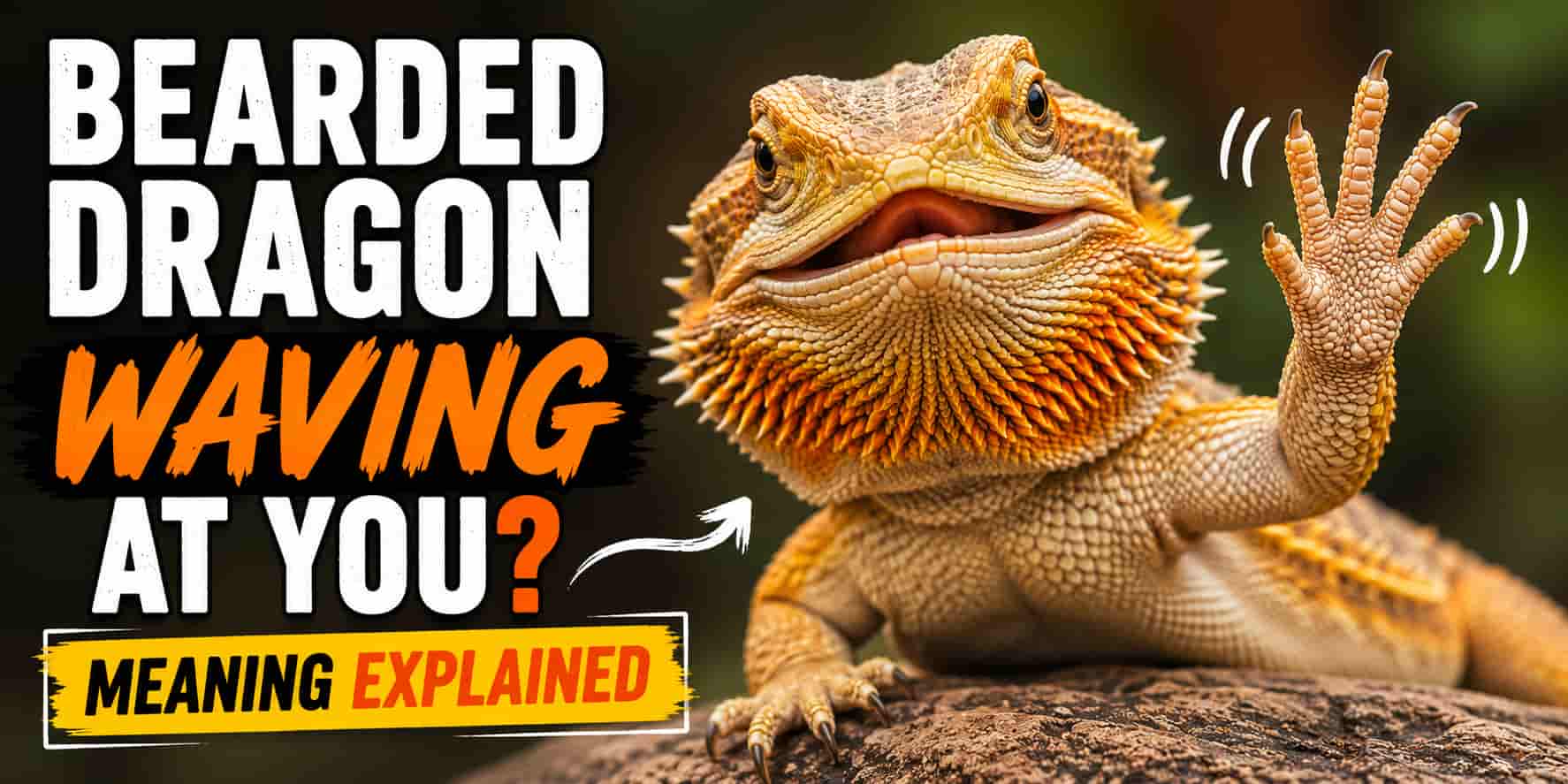
Many bearded dragon owners notice their pet slowly lifting one arm and making a small waving motion inside the enclosure. It may look like your beardie is saying hello, but this behavior usually has a deeper meaning.
Yes, you can wave back at your bearded dragon. It will not harm your pet. However, if your bearded dragon keeps waving, you should look for the reason behind it. In most cases, arm waving is a form of reptile body language. Your beardie may be showing submission, feeling stress, reacting to its reflection, or responding to another bearded dragon nearby.
A single wave is usually not a problem. But frequent waving behavior can mean your pet feels unsafe, nervous, or uncomfortable in its habitat. Check the tank setup, lighting, temperature, hiding spots, and anything that may be causing fear or anxiety.
Understanding this bearded dragon behavior helps you care for your pet better. Instead of only waving back, watch your beardie closely and make sure its environment feels calm, safe, and comfortable.
What Happens When You Wave Back at a Bearded Dragon?
Waving back at your bearded dragon is usually harmless. In some cases, your beardie may feel calm or comforted when it sees a soft, slow movement from you. In other cases, it may simply feel confused because it does not understand waving the same way humans do.
Overall, there is no serious risk in waving back at your bearded dragon. However, if your pet waves often, you should pay attention. Frequent arm waving can be a sign that your beardie is trying to communicate something through reptile body language.
Common Reasons Bearded Dragons Wave
Bearded dragons do not usually wave to say hello. Their waving behavior often has a natural meaning. A beardie may wave to show submission, especially if it feels smaller, weaker, or less dominant. It may also wave during mating behavior, when it sees another dragon, or when it notices its own reflection in the glass.
Sometimes, bearded dragon waving can also happen because of stress, fear, or discomfort in the enclosure. Loud sounds, sudden movements, poor tank setup, lack of hiding spots, or seeing another pet nearby may make your beardie feel unsafe.
If the waving happens only sometimes, it is usually normal. But if your bearded dragon keeps waving, check its habitat, lighting, temperature, reflection, and overall comfort to make sure it feels safe and relaxed.
Showing Submission
Bearded dragons often wave as a sign of submission. This behavior usually means, “I am not a threat, please do not hurt me.” In the wild or in a shared space, a smaller or weaker beardie may wave when it feels scared, nervous, or less powerful than another reptile.
When two bearded dragons meet, the smaller one may show submissive behavior by waving its arm, while the larger one may show dominance through head bobbing. This is part of their natural body language and social behavior.
It is generally not a good idea to keep multiple bearded dragons in the same enclosure. If one beardie keeps waving again and again while the other acts dominant, it may be feeling intimidated, unsafe, or stressed. In this case, the waving is not friendly; it is a sign that the dragon may need more space and a calmer environment.
Read Also Worms in Turtle Tank? [Causes & Fixes]
Breeding Signals
Waving can also be part of bearded dragon mating behavior. During breeding, a male bearded dragon may show interest by head bobbing toward a female. If the female is receptive, she may respond with a slow arm wave.
However, it is not true that only female beardies wave. Both male and female bearded dragons can wave for different reasons, including submission, stress, communication, and mating signals.
Mistaking Reflection for Another Dragon
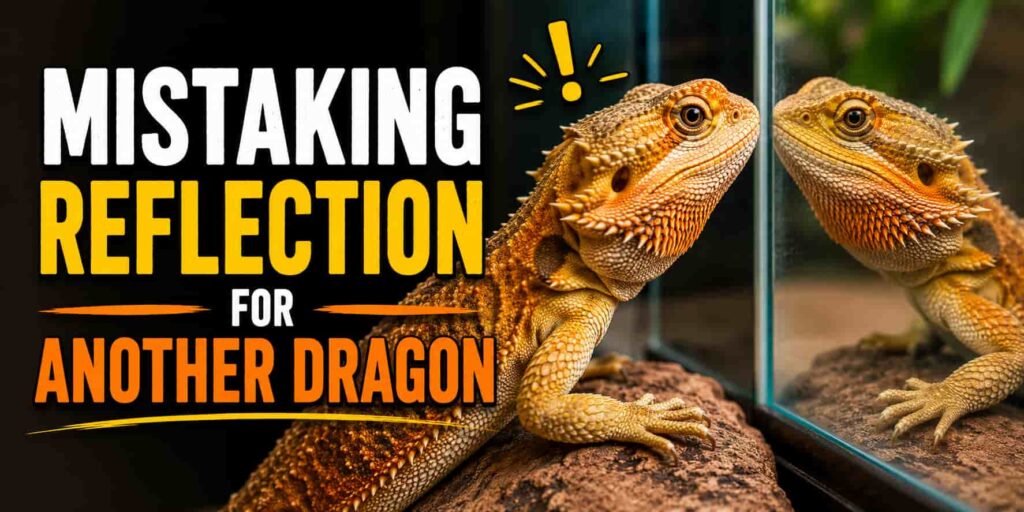
Sometimes, a bearded dragon may see its own reflection in the glass of its enclosure and think another dragon is nearby. This can make the beardie feel nervous or threatened, so it may start waving as a submissive response.
If this happens often, it can cause stress for your pet. To reduce reflection, you can add more greenery, hides, decorations, or background covers inside the terrarium. You can also change the position of the light source to reduce glare on the glass. A calmer setup helps your reptile feel safer and more comfortable.
Stress and Fear Response
A bearded dragon may wave when it feels stressed, scared, or unsafe. This behavior is often linked to the beardie’s environment, especially when something changes suddenly or feels threatening.
Simple changes inside the enclosure, such as a new decoration, different substrate, or rearranged tank setup, can make your reptile feel uncomfortable for a few days. Poor temperature, incorrect humidity levels, and an unsuitable terrarium setup can also increase stress.
Fear can also happen when other animals come too close to the bearded dragon’s tank. A dog or cat near the enclosure may look like a predator to your beardie. If the tank is placed near a window, your pet may also see birds, outdoor animals, or moving shadows and think they are threats.
If your beardie waves often, check its surroundings carefully. Keeping the enclosure calm, secure, and properly heated can help reduce fear, stress, and repeated submissive behavior.
Common Signs of Bearded Dragon Stress
If your bearded dragon feels stressed, scared, or uncomfortable, its behavior and body color may start to change. These signs can help you understand when your beardie is not feeling safe or relaxed.
- Loss of appetite or refusing to eat
- Lower activity levels or unusual laziness
- Color changes, especially becoming darker
- Avoiding the basking area
- Scratching or clawing at the enclosure walls
- Dark stress marks on the chin, belly, or body
If these signs continue, check the terrarium setup, temperature, humidity, lighting, and nearby stress triggers. A calm, safe, and properly managed enclosure can help reduce fear, stress, and unhealthy behavior in your reptile.
How to Calm a Stressed Bearded Dragon
A bearded dragon often becomes stressed when its environment does not feel safe, comfortable, or properly controlled. The best way to help a scared or stressed beardie is to check the enclosure setup first.
Your bearded dragon tank should be large enough for movement and exploration. A tank of at least 40 gallons gives your reptile enough space to feel more secure. The enclosure should also have a proper temperature gradient, with a cooler side around 75–80°F and a warm basking area around 95–105°F.
Provide two similar hides, one on the cool side and one on the warm side, so your beardie can rest and feel protected. Keep humidity levels between 20–40%, as too much humidity can make the habitat uncomfortable.
Adding fake plants, safe decorations, and cover inside the terrarium can also help your bearded dragon feel hidden, calm, and secure. A stable, clean, and well-balanced habitat can reduce fear, stress, and nervous behavior.
Read Also How Long Can Crested Geckos Go Without Water? [Pet Safety]
Reduce Triggers and Build a Calm Routine
To help a bearded dragon feel calm, keep other pets away from its enclosure. Dogs, cats, or other animals near the tank can make your beardie feel unsafe because it may see them as predators.
You should also avoid loud noises, fast hand movements, and sudden activity around the terrarium. Bearded dragons can get scared easily, so giving them a quiet and stable space is important. If your pet seems nervous, reduce handling for a while and allow it to rest on its own.
A bearded dragon may also become stressed if it does not get enough mental stimulation. You can support healthy reptile enrichment by adding safe tank accessories, climbing items, hides, and simple toys. Letting your beardie explore a safe, lizard-proof room from time to time can also keep it active and curious.
A regular routine is also very important. Irregular feeding schedules and a dirty tank can increase stress. Keep a consistent feeding routine, clean the enclosure often, and maintain a safe, calm, and enriched habitat to help your bearded dragon feel more secure.
What to Do When a Bearded Dragon Keeps Waving
Waving is common in young bearded dragons, especially babies and juveniles. This behavior often becomes less frequent as they grow older. Baby beardies may wave more often because they feel nervous, submissive, or intimidated by other dragons.
If you keep more than one bearded dragon in the same enclosure, repeated waving can be a sign of stress, fear, or submissive behavior. Bearded dragons should usually be housed separately because one dragon may become dominant while the other feels threatened. If you notice constant waving between multiple beardies, it is best to separate them into different tanks.
If your beardie lives alone but still waves often, improve its terrarium setup by adding more plants, hides, and safe decorations. Bearded dragons can feel exposed in open spaces because they are natural prey animals. Extra cover helps them feel protected from movement outside the tank.
A good hide gives your reptile a safe place to escape from stressors, loud noises, or anything it sees as a threat. If your bearded dragon waves whenever you enter the room, it may see you as a possible predator. In that case, move slowly, avoid sudden handling, and spend time building trust so your bearded dragon feels safer around you.
Building Trust With Your Bearded Dragon
If your bearded dragon waves every time it sees you, it may feel scared, nervous, or unsure around you. This does not mean your pet dislikes you. It simply needs time, patience, and gentle interaction to feel safe. Bonding with a bearded dragon is a slow process, so avoid rushing or forcing contact.
Use Hand-Feeding to Create Trust
Hand-feeding is one of the best ways to build a positive connection with your beardie. When your bearded dragon takes food from your hand, it starts to connect you with safety, comfort, and good experiences.
You can offer a small healthy treat, such as a tiny piece of strawberry or kiwi, to encourage your reptile to come closer. Over time, this can help your bearded dragon feel more relaxed, comfortable, and confident around you.
Always move slowly, stay calm, and let your beardie approach at its own pace. This helps reduce fear, improve trust, and strengthen the bond between you and your pet.
Safe Handling and Supervised Exploration
Once your bearded dragon feels comfortable eating from your hand and shows no signs of fear, stress, or nervous behavior, you can slowly begin handling it. Always move gently and avoid quick movements. Never reach down from above, because your beardie may see this as a predator-like action and become frightened.
At first, keep handling sessions short and calm. Let your reptile get used to your touch gradually. This helps build trust, reduce anxiety, and make your bearded dragon feel safer around you.
Let Your Bearded Dragon Explore Safely
You can also strengthen your bond by allowing your bearded dragon to explore a safe, lizard-proof room. A bathroom is often a good option because it is easier to control and clean. Remove anything dangerous, block small gaps, and make sure the space is safe before letting your beardie roam.
Always stay nearby and supervise your pet. Never leave your bearded dragon alone outside its enclosure. When your beardie connects you with calm, safe, and enjoyable experiences like exploration, it can become more confident and comfortable with you over time.
Final Thoughts on Bearded Dragon Waving
If your bearded dragon waves at you, it is usually harmless to wave back. However, this cute behavior does not always mean your beardie is greeting you. In many cases, waving is a sign of stress, fear, submission, or nervous body language. It may also happen during mating behavior, especially when bearded dragons are communicating with each other.
If your bearded dragon keeps waving often, check its enclosure setup carefully. Make sure the temperature, humidity, lighting, and tank space are suitable. Adding more plants, hides, and safe decorations can help your reptile feel protected and less exposed.
You should also spend time building trust with your beardie through calm handling, slow movements, and positive interaction. When your bearded dragon feels safe in its habitat and comfortable around you, it is less likely to wave because of fear or stress.
FAQs: Bearded Dragon Waving at You? [Meaning Explained
How do bearded dragons show affection to humans?
Bearded dragons show affection in quiet and gentle ways. They may stay calm while being handled, sit peacefully on their owner’s lap, relax near their human, or show trust by not trying to run away. Unlike dogs or cats, they are not highly emotional or naturally social animals because they usually live alone in the wild. Still, a relaxed and comfortable bearded dragon can show that it feels safe with you.
Do bearded dragons like to be hugged?
Bearded dragons may enjoy gentle handling, but they usually do not like tight hugging. Their comfort depends on their personality, trust level, and past experience with humans. A relaxed body, calm behavior, and staying still can mean your beardie feels safe. However, hissing, tail thrashing, hiding, or trying to escape are clear signs of stress, fear, or discomfort. Always handle them softly and watch their body language carefully.
Can bearded dragons recognize people?
Bearded dragons can often recognize familiar people, especially their owners. They may respond by looking at you, staying calm, coming closer, begging for food, or allowing gentle handling. However, they are naturally solitary reptiles, so they do not need constant attention like dogs or cats. A beardie that feels safe around you may show trust, comfort, and relaxed body language.
Do bearded dragons recognize their owners’ voice?
Yes, bearded dragons can learn to recognize their owner’s voice, especially through regular feeding, gentle handling, and daily routines. They may also know familiar people by their smell, voice, and repeated patterns. Over time, a beardie may respond calmly, look toward you, or seem more comfortable when it hears a familiar voice.
Do bearded dragons get emotionally attached?
Bearded dragons do not usually form deep emotional attachments like dogs or cats. Their bond with humans is mostly based on recognition, familiarity, trust, and daily routines. They may feel comfortable with their owners, respond to familiar voices, and stay calm during gentle handling, but this is different from strong emotional bonding. They also do not normally become attached to inanimate objects.ts.


![Why Does My Snake Pee on Me [Owner Guide]](https://reptilesinfo.com/wp-content/uploads/2026/06/Why-Does-My-Snake-Pee-on-Me-Owner-Guide.jpg)
![Are Ball Pythons Active After Eating [Must Know]](https://reptilesinfo.com/wp-content/uploads/2026/06/Are-Ball-Pythons-Active-After-Eating-Must-Know.jpg)
![Why Is My Crested Gecko Going Crazy [Stress Alert]](https://reptilesinfo.com/wp-content/uploads/2026/06/Why-Is-My-Crested-Gecko-Going-Crazy-Stress-Alert.jpg)
![Why Is My Leopard Gecko Not Moving [Stress Alert]](https://reptilesinfo.com/wp-content/uploads/2026/06/Why-Is-My-Leopard-Gecko-Not-Moving-Stress-Alert.jpg)
![Why Is My Crested Gecko’s Mouth White [Danger Signs]](https://reptilesinfo.com/wp-content/uploads/2026/06/Why-Is-My-Crested-Geckos-Mouth-White-Danger-Signs.jpg)