
![Snake Scales Lifting [Shedding Warning]](https://reptilesinfo.com/wp-content/uploads/2026/05/Snake-Scales-Lifting-Shedding-Warning.jpg)
If your snake scales lifting feel rough, raised, or uneven when you touch them, it may be a sign of a skin problem. Healthy snake scales usually feel smooth, firm, and clean. When the scales begin to lift, peel in unusual patches, or look swollen, it should not be ignored.
The most common reason for lifting snake scales is a condition called scale rot. This is a bacterial skin infection that often affects reptiles, especially snakes. It can become serious if it is not treated early. In some cases, untreated scale rot may lead to pain, deeper infection, and serious health problems.
Common Signs to Watch For
A snake with possible scale rot may show signs such as raised scales, red or dark patches, swelling, blisters, rough skin, or unusual shedding problems. The affected area may also look wet, dirty, or irritated.
Possible Causes
This condition is often linked to poor enclosure hygiene, too much humidity, a damp substrate, dirty bedding, or small injuries on the skin. When bacteria grow in an unclean or overly wet environment, they can enter the skin and cause infection.
What You Should Do
If your snake’s scales are lifting, check its tank conditions, clean the enclosure, replace dirty bedding, and make sure the temperature and humidity levels are correct. Most importantly, contact a reptile vet as soon as possible, especially if the skin looks infected, swollen, or painful.
Early care can help your pet snake recover safely from scale rot and prevent the infection from becoming worse.
Read Also Do Ball Pythons Get Darker With Age? [Morph Facts]Skin Blisters Under the Scales
Another warning sign of scale rot is the appearance of small skin blisters under your snake’s scales. These blisters may contain clear or yellow fluid. If they are not treated early, they can become infected by bacteria, fungi, or even mites.
These blisters usually appear on the snake’s belly or lower body because this part stays in contact with the substrate while the snake moves around its enclosure. If the problem gets worse, the blisters may leak pus and turn into painful skin ulcers.
In serious cases, untreated infected blisters can damage the skin tissue, weaken the scales, and lead to dangerous skin rot. This condition can become life-threatening, so a snake with swelling, oozing, ulcers, or rotting scales should be checked by a reptile vet as soon as possible.
Raised or Lifting Scales
One clear warning sign of scale rot is when your snake’s scales look raised, loose, or lifted. This can happen when blood or fluid collects under the scales, making the skin feel uneven.
A healthy snake usually feels smooth when you gently touch its body. But if the scales feel rough, bumpy, or textured, it may point to a skin infection or scale damage.
If you notice lifting scales, raised scales, rough skin, discoloration, blisters, or other unusual changes, your snake may have scale rot. This condition should be treated seriously because it can become worse without proper care. It is best to check the enclosure hygiene, substrate, humidity, and contact a reptile vet for safe treatment.
Common Reasons Behind Scale Rot
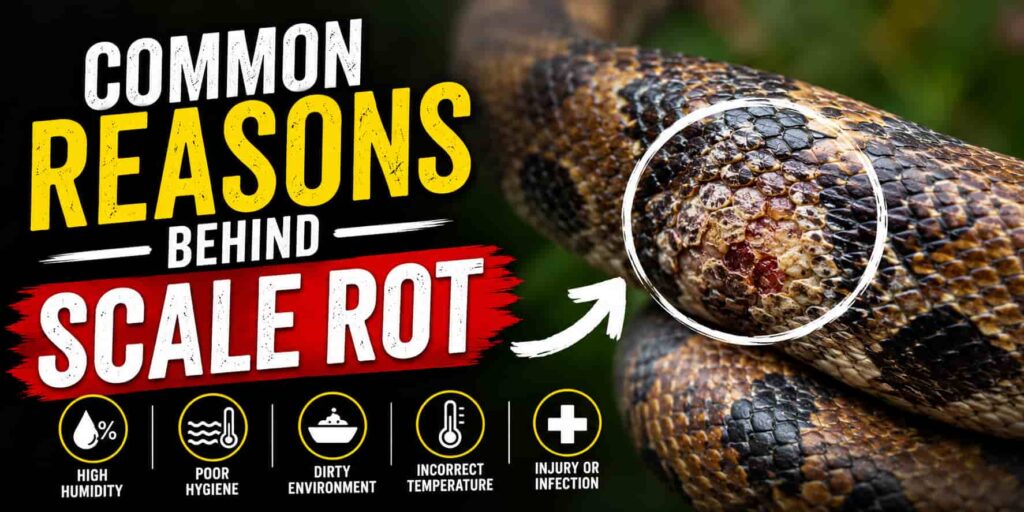
If your snake has signs of scale rot, you may wonder how this skin infection started. In most cases, scale rot develops when a snake’s enclosure conditions are not clean, dry, or safe enough.
The most common causes include poor tank hygiene, dirty or wet substrate, high humidity, and small skin injuries that allow bacteria or fungi to enter the skin. When these problems are not fixed early, the infection can spread under the scales and cause blisters, discoloration, swelling, raised scales, or skin ulcers.
Understanding these causes can help you protect your pet snake, improve its habitat, and prevent scale damage from becoming a serious health problem.
Wrong Enclosure Temperature
Incorrect temperature in a snake’s enclosure can weaken its health and may increase the risk of scale rot. Snakes are cold-blooded reptiles, which means they depend on their environment to control their body temperature.
The enclosure should usually stay around 75–85°F or 23.8–29.4°C, depending on the snake species. It is also important to create a proper temperature gradient. This means the tank should have a warm side and a cool side, so the snake can move between both areas and thermoregulate naturally.
To keep the habitat safe, use a reliable thermometer to check the temperature regularly. Stable heat levels, correct enclosure setup, and proper reptile care can help prevent stress, poor immunity, and possible skin problems.
Excessive Humidity in the Snake Enclosure
High humidity levels can create serious health problems for your snake. Along with proper temperature control, balanced enclosure humidity is important for healthy skin, normal shedding, and overall reptile care.
Most snakes do well when the humidity stays around 30–50%, although the exact level can depend on the species. If the enclosure becomes too humid, your snake may have trouble shedding properly. This can lead to retained shed, where old skin stays stuck on the body.
When retained skin remains on the scales, moisture and bacteria can build up underneath. Over time, this may cause scale rot, skin irritation, raised scales, blisters, or infection. Too much humidity can also increase the risk of respiratory problems in snakes.
To prevent these issues, use an accurate hygrometer to monitor the humidity inside the enclosure. Keeping the habitat clean, dry, and properly balanced can help protect your snake from shedding problems, skin infections, and scale damage.
Read Also Snake Shedding Change Causes [Care Guide]Dirty Enclosure and Poor Hygiene
A dirty snake enclosure is one of the common reasons for lifting scales and scale rot. When the cage is not cleaned properly, bacteria, fungi, and other harmful germs can grow in the environment. These germs may enter small cuts or weak areas in the skin, causing infection, skin irritation, raised scales, and scale damage.
To keep your snake healthy, the enclosure should be cleaned regularly. A full deep clean should be done at least once a month, while small messes, waste, spilled water, and dirty areas should be cleaned as soon as possible. Always use reptile-safe cleaning products or disinfectants recommended by a reptile vet, because strong chemicals can harm your snake.
The type of substrate also matters. Some bedding materials can hold moisture and bacteria, which may increase the risk of skin infections and scale rot. For a simple and safer option, many owners use paper towels or newspaper, especially when monitoring a snake with possible health problems.
Keeping the habitat clean, dry, and safe helps prevent bacterial growth, shedding issues, blisters, ulcers, and other serious reptile skin conditions.
Skin Injury or Physical Damage
A snake can develop scale rot if its skin or scales are injured. Even a small cut, scrape, or bite can allow bacteria to enter the body and cause a skin infection.
One common cause is sharp or rough objects inside the enclosure. Pointed decorations, rough hides, broken branches, or sharp edges can scratch your snake as it moves around. These items should be removed or replaced with safe, smooth materials.
Another possible cause is feeding live prey. A live mouse or rat may bite or scratch the snake before being eaten. These wounds can damage the scales and increase the risk of infection, lifting scales, swelling, blisters, and scale rot.
To protect your snake, always check the habitat for unsafe objects and watch carefully during feeding. Any visible wound, scrape, or scale damage should be cleaned and monitored. If the injury looks infected or the scales start lifting, contact a reptile vet for proper treatment.
How to Help a Snake With Scale Rot
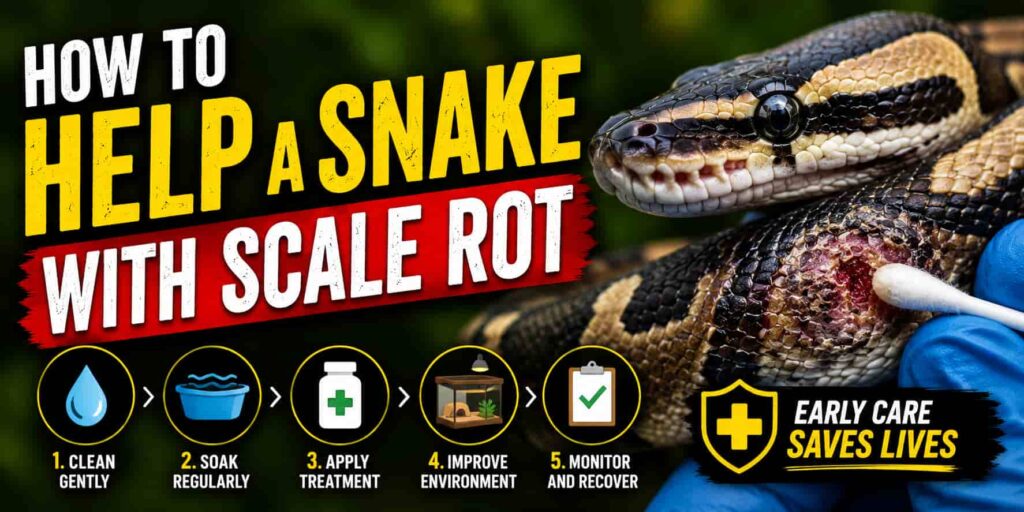
If your snake has signs of scale rot, it is important to act quickly. This skin condition can cause pain, stress, and serious infection if it is ignored. The good news is that early care can help your snake recover and prevent the problem from getting worse.
Treatment usually starts with improving the enclosure hygiene, checking the temperature, balancing the humidity levels, and keeping the substrate clean and dry. These steps help reduce bacteria, protect damaged scales, and support healthy skin healing.
However, scale rot can become dangerous if there are blisters, swelling, pus, ulcers, lifting scales, or dark patches on the body. In these cases, your snake should be examined by a reptile vet. A vet can give the right medical treatment, prevent deeper infection, and help your snake recover safely.
Check the Enclosure Conditions First
If your snake has signs of scale rot, start by checking the main environmental factors inside the enclosure. Poor habitat conditions are often linked to lifting scales, skin infection, and other reptile health problems.
First, make sure the temperature range is correct for your snake’s species. Then check the humidity level with a reliable hygrometer. If you are unsure about either reading, use a good-quality thermometer and humidity gauge to monitor the enclosure accurately.
Next, look at the basic cage hygiene. The enclosure should be cleaned regularly, and dirty substrate, waste, spilled water, or leftover food should be removed quickly. A dirty habitat can allow bacteria and fungi to grow, which may lead to scale rot or worsen existing skin damage.
Finally, inspect the enclosure for anything that could injure your snake, such as sharp decorations, rough edges, or unsafe objects. Also, consider whether live prey may have bitten or scratched the snake during feeding. Even small wounds, scrapes, or scale injuries can become infected.
Once the temperature, humidity, cleanliness, and injury risks are corrected, your snake will have a safer environment for skin healing and recovery.
Read Also Beardie Food Digestion Explained [Beginner Guide]Separate the Snake During Recovery
A snake with scale rot should be kept away from other snakes and reptiles to reduce the risk of spreading infection. Move the affected snake into a clean quarantine tank where you can monitor its condition closely.
Do not use loose substrate in the quarantine setup. Instead, place paper towels on the floor of the tank. Paper towels are easier to replace, help keep the enclosure clean, and allow you to notice any fluid, pus, blood, or worsening skin damage quickly.
Loose bedding can irritate the infected skin and may slow down healing. Keep using clean paper towels until the scale rot infection, lifting scales, blisters, or skin irritation have fully improved. Also, make sure the temperature, humidity, and enclosure hygiene stay properly controlled during recovery.
Clean the Infected Scale Area Carefully
After placing your snake in a quarantine tank, you can gently clean the affected scales to help reduce bacteria, infection, and further skin irritation. Use a properly diluted Betadine solution or chlorhexidine solution, preferably as advised by a reptile vet.
A common option is mixing 1 part Betadine with 3 parts water. Gently soak or wash the infected area for about 5 minutes, making sure not to rub the skin harshly. This cleaning process is often done twice a day, but severe cases should always be checked by a vet.
After soaking, carefully dry your snake with clean paper towels. Do not leave the skin wet, because excess moisture can make scale rot, lifting scales, swelling, blisters, or skin infection worse.
Be very gentle during cleaning, as the damaged scales may be painful, swollen, or sensitive. If you notice pus, deep wounds, bleeding, or spreading infection, contact a reptile veterinarian as soon as possible.
Apply a Safe Antibiotic Treatment
After cleaning the affected area, make sure your snake’s skin and scales are completely dry. Then apply a thin layer of antibiotic ointment or use a suitable antibacterial spray on the infected scales.
These products may help with early scale rot, minor skin infections, irritation, and small areas of scale damage. However, the treatment should be used carefully and only on the affected area. Avoid products that contain pain-relief ingredients, as some can be harmful to reptiles.
If the infection looks deep, spreads quickly, produces pus, causes swelling, or does not improve, contact a reptile vet as soon as possible. Professional treatment may be needed to prevent serious skin rot, worsening bacterial infection, or long-term damage to your snake’s health.
Visit a Reptile Vet if the Infection Does Not Improve
If your snake’s scale rot does not improve after about a week of careful home care, or if the condition becomes worse, you should take your snake to a reptile vet. Waiting too long can allow the infection to spread deeper into the skin and damage the scales even more.
A vet can properly examine the affected area and decide whether your snake needs stronger antibiotics, a prescription ointment, or another medical treatment. This is especially important if you notice swelling, pus, open wounds, lifting scales, skin ulcers, or a bad smell from the infected area.
Getting professional help early can control the bacterial infection, prevent further scale damage, and give your snake the best chance of a safe recovery.
Final Thoughts on Lifting Snake Scales
Noticing rough, raised, or lifting scales on your snake can be worrying, especially when the skin no longer feels smooth and healthy. In many cases, this problem may be linked to scale rot, a serious skin infection that needs quick attention.Now you understand the main signs, possible causes, and basic care steps for this condition. Scale rot may happen because of poor enclosure hygiene, wrong temperature, high humidity, dirty substrate, or small skin injuries. Once you notice the problem, check your snake’s habitat, improve the cage conditions, and watch the affected area closely.Early action can help prevent bacterial infection, swelling, blisters, skin ulcers, and further scale damage. If the condition does not improve or looks worse, take your snake to a reptile vet for proper treatment.By staying alert and caring for your snake’s enclosure, skin health, and overall reptile care, you can catch problems like scale rot early and protect your pet from serious illness.
FAQs: Snake Scales Lifting? [Shedding Warning]
Why are my snake’s scales lifting up?
Your snake’s scales may lift slightly because this can be normal. Snake scales are not completely hard; they can bend, shift, or look raised when the snake rests against a surface for a long time.
However, if the lifting scales come with redness, blisters, swelling, discoloration, rough skin, or signs of scale rot, you should check the enclosure, humidity, temperature, and contact a reptile vet.
Is it bad to hold a snake while it is shedding?
Holding a snake during shedding is not always harmful, but it is usually better to handle it less. During this time, the snake’s eyes may look cloudy, its vision becomes poor, and it may feel more stressed or defensive. Shedding is not normally painful, but too much handling can make the process harder. Keep the enclosure humidity at the correct level, provide fresh water, and let your snake shed comfortably.
Is it safe to touch shed snake skin?
It is better not to touch shed snake skin with bare hands because it may carry Salmonella bacteria or other germs. Direct contact can increase the risk of bacterial infection, especially if you touch your face, mouth, or food afterward. If you need to remove the shed from the enclosure, use gloves or a tissue, throw it away safely, and wash your hands well with soap and water.
What animal is not afraid of snakes?
The honey badger is one of the animals known for facing snakes without fear. It has thick skin, a strong body, and a bold fighting nature, which helps protect it during attacks. Honey badgers may even fight venomous snakes and often survive because of their toughness, quick movements, and natural resistance to some snake venom.
What is a silent killer snake?
The common krait is often called a silent killer snake because its bite can be very dangerous and may not cause strong pain at first. Its venom contains powerful neurotoxins that can affect the nervous system, cause muscle paralysis, and make breathing difficult. This makes the common krait one of the most medically important and deadly venomous snakes in parts of Asia, including Thailand.


![Why Does My Snake Pee on Me [Owner Guide]](https://reptilesinfo.com/wp-content/uploads/2026/06/Why-Does-My-Snake-Pee-on-Me-Owner-Guide.jpg)
![Are Ball Pythons Active After Eating [Must Know]](https://reptilesinfo.com/wp-content/uploads/2026/06/Are-Ball-Pythons-Active-After-Eating-Must-Know.jpg)
![Why Is My Crested Gecko Going Crazy [Stress Alert]](https://reptilesinfo.com/wp-content/uploads/2026/06/Why-Is-My-Crested-Gecko-Going-Crazy-Stress-Alert.jpg)
![Why Is My Leopard Gecko Not Moving [Stress Alert]](https://reptilesinfo.com/wp-content/uploads/2026/06/Why-Is-My-Leopard-Gecko-Not-Moving-Stress-Alert.jpg)
![Why Is My Crested Gecko’s Mouth White [Danger Signs]](https://reptilesinfo.com/wp-content/uploads/2026/06/Why-Is-My-Crested-Geckos-Mouth-White-Danger-Signs.jpg)