
![Worms in Turtle Tank [Causes & Fixes]](https://reptilesinfo.com/wp-content/uploads/2026/06/Worms-in-Turtle-Tank-Causes-Fixes.jpg)
Seeing worms in a turtle tank can be worrying, especially if they are swimming near your turtle or appearing in its feces. In many cases, worms may be a sign of parasites, poor tank hygiene, leftover food waste, or dirty aquarium water. Some worms may be harmless organisms growing in an unclean tank, but others can point to a serious parasitic infection inside your turtle.
If your turtle has worms in its stool, acts weak, stops eating, loses weight, or seems less active, it may be infected with internal parasites. These parasites can harm your turtle’s digestive system, lower its immune health, and become dangerous if ignored.
The best step is to clean the turtle enclosure properly, remove waste, change the water, clean the filter, and avoid leaving uneaten food in the tank. Most importantly, take your turtle to a reptile vet for a proper checkup and treatment. A vet may test a stool sample and give safe deworming medicine if needed.
To prevent worms from coming back, keep the aquarium filter working well, maintain clean water, remove feces quickly, feed your turtle in a separate container if possible, and follow a regular tank cleaning routine. Clean water, proper feeding, and good reptile care are the best ways to keep your turtle healthy and parasite-free.
Common Parasites Found in Turtles
Turtles can be affected by different types of parasites, and sometimes more than one parasite may be present at the same time. These parasites can live inside the digestive system, intestines, or other organs, and some may seriously affect your turtle’s health if left untreated.
Nematodes
Nematodes are round, unsegmented worms that are similar to roundworms found in other animals. Some turtles may carry them without showing clear symptoms, but heavy infections can cause weight loss, poor appetite, weakness, and general health problems.
Hookworms
Hookworms are small, thin intestinal parasites that can be hard to see in turtle waste. They are dangerous because they attach to the intestinal wall and feed on the turtle’s blood. This can lead to weakness, poor growth, and serious health issues.
Roundworms
Roundworms are long, round parasites that may look like thin spaghetti noodles. In serious cases, they can cause intestinal blockage, poor digestion, loss of energy, and other digestive problems.
Protozoa
Protozoa are tiny microscopic organisms made of one cell. They are usually too small to see in the turtle tank without testing. Common types include flagellates and ciliates, which can affect the turtle’s gut and may cause diarrhea or poor health.
Tapeworms
Tapeworms, also called cestodes, are less common in turtles. They may look like small moving grains of rice in the turtle’s feces. Many cases are mild, but they should still be checked by a reptile vet.
Fluke Worms
Fluke worms, also known as trematodes, usually live in the turtle’s intestines, but they may also move to the lungs, kidneys, or liver. They do not always cause death, but they can still damage your turtle’s body over time.
Final Advice
If you notice worms in turtle poop, unusual behavior, weight loss, poor appetite, or dirty tank conditions, take your turtle to a reptile veterinarian. A proper fecal test, clean turtle tank, safe deworming treatment, and good reptile care can help protect your turtle from parasite-related health problems.
How Can I Tell if My Turtle Has Parasites?
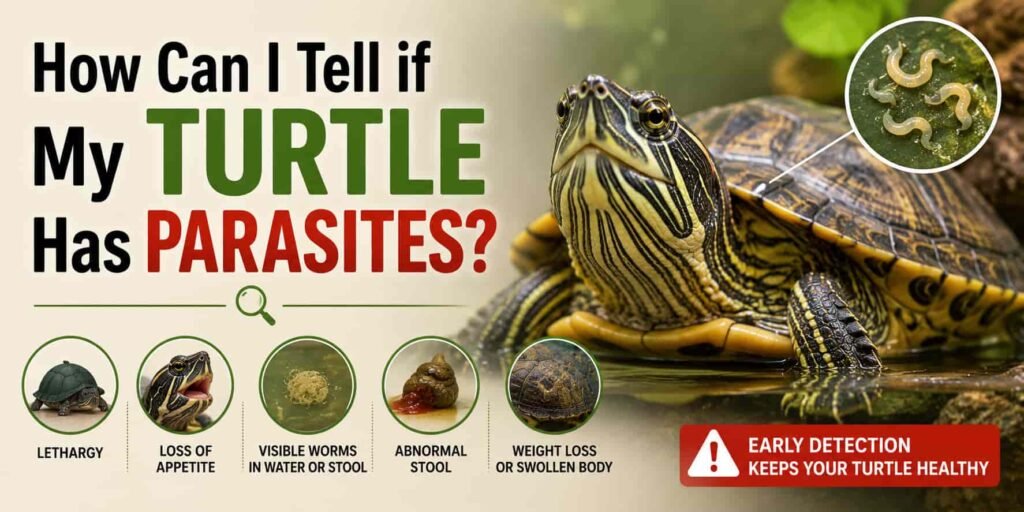
A turtle with parasites may show several warning signs, especially if the infection affects its digestive system, intestines, or overall health. Common symptoms include diarrhea, weight loss, loss of appetite, dehydration, tiredness, and unusual changes in the turtle’s feces.
Some turtles may also pass undigested food, vomit visible worms, or become less active than usual. If your turtle stops eating, looks weak, loses body weight, or has runny stool, it may be dealing with an internal parasite infection.
Because these signs can also be linked to other reptile health problems, the safest step is to take your turtle to a reptile vet. A vet can check a fecal sample, identify the type of parasite, and provide the right deworming treatment if needed. Clean tank water, proper turtle care, and regular aquarium maintenance can also help prevent parasites from spreading.
Why Does My Turtle Have Parasites?
If your turtle shows signs of parasites, such as diarrhea, weight loss, loss of appetite, dehydration, weakness, or worms in its feces, you should take it to a reptile vet as soon as possible. A parasitic infection can be mild at first, but it may become dangerous or even life-threatening if it is not treated properly.
The most common reason turtles get parasites is a dirty tank environment. When the turtle tank, aquarium water, filter, or bedding is not cleaned regularly, it can become a breeding area for parasites, bacteria, and other harmful organisms. Contaminated water from an unsafe or unclean source can also introduce parasites into the tank.
Parasites may also enter your turtle’s body through infected food, live feeders, or contact with another turtle. If two or more turtles live together, parasites can spread through turtle feces, dirty water, shared surfaces, or close contact.
In the wild, turtles may carry small numbers of internal parasites without serious problems. However, in captivity, the space is smaller and more controlled, so parasites can multiply quickly. If the tank is not cleaned deeply, your turtle may keep getting infected again and again.
To protect your turtle, keep the enclosure clean, change the water regularly, remove waste quickly, clean the filter, avoid unsafe food sources, and schedule a fecal test with a qualified reptile veterinarian. Proper turtle care, good tank hygiene, and early deworming treatment can help keep your pet healthy and parasite-free.
Read Also How Long Can Crested Geckos Go Without Water? [Pet Safety]How Are Turtle Parasites Treated?
The safest way to treat parasites in turtles is to visit a qualified reptile vet. Parasites should not be treated at home without proper testing because different internal parasites need different types of medication.
A vet will usually ask for a fresh fecal sample from your turtle. This sample is checked under a microscope to look for parasite eggs, worms, protozoa, or other harmful organisms. Once the vet knows what type of parasitic infection your turtle has, they can prescribe the correct deworming treatment or anti-parasitic medicine.
If your turtle is already showing symptoms such as weight loss, diarrhea, loss of appetite, weakness, worms in the tank, or worms in its feces, it should be checked as soon as possible. Active parasite infestations can become serious if they are ignored.
Prevention is also very important. Taking a yearly stool sample to the vet can help find parasites early before they cause major health problems. Regular turtle tank cleaning, clean aquarium water, proper filter maintenance, and safe food sources can also reduce the risk of parasites coming back.
In simple words, the best treatment plan is: get a fecal test, let the reptile veterinarian identify the parasite, use the right prescribed medicine, and keep the turtle enclosure clean to prevent reinfection.
How Can I Stop Turtle Parasites From Returning?
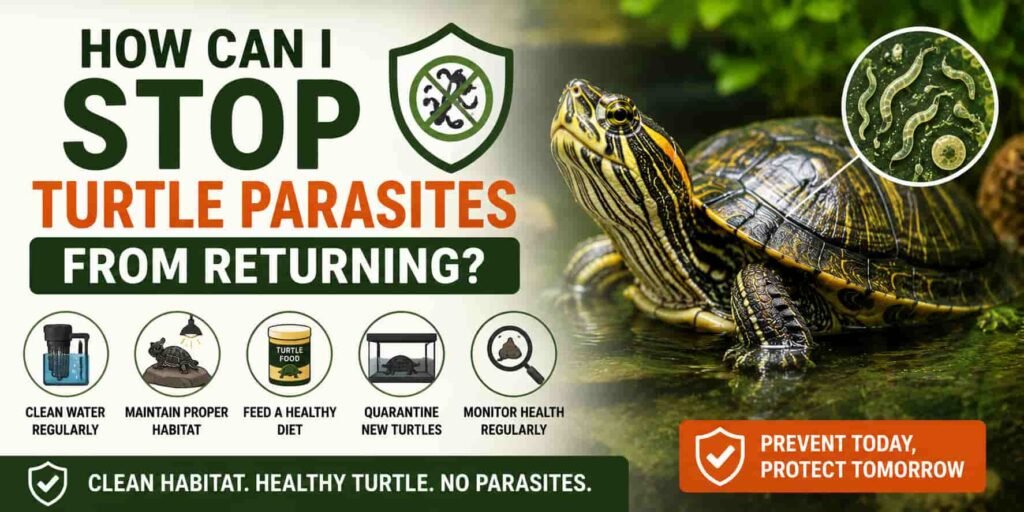
The best way to prevent parasites from coming back is to keep your turtle’s tank environment clean, dry, and well-maintained. A dirty turtle tank can quickly become a breeding place for parasites, bacteria, worms, and other harmful organisms.
Start by cleaning the entire turtle enclosure, including the tank walls, filter, decorations, basking area, food bowls, rocks, and any other tank accessories. A properly diluted bleach solution or reptile-safe disinfectant can help kill remaining parasites, but everything must be rinsed very well and allowed to dry before your turtle goes back inside. Any leftover chemical can be dangerous for your pet.
If the parasites came from contaminated water, unsafe food, or live feeders, change the source immediately. Always use clean, safe aquarium water and reliable food to reduce the risk of parasite reinfection.
Regular partial water changes are also important. Remove feces, leftover food, and waste as soon as possible, because dirty water can allow parasites to multiply. Keep the correct temperature, humidity, and water quality for your turtle’s species.
A clean and stable reptile habitat makes it much harder for parasites to survive. With regular tank cleaning, proper filter maintenance, safe feeding, and good turtle care, you can greatly lower the chance of parasites returning.
Read Also Ball Python Outside Care [Avoid These Mistakes] Best Way to Clean a Turtle Tank and Reduce Parasite Risk
The best way to keep your turtle tank clean and parasite-free is to maintain strong water quality, remove waste quickly, and follow a regular tank cleaning routine. Turtles produce a lot of waste, so a dirty tank can quickly become a breeding place for parasites, bacteria, ammonia, and harmful microorganisms.
Use a Strong Canister Filter
A canister filter is one of the best choices for a turtle tank because turtles are messy pets. They create more waste than many fish, which can make the water cloudy fast. A powerful aquarium filter helps remove dirt, waste, and food particles, keeping the tank water cleaner for longer.
Remove Leftover Food Regularly
Clean out your turtle’s leftover food at least once a week, or more often if possible. Uneaten food breaks down and increases ammonia levels in the water. Too much ammonia can be harmful or toxic to your turtle. A gravel vacuum with a long hose is useful for removing food particles, feces, and debris from the bottom of the tank.
Use a UV Water Sterilizer
A UV water sterilizer can help control cloudy or dirty water by reducing harmful bacteria, algae, and microorganisms. However, this is not the same as your turtle’s basking UVB light. A UV sterilizer is a separate device made specifically for cleaning the water.
Choose Dechlorinated Water
Always use dechlorinated water when changing your turtle’s water. Chlorinated tap water may kill harmful bacteria, but it can also destroy helpful bacteria that support a healthy aquarium ecosystem. Dechlorinated water helps keep the tank balanced and safer for your turtle.
Add Safe Aquatic Plants
Some freshwater plants can help improve water quality by absorbing nitrates and ammonia. Safe options may include giant duckweed, hornwort, and water lettuce. Make sure any plant you add is safe for turtles because some plants can be harmful if eaten.
Avoid Overfeeding
A clean tank also depends on a proper feeding schedule. Overfeeding is one of the main reasons turtle tanks become dirty. Extra food creates waste, raises ammonia, and can make the water unsafe. Feed your turtle the right amount and remove leftovers quickly.
Final Tip
To prevent parasites in turtles, keep the turtle enclosure clean, use a strong filter system, perform regular partial water changes, remove waste fast, and maintain safe temperature, humidity, and water conditions. A clean, stable tank makes it much harder for parasites, worms, and harmful bacteria to return.
Final Thoughts: Keeping Your Turtle Safe From Parasites
Parasites are a common problem in turtles, and they may appear as worms in the turtle tank or in your turtle’s waste. The most common turtle parasites include nematodes, hookworms, roundworms, protozoa, tapeworms, and fluke worms. Some parasites may cause only mild health issues, while others can become dangerous or even life-threatening if not treated quickly.Common signs of a parasitic infection include dehydration, loss of appetite, weight loss, vomiting, diarrhea, lethargy, and visible worms in feces. If your turtle shows any of these symptoms, take it to a qualified reptile vet as soon as possible. The vet can check a fresh fecal sample, identify the type of parasite, and provide the correct deworming treatment or medication.
FAQS: Worms in Turtle Tank? [Causes & Fixes]
How do I get rid of worms in my turtle tank?
To remove worms in a turtle tank, clean the tank regularly and focus on the bottom area where waste and food collect. Use a siphon to remove dirt from the tank floor, take out uneaten food after 5–10 minutes, and keep a proper water change schedule. Also, clean or replace the filter media when needed because poor water quality, leftover food, and turtle waste can help tiny worms, parasites, or detritus worms grow. Avoid using gravel if possible, because it can trap waste and make cleaning harder.
How to get rid of worms in a tank?
To remove worms in a tank, clean the aquarium carefully with a sand or gravel siphon. This process, also called vacuuming, helps remove worms from the tank bottom, glass sides, and areas where waste, leftover food, and organic debris collect. During cleaning, avoid removing more than 10%–15% of the water at one time. After vacuuming, slowly refill the tank with clean, treated water to keep the water quality, filter system, and aquatic environment safe for your fish or turtle.
How to treat worms immediately?
A worm infection, especially threadworms, is usually treated with worming tablets available from a pharmacy. For best results, the whole household should be treated at the same time, even if some people have no symptoms. Good hygiene, regular handwashing, washing bedding, and cleaning shared areas can also help stop the worms from spreading again. For children, pregnancy, severe symptoms, or repeated infections, ask a doctor or pharmacist for safe treatment advice.
What do worms hate the most?
Worms usually dislike strong or difficult-to-digest foods, especially when given in large amounts. These include citrus fruits, spicy chilli foods, onions, garlic, meat, fish, dairy products, oily foods, greasy leftovers, very salty food, and starchy items like bread. In a worm bin or compost system, these materials can upset the balance, cause bad smells, attract pests, and make the environment uncomfortable for composting worms.
How do I deworm my turtle?
To deworm your turtle, first take it to a reptile veterinarian for a fecal test to confirm the type of parasite. Vets commonly use Fenbendazole because it is considered one of the safer deworming medications for reptiles, including turtles. However, the correct dose depends on your turtle’s weight, species, and health condition. Avoid giving medicine without veterinary guidance, because the wrong treatment can harm the turtle’s digestive system or fail to remove the worms properly.


![Why Does My Snake Pee on Me [Owner Guide]](https://reptilesinfo.com/wp-content/uploads/2026/06/Why-Does-My-Snake-Pee-on-Me-Owner-Guide.jpg)
![Are Ball Pythons Active After Eating [Must Know]](https://reptilesinfo.com/wp-content/uploads/2026/06/Are-Ball-Pythons-Active-After-Eating-Must-Know.jpg)
![Why Is My Crested Gecko Going Crazy [Stress Alert]](https://reptilesinfo.com/wp-content/uploads/2026/06/Why-Is-My-Crested-Gecko-Going-Crazy-Stress-Alert.jpg)
![Why Is My Leopard Gecko Not Moving [Stress Alert]](https://reptilesinfo.com/wp-content/uploads/2026/06/Why-Is-My-Leopard-Gecko-Not-Moving-Stress-Alert.jpg)
![Why Is My Crested Gecko’s Mouth White [Danger Signs]](https://reptilesinfo.com/wp-content/uploads/2026/06/Why-Is-My-Crested-Geckos-Mouth-White-Danger-Signs.jpg)