
![Bearded Dragon Bath Poop Habit [Quick Fix]](https://reptilesinfo.com/wp-content/uploads/2026/05/Bearded-Dragon-Bath-Poop-Habit-Quick-Fix.jpg)
A bearded dragon may only poop in the bath because warm bath water helps relax its body and encourages a bowel movement. In many cases, this happens for two main reasons: your beardie has become conditioned to use the bath as its regular bathroom spot, or it may be having a health issue that makes normal pooping difficult.
Some bearded dragons learn that bath time is the best time to poop. This can happen when they are repeatedly placed in warm water and then have a bowel movement. Over time, this becomes a habit, almost like simple potty training. While this may keep the tank cleaner, it can also make your beardie depend too much on baths to poop.
However, if your bearded dragon suddenly starts pooping only in the bath, it may be a sign of constipation, dehydration, stress, low enclosure temperature, or possible impaction. A warm bath can help because it supports digestion, relaxes the muscles, and gives the reptile some relief.
Bathing can be useful, but it should not replace proper reptile care. Your beardie still needs the right basking temperature, fresh water, a balanced diet, and a safe environment. If your pet struggles to poop, looks weak, stops eating, or shows signs of pain, it is best to contact a reptile vet.
In this guide, we will explain why warm baths can trigger pooping, the benefits and problems of bath-time potty habits, and how to bathe your bearded dragon safely for better digestive health.
Can Bearded Dragons Learn to Poop During Bath Time?
Your bearded dragon may not have been purposely potty trained to poop in the bath. In many cases, this habit develops naturally over time. If your beardie often has a bowel movement during a warm bath, it may start to connect bath time with pooping.
This does not always mean something is wrong. Some reptiles simply build strong habits based on repeated experiences. However, every bearded dragon is different. What is normal for one beardie may not be normal for another.
The most important thing is to understand your own pet’s behavior, bathroom routine, and personal preferences. If your beardie is eating well, active, basking properly, and pooping regularly in the bath, this may simply be part of its normal routine.
Benefits of Letting Your Bearded Dragon Poop in the Bath
A bearded dragon pooping in the bath may seem unpleasant at first, but it can actually make cleaning much easier. When your beardie has a bowel movement in the bath water, you can remove the waste quickly or simply flush the dirty water away. This is often easier than cleaning poop from the substrate, where it can leave smell, stains, and bacteria inside the enclosure.
Another benefit is better tank hygiene. If your beardie regularly poops during bath time, the habitat may stay cleaner for longer. This can help reduce bad odor, lower the risk of germs, and make regular reptile care more manageable.
If your bearded dragon develops this habit, try to keep a steady bathing schedule. Some owners bathe their beardies every day, while others prefer two or three baths per week. The right routine depends on your pet’s age, health, and normal bathroom pattern.
A healthy baby bearded dragon may poop once a day during the first few months. A juvenile bearded dragon may poop every other day, while an adult beardie may only poop once or twice a week. However, every reptile is different, so slight changes can be normal if your pet is eating well, active, and showing good digestion.
Possible Problems With Bath-Time Pooping
A bearded dragon that only poops in the bath may face problems if bath time is not available regularly. For example, if you are busy and cannot bathe your beardie for a few days, it may hold its bowel movement because the bath has become the only place where it feels comfortable pooping.
Some bearded dragons may show signs that they need to poop, such as glass dancing. This means they may move, jump, or scratch against the glass of their enclosure because they want to come out for a bathroom break.
Another concern is too much bathing. If your beardie spends too much time in water, its skin may stay overly moist. This can increase the risk of skin problems, including fungal infections, cutaneous mycosis, irritation, or shedding issues. For this reason, some owners prefer to bathe their beardie only when needed, such as when it is dirty or has walked through its feces.
Bathing can also be stressful for some bearded dragons. Not every beardie enjoys water, and forced baths may cause stress, fear, or discomfort. The best approach is to watch your pet’s behavior, understand its routine, and choose a care method that supports its health, digestion, and comfort.
Read Also Bearded Dragon Outdoor Rage [Calm Him Fast]Can Bathing Help a Bearded Dragon Poop?
A warm bath may help a bearded dragon poop when it is having trouble passing waste. Just like humans, reptiles can also struggle with difficult bowel movements. In bearded dragons, this problem is often called impaction, which is more serious than simple constipation.
A beardie may stop pooping for several reasons, including dehydration, stress, low enclosure temperature, poor digestion, or possible impaction. Warm bath water can sometimes relax the body, support movement in the digestive tract, and help your pet pass waste more easily.
Impaction and Pooping Problems
Impaction can happen when a bearded dragon swallows unsafe substrate from its enclosure. Loose materials such as sand, gravel, bark, or small particles can build up inside the digestive system and make it hard for the beardie to poop.
Diet can also play a role. Feeding insects or worms that are too large may increase the risk of digestive blockage. A good rule is to offer feeders that are no wider than the space between your bearded dragon’s eyes. Incorrect supplements, poor food choices, or lack of proper hydration can also affect healthy digestion.
A bath can provide temporary relief, but it should not be the only solution. If your beardie has not pooped for several days, looks weak, refuses food, has a swollen belly, or seems in pain, contact a reptile vet. Proper reptile care, safe substrate, correct temperatures, a balanced diet, and fresh water are all important for preventing future pooping problems.
Dehydration Can Make Pooping Difficult
Dehydration can make it harder for a bearded dragon to poop. When a beardie does not get enough moisture, its digestive system may slow down, and the stool can become harder to pass.
Bearded dragons get water from both fresh food and drinking water. Some beardies do not like still water and may prefer moving water, so a small water dispenser or drip system may encourage them to drink more.
Bath time can also help with hydration. Many bearded dragons drink while sitting in shallow bath water. This can rehydrate the body and may also encourage a natural bowel movement.
Stress Can Affect Bathroom Habits
Stress is another common reason a bearded dragon may stop pooping. A new home, sudden relocation, loud surroundings, or changes in the enclosure can make a beardie feel unsafe.
Living with other bearded dragons may also cause stress, especially if there is competition or bullying. Bigger household pets, such as cats and dogs, can also make a beardie feel threatened.
When stressed, some bearded dragons may hold in their poop or stop eating. If they are not eating enough, they may also stop having regular bowel movements. To help, keep the enclosure calm, warm, clean, and secure so your beardie can return to a normal pooping routine.
Low Temperature Can Stop Normal Pooping
A bearded dragon may have trouble pooping if its terrarium temperature is too low. Bearded dragons are cold-blooded reptiles, so they need proper heat to digest food and stay active. When the enclosure is too cold, your beardie may become lethargic, eat less, and struggle with normal bowel movements.
For healthy digestion, the basking spot should usually stay between 92–110°F or 33–43°C. The cooler side of the enclosure should be around 75–85°F or 24–29°C. At night, the temperature should stay near 65–70°F or 18–21°C. Keeping the right temperature gradient helps your beardie digest food properly and poop more regularly.
Safe Bathing Tips to Help Your Bearded Dragon Poop
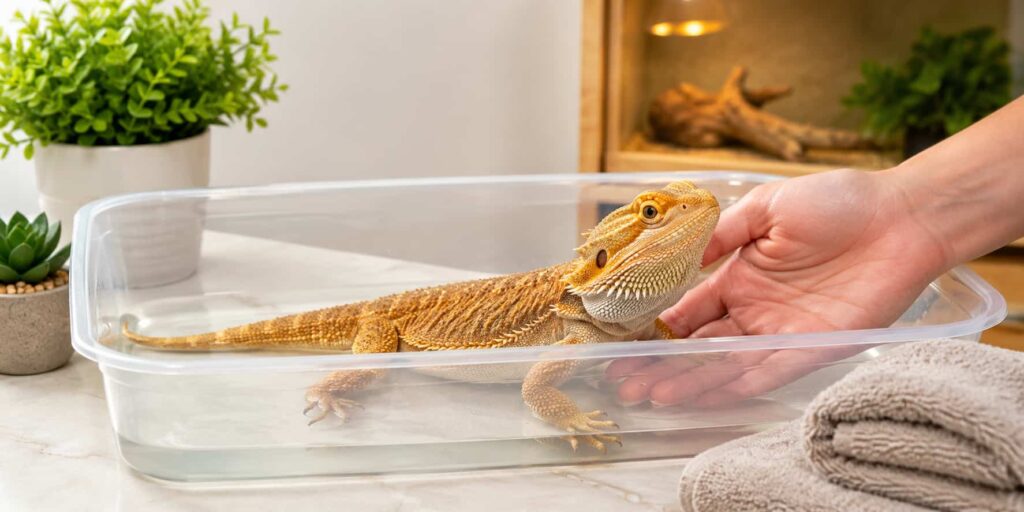
A warm bath can sometimes help a bearded dragon relax, rehydrate, and pass waste more easily. Many beardies enjoy soaking, splashing, and drinking during bath time, but the bath must be safe and comfortable.
Use a separate bath tub only for your beardie. It should be large enough for your pet to move around easily. Adding non-slip grip strips at the bottom can help prevent slipping and stress.
Keep the bath water temperature between 85–100°F or 29–38°C. The water should be shallow, about shoulder level, so your beardie can sit safely without struggling.
You can gently massage your beardie with a soft toothbrush to help it relax. After the bath, dry your bearded dragon completely with a towel before placing it back into the warm enclosure.
Finally, always clean and disinfect the bath tub after use, especially if your beardie has pooped in the water. Proper cleaning helps prevent bacteria, bad smell, and possible reptile health problems.
Cold Enclosure Temperatures Can Affect Digestion
A bearded dragon may struggle to poop if the terrarium temperature is too low. Bearded dragons are cold-blooded reptiles, which means they depend on external heat to stay active, digest food, and maintain normal bowel movements. When the enclosure is too cold, your beardie may become lethargic, eat less, and have slower digestion.
For proper digestive health, the basking area should usually stay between 92–110°F or 33–43°C. The cooler side of the tank should be around 75–85°F or 24–29°C. At night, the temperature should remain close to 65–70°F or 18–21°C. A healthy temperature gradient allows your bearded dragon to move between warm and cool areas, which supports better thermoregulation, appetite, and regular pooping.
Read Also Why Is My Snake Drinking So Much? [Common Causes]How to Bathe a Bearded Dragon Safely
A warm bath can help a bearded dragon relax, drink water, and pass waste more easily. Many beardies enjoy soaking, splashing, and drinking during bath time, but the bath should always be safe, shallow, and stress-free.Use a separate bathing tub only for your beardie. Choose a tub that gives your pet enough space to move comfortably. You can also add non-slip grip strips to the bottom to prevent slipping and reduce stress.Keep the bath water temperature between 85–100°F or 29–38°C. The water should not be too deep. Shoulder-level water is usually enough, so your beardie can sit safely without struggling.During the bath, you may gently rub your beardie with a soft toothbrush to help it relax. After bathing, dry your bearded dragon well with a clean towel before placing it back into its warm enclosure.
FAQs: Bearded Dragon Bath Poop Habit [Quick Fix]
How to make a bearded dragon poop quickly?
A warm bath can help a bearded dragon poop faster by relaxing its body, improving hydration, and stimulating a natural bowel movement. Soak your beardie in shallow warm water for about 20–30 minutes. If it is having trouble pooping, daily soaking for a few days may help, then you can return to a normal bath routine every 2–4 days.
Also make sure your beardie has enough water in its diet, proper basking temperature, safe substrate, and healthy digestion. If your bearded dragon still cannot poop, looks weak, stops eating, or has a swollen belly, contact a reptile vet because it may be impaction or another health issue.
Can a bearded dragon go 2 weeks without pooping?
Yes, an adult bearded dragon can sometimes go 2 weeks without pooping, especially during brumation, which is a reptile’s low-activity rest period. During brumation, your beardie may eat less, move less, and have very slow digestion, so bowel movements may stop for weeks.
However, if your bearded dragon is not in brumation, has a swollen belly, seems weak, refuses food, or looks uncomfortable, it may have constipation, dehydration, or impaction. In that case, contact a reptile vet for proper care.
What is the 3 poop rule?
The 3 poop rule, also called the three-and-three rule, means a healthy person may poop anywhere from 3 times a day to 3 times a week. This range is usually considered normal for bowel movements.
If someone poops fewer than 3 times per week, it may suggest constipation. If they poop more than 3 times a day, especially with loose or watery stool, it may be a sign of diarrhea or a digestive issue.
Can bearded dragons eat fruit?
Yes, bearded dragons can eat fruit, but only in small amounts as an occasional treat. Safe options include papaya, melon, banana, figs, watermelon, apples, mango, dates, peaches, and apricots.
Fruit should not be the main part of a beardie’s diet because it contains natural sugar. A healthy diet should include proper vegetables, safe feeder insects, and the right calcium supplementation. Calcium is important because many insects have more phosphorus than calcium, which can affect your bearded dragon’s bone health.
Is taking 30 minutes to poop normal?
No, taking 30 minutes to poop is usually not considered normal, especially if you are straining. A healthy bowel movement should normally happen within a few minutes. Sitting on the toilet for 20–30 minutes may be a sign of constipation, slow digestion, low fiber intake, dehydration, or another digestive health issue.
If this happens often, try drinking more water, eating more fiber-rich foods, staying active, and avoiding long toilet sitting. If you have pain, bleeding, hard stool, or frequent straining, it is best to speak with a doctor or gastroenterologist.


![Why Does My Snake Pee on Me [Owner Guide]](https://reptilesinfo.com/wp-content/uploads/2026/06/Why-Does-My-Snake-Pee-on-Me-Owner-Guide.jpg)
![Are Ball Pythons Active After Eating [Must Know]](https://reptilesinfo.com/wp-content/uploads/2026/06/Are-Ball-Pythons-Active-After-Eating-Must-Know.jpg)
![Why Is My Crested Gecko Going Crazy [Stress Alert]](https://reptilesinfo.com/wp-content/uploads/2026/06/Why-Is-My-Crested-Gecko-Going-Crazy-Stress-Alert.jpg)
![Why Is My Leopard Gecko Not Moving [Stress Alert]](https://reptilesinfo.com/wp-content/uploads/2026/06/Why-Is-My-Leopard-Gecko-Not-Moving-Stress-Alert.jpg)
![Why Is My Crested Gecko’s Mouth White [Danger Signs]](https://reptilesinfo.com/wp-content/uploads/2026/06/Why-Is-My-Crested-Geckos-Mouth-White-Danger-Signs.jpg)