
![Bearded Dragon Outdoor Rage [Calm Him Fast]](https://reptilesinfo.com/wp-content/uploads/2026/05/Bearded-Dragon-Outdoor-Rage-Calm-Him-Fast.jpg)
It sounds fun and exciting to watch your bearded dragon explore the great outdoors, but what if your pet Why Bearded Dragons May Act Stressed Outside
Many bearded dragons do not feel comfortable when they are taken outside. If your bearded dragon.
turns black, it starts head bobbing, becomes aggressive, or refuses to move, it may be feeling stressed, scared, or threatened.
The main reason is that the outdoors can feel unsafe. Open spaces, loud sounds, sudden movement, birds, cats, dogs, and other possible predators can make a bearded dragon feel exposed. Hot weather can also cause overheating, which may make your pet more irritated or defensive.
In simple words, your bearded dragon may get mad outside because it feels unsafe, too hot, or overwhelmed by its surroundings.
To make outdoor time safer, keep outings short, choose a quiet area, avoid direct extreme heat, stay close to your pet, and watch for signs of stress, such as a black beard, hiding, puffing up, or trying to escape.
Why Bearded Dragons May Feel Unsafe Outside
Taking your bearded dragon outside may seem like a good way to give it fresh air, sunlight, and a break from its enclosure. Some beardies enjoy outdoor time, but others feel nervous, scared, or defensive as soon as they leave their familiar space.
Outdoor Stress and Fear
Your bearded dragon may dislike going outside because it feels stressed, threatened, or unsafe. Indoors, it is used to its tank, hide spots, controlled temperature, and familiar surroundings. Outside, there is too much open space, noise, movement, and unfamiliar smells, which can quickly make your beardie feel exposed.
Fear of Predators
The outdoors can also feel dangerous because of possible predators. Birds, cats, dogs, and other animals may scare your bearded dragon. Large birds are especially stressful because they can see small reptiles as prey. This is why you should never leave your beardie unattended outside.
In simple words, your bearded dragon may not like going outside because it feels unsafe, overwhelmed, or afraid of predators. Always keep outdoor time short, calm, and supervised.
Common Signs of Stress in Bearded Dragons
It is usually easy to notice when a bearded dragon is feeling stressed, angry, or uncomfortable. Changes in color, behavior, appetite, and body language can all show that your beardie is not feeling calm.
Common warning signs include darker skin color, black marks on the chin or belly, also known as stress marks, and less movement than usual. Your bearded dragon may also stop eating, refuse food, or become unusually inactive.
Some beardies may show physical signs such as hard urates, diarrhea, or other changes in their droppings. Defensive behaviors like hissing, head bobbing, puffing up, or acting aggressive can also mean your pet feels threatened.
If these stress symptoms happen often or do not go away, check your dragon’s enclosure, temperature, lighting, diet, and surroundings. A calm, safe environment can help reduce stress and keep your bearded dragon healthy.
Read Also Why Is My Snake Drinking So Much? [Common Causes]How Can I Help My Angry or Stressed Bearded Dragon Calm Down?
Since constant stress can have a negative impact on your pet’s immune system and make it more likely to become ill, it’s a good idea to handle stress at the source. Here are some tips for helping your bearded dragon feel more calm and content.
- Cut back on sensory overload by providing a place for your bearded dragon to hide away when it’s outdoors. This could be as simple as bringing one of your pet’s hides outside with you. If your bearded dragon has a way to escape the overwhelming open space, it will feel much more safe and calm.
- Hold your bearded dragon rather than setting it on the ground if it seems nervous. This is especially helpful if you have a strong bond with your pet, because your beardie will feel more secure in your arms.
- Ease into going outside. Start by letting your bearded dragon hangout near a window indoors. Next, move to the doorway. Go step by step, making sure your beardie feels secure before moving on. Spread out the process over a week or more if your pet is particularly stressed out or frightened by the outdoors.
How to Know Your Bearded Dragon Feels Calm Outside
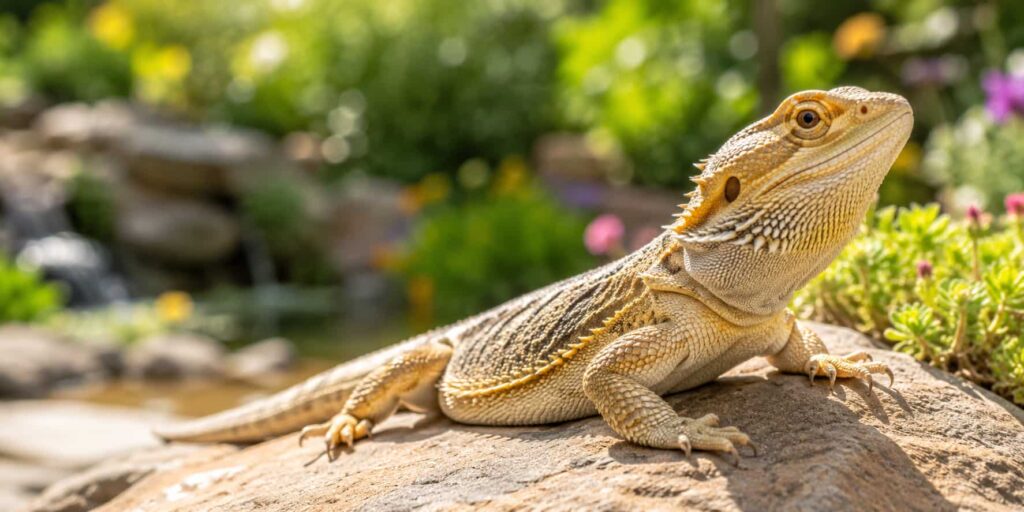
A bearded dragon that feels happy outside will usually look relaxed, curious, and comfortable. Instead of acting scared or defensive, it will explore slowly and show normal body language.
Signs your beardie is enjoying outdoor time include exploring its surroundings, gently sticking out its tongue to smell the air, and keeping its body loose instead of tense. It may also lay flat, stay alert without looking frightened, and spend time basking in the sunlight.
In simple words, if your bearded dragon is moving calmly, smelling the air, relaxing its body, and basking without showing stress marks, black beard, hiding, hissing, or trying to escape, it is likely feeling safe and comfortable outside.
Outdoor Heat Can Make Bearded Dragons Irritable
A bearded dragon may seem angry outside because it is getting overheated. Since bearded dragons are cold-blooded reptiles, they depend on their surroundings to control their body temperature. If the weather is too hot, your beardie can become uncomfortable, stressed, or defensive very quickly.
Why Heat Causes Stress
When outdoor temperatures rise, your bearded dragon may struggle to thermoregulate. This can make it act restless or aggressive. Common signs include a dark beard, hissing, gaping, head bobbing, and even biting. These behaviors may look like anger, but they often mean your pet is too hot or uncomfortable.
Read Also Snake Scales Lifting? [Shedding Warning]How to Keep Your Beardie Cool Outside
Always give your bearded dragon access to both sunlight and shade. A shaded hide can help it cool down when needed. You can also place a shallow water bowl in the shade so your beardie can drink or soak if it wants to.
If the outdoor temperature is very high, it is safer to keep your bearded dragon indoors. Outdoor time should be calm, supervised, and comfortable, with plenty of shade, water, and safe hiding spots.
Helping Your Bearded Dragon Enjoy Outdoor Time
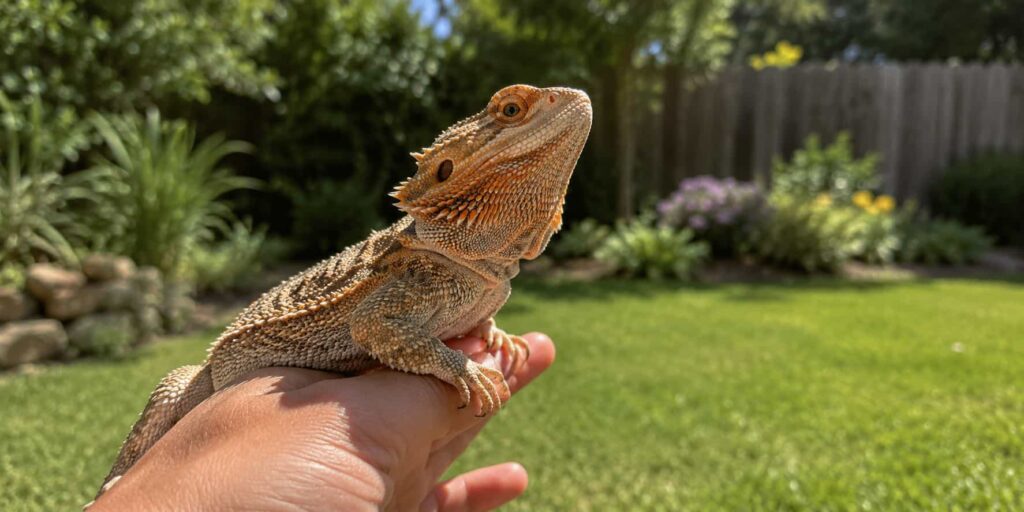
Taking your bearded dragon outside can be healthy, especially in a warm and safe climate. Natural sunlight gives your beardie warmth, visible light, and helpful UVB rays, which support strong bones, healthy behavior, and proper calcium absorption. However, outdoor time should always feel safe, calm, and comfortable for your pet.
Use a Reptile Harness for Safety
A reptile leash or bearded dragon harness is a smart way to keep your pet secure outside. It allows your beardie to explore while preventing it from running away, hiding, or getting lost. A harness also helps you stay relaxed because you know your dragon is safe and under control.
Choose a Familiar Outdoor Spot
Try taking your bearded dragon to the same quiet outdoor area each time. A familiar place can help reduce stress, fear, and nervous behavior. Constantly moving your beardie to new locations may feel overwhelming because of different sounds, smells, open spaces, and possible predators.
In simple words, outdoor time is best when your bearded dragon has sunlight, shade, safety, supervision, and a familiar environment. This helps your pet feel more confident and comfortable outside.
Pick a Safe and Covered Outdoor Spot
When taking your bearded dragon outside, choose an area near trees, bushes, or other natural cover. These places can help your beardie feel more safe, secure, and protected from open spaces. If you do not want to bring one of its usual hide spots, natural cover can give your pet a place to feel less exposed.
Keep Your Beardie Away From Chemicals
Never allow your bearded dragon to walk on grass or soil that has been treated with fertilizers, pesticides, weed killers, or other harmful chemicals. These substances can be dangerous if your beardie licks, eats, or absorbs them. In serious cases, chemical exposure can make your reptile very sick or even become life-threatening.
Read Also Do Ball Pythons Get Darker With Age? [Morph Facts]Stop Your Bearded Dragon From Eating Outdoor Items
Do not let your beardie eat random insects, bugs, rocks, pebbles, plants, or small objects it finds outside. Wild insects may be toxic, contaminated, or unsafe for reptiles. Small stones and hard objects can also cause serious digestive problems, including impaction, which can block the digestive tract.
In simple words, outdoor time should be supervised, chemical-free, and safe. Give your bearded dragon cover, avoid treated grass, and make sure it does not eat anything from the ground.
Check the Temperature Before Going Outside
Before taking your bearded dragon outside, always check the outdoor temperature. The safest time is usually when the weather is warm but not too hot, around the high 70s°F. In a proper bearded dragon enclosure, the cool side should stay around 75 to 80°F, while the basking area should be about 95 to 100°F.
If the outdoor temperature is much colder or hotter than your beardie’s safe range, outdoor time may not be a good idea. You should also avoid taking your pet outside if there is no shade, no cool area, or no safe place to hide. Bearded dragons need both warmth and cooler spots so they can thermoregulate and control their body temperature.
Be Careful About Outdoor Parasites
Outdoor time can also expose your bearded dragon to parasites, such as mites, ticks, or internal parasites. These problems are not always easy to notice at first. Many owners only see signs when the infestation becomes serious.
To keep your beardie healthy, take a fresh stool sample to a reptile vet once or twice a year. A vet can check for parasites, digestive issues, and other hidden health problems before they become dangerous.
In simple words, only take your bearded dragon outside when the temperature is safe, shade is available, and the area is clean. Also, regular vet checks can help protect your pet from outdoor parasites.
Be Patient With Outdoor Training
Moving from a familiar enclosure to the outdoors can feel like a big change for a bearded dragon. New sounds, open space, bright light, smells, and possible predators may make your beardie feel nervous at first. Because of this, outdoor time should be introduced slowly and calmly.
Final Thoughts
If your bearded dragon acts angry when you take it outside, it is usually reacting to stress, fear, or overheating. A lack of cover, too much open space, and high temperatures can make your pet feel unsafe or defensive.To help your beardie feel more comfortable, provide shade, hides, and safe cover whenever it is outdoors. Always use a reptile leash or harness, supervise closely, and never allow it to eat random bugs, plants, rocks, or other outdoor objects.With patience, short outdoor sessions, and a safe routine, your bearded dragon may slowly become more relaxed and confident outside.
FAQs: Bearded Dragon Outdoor Rage [Calm Him Fast]
How to calm down an angry bearded dragon?
To calm an angry bearded dragon, first reduce noise, movement, and bright lights around the enclosure. Give your dragon some quiet time and avoid unnecessary handling until it feels safe again. You can dim or turn off the lights for a short time, but do not leave the tank dark too long because your bearded dragon still needs proper heat and tank temperature. Also, provide a hide so it can feel secure and slowly relax.
How can I tell if my bearded dragon is calm?
A calm bearded dragon usually has a relaxed body, normal breathing, bright eyes, and a light or normal-colored beard. It may sit quietly, bask peacefully, explore slowly, and accept gentle handling without trying to run away. Signs like a dark beard, glass surfing, hiding too much, or sudden lethargy usually mean your dragon feels stressed, scared, or uncomfortable because of noise, bright lighting, frequent handling, or changes in its enclosure.
How do bearded dragons show anger?
Bearded dragons often show anger, stress, or fear by puffing out the skin under their throat, which is called bearding. Their beard may also turn black, making the warning sign more obvious. Other signs of aggression can include hissing, opening the mouth, flattening the body, tail twitching, or trying to bite. These behaviors usually mean the bearded dragon feels threatened, unsafe, or uncomfortable.
Do beardies remember their owners?
Yes, bearded dragons can remember and recognize their owners, especially through regular feeding, gentle handling, familiar smell, and a known voice. Over time, they may learn daily routines, respond to familiar people, and feel more relaxed around someone they trust. While they do not bond exactly like dogs or cats, many beardies can show recognition, comfort, and simple social behaviors such as calm body language, waving, or head bobbing.
What stresses a bearded dragon out?
A bearded dragon can become stressed when it feels unsafe, threatened, or exposed to something unfamiliar. Common causes include loud noise, sudden movement, too much handling, bright or poor lighting, incorrect tank temperature, lack of hiding spots, other pets, and changes in its enclosure. Stress signs may include a dark beard, glass surfing, hiding, hissing, biting, loss of appetite, or unusual aggression.


![Why Does My Snake Pee on Me [Owner Guide]](https://reptilesinfo.com/wp-content/uploads/2026/06/Why-Does-My-Snake-Pee-on-Me-Owner-Guide.jpg)
![Are Ball Pythons Active After Eating [Must Know]](https://reptilesinfo.com/wp-content/uploads/2026/06/Are-Ball-Pythons-Active-After-Eating-Must-Know.jpg)
![Why Is My Crested Gecko Going Crazy [Stress Alert]](https://reptilesinfo.com/wp-content/uploads/2026/06/Why-Is-My-Crested-Gecko-Going-Crazy-Stress-Alert.jpg)
![Why Is My Leopard Gecko Not Moving [Stress Alert]](https://reptilesinfo.com/wp-content/uploads/2026/06/Why-Is-My-Leopard-Gecko-Not-Moving-Stress-Alert.jpg)
![Why Is My Crested Gecko’s Mouth White [Danger Signs]](https://reptilesinfo.com/wp-content/uploads/2026/06/Why-Is-My-Crested-Geckos-Mouth-White-Danger-Signs.jpg)