
![Why Is My Snake Drinking So Much [Common Causes]](https://reptilesinfo.com/wp-content/uploads/2026/05/Why-Is-My-Snake-Drinking-So-Much-Common-Causes.jpg)
Many snake owners do not often see their pets drinking from the water bowl. So, if your snake suddenly starts drinking more than usual, it can feel worrying. In most cases, increased water intake happens because of changes in the enclosure environment or the snake’s natural body need snake drinking so mouch more water due to low humidity, high temperature, dehydration, or the shedding process. These are common reasons and should be checked carefully.If the humidity level inside the enclosure is too low, your snake may lose moisture faster and drink more to stay hydrated. Similarly, if the tank temperature is too high, the snake may need extra water because heat can increase fluid loss.Another possible cause is dehydration. Signs may include wrinkled skin, dry scales, sunken eyes, or low energy. During shedding, snakes also need more moisture to help loosen the old skin, so they may drink more or spend more time near water.To keep your snake healthy, always check the temperature, humidity, water bowl, and overall reptile enclosure setup. If your snake keeps drinking too much or shows signs of illness, it is best to contact a reptile veterinarian.
Common Reasons Snakes Drink More Water
Why is snake Drinking so much water when something changes in its environment, body condition, or daily care routine. One common reason is high enclosure temperature, which can make the snake lose moisture faster. Another possible cause is low humidity, especially in species that need a moist reptile habitat to stay healthy.
Snakes may also increase their water intake before or during the shedding process. Extra moisture helps soften the old skin and supports a smoother shed. In some cases, drinking more can also be linked to dehydration, which may happen if the snake’s diet, humidity level, or water availability is not suitable.
Overall, increased drinking is usually connected to temperature, humidity, shedding, dehydration, or general snake care conditions. Owners should check the enclosure setup, keep fresh water available, and watch for signs such as dry skin, sunken eyes, or low energy.
High Tank Temperature and Extra Drinking
Snakes are ectothermic animals, which means they cannot control their body temperature the same way humans do. They depend on their environment to stay warm or cool. Because of this, every snake enclosure should have a proper temperature gradient. This means one side of the tank should be cooler, while the other side should be warmer, including a safe basking area.
If the enclosure temperature becomes too high, your snake may drink more water than usual. It may also spend more time soaking in the water bowl to cool down and escape the heat. This can be a sign that the tank setup is too warm and needs checking.
A suitable temperature range is usually around 75°F to 80°F on the cool side and 80°F to 85°F on the warm side. The basking spot should be around 88°F to 92°F. However, exact needs can vary depending on the snake species, so owners should always check species-specific care requirements.
Your snake should also have two similar hides: one on the cool side and one on the warm side. This helps the snake feel safe while choosing the right area for thermoregulation.
To avoid overheating, always use a thermostat with any heat source. Reliable digital thermometers are also important for monitoring the reptile tank temperature and keeping your snake healthy.
Read Also Snake Scales Lifting? [Shedding Warning]Low Humidity and Increased Water Intake
Humidity is an important part of proper snake care, especially if your snake is drinking more water than usual. Snakes do not only stay hydrated by drinking from a water bowl. They also absorb moisture from the air inside their enclosure.
If the humidity level is too low, your snake may try to get extra moisture in other ways. This may include drinking more water or spending more time soaking in its bowl. These behaviors can be signs that the reptile habitat is too dry.
For many snakes, a humidity level of around 60% is suitable. However, this can change depending on the snake species, so it is always better to check the correct care needs for your specific pet. During the shedding process, slightly higher humidity can help the old skin come off smoothly and in one piece.
Snakes recovering from illness may also benefit from a little extra moisture, but the enclosure should not be kept overly wet. Too much humidity can also cause health problems.
To manage this properly, use a hygrometer to measure the humidity level inside the tank. This helps you maintain better snake husbandry, prevent dehydration, and keep your snake comfortable and healthy.
Shedding and Extra Water Intake
A snake may drink more water when it is getting ready to shed its skin. This is normal because the shedding process needs enough hydration and moisture. When a snake is well hydrated, the old skin is more likely to come off smoothly and in one complete piece.
Some snakes also spend more time soaking in the water bowl before shedding. This helps soften the old skin and makes the shed cycle easier. Extra moisture can support a healthy shed and reduce the risk of stuck skin, especially around the eyes or tail.
You can help your snake by slightly increasing the humidity level in the enclosure during this time. A moist hide can also be useful. To make one, place damp moss inside one of the snake’s hides. This creates a small humid area where your snake can rest comfortably while preparing to shed.
Good snake husbandry, proper hydration, clean water, suitable humidity, and a safe reptile enclosure all help your snake complete the shedding process without stress.
Dehydration in Snakes
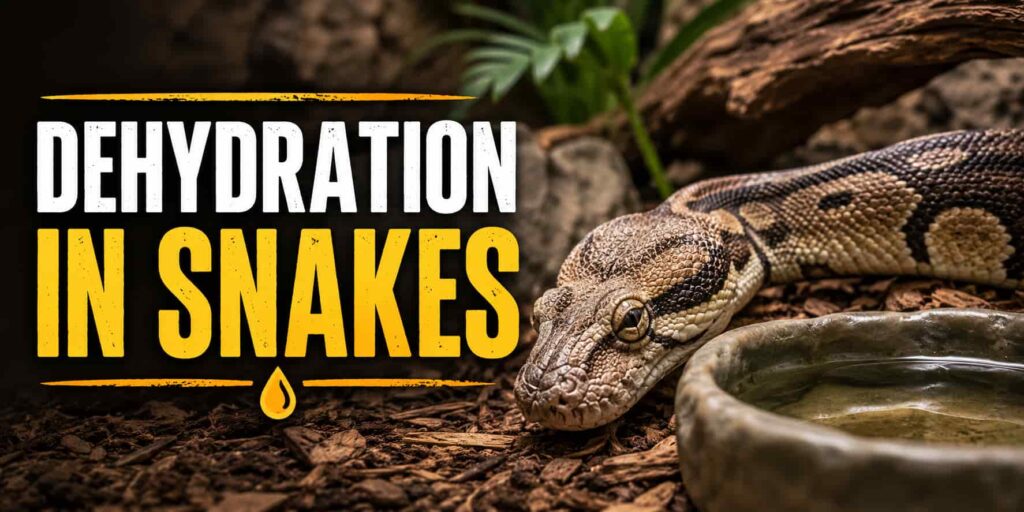
A common myth says that snakes do not drink water, but this is not true. Like other animals and even humans, snakes need regular access to fresh water to stay healthy. A pet snake should always have clean water available every day because lack of water can lead to dehydration.
Common Causes of Dehydration
Dehydration in snakes can happen for several reasons, including no water bowl, low humidity, and a lack of moisture in food.
If your snake does not have a water bowl, or if the bowl is too small for soaking, it may not get enough water. Snakes often use water bowls not only for drinking but also for cooling down and supporting hydration.
Low humidity levels can also cause dehydration. If the enclosure humidity drops too low, especially below the level your snake species needs, the snake may lose moisture faster and struggle to stay properly hydrated.
Diet can also play a role. If your snake eats prey that is too dry, old, or has been stored in the freezer for a long time, it may receive less moisture from its meals. This can slowly contribute to fluid loss and poor reptile health.
To prevent dehydration, always provide a clean water bowl, maintain proper humidity, offer suitable snake food, and monitor your snake for signs such as dry skin, wrinkled scales, sunken eyes, or low energy.
Dehydration in Snakes
A common myth says that snakes do not drink water, but this is not true. Like other animals and even humans, snakes need regular access to fresh water to stay healthy. A pet snake should always have clean water available every day because lack of water can lead to dehydration.
Read Also Do Ball Pythons Get Darker With Age? [Morph Facts]Common Causes of Dehydration
Dehydration in snakes can happen for several reasons, including no water bowl, low humidity, and a lack of moisture in food.
If your snake does not have a water bowl, or if the bowl is too small for soaking, it may not get enough water. Snakes often use water bowls not only for drinking but also for cooling down and supporting hydration.
Low humidity levels can also cause dehydration. If the enclosure humidity drops too low, especially below the level your snake species needs, the snake may lose moisture faster and struggle to stay properly hydrated.
Diet can also play a role. If your snake eats prey that is too dry, old, or has been stored in the freezer for a long time, it may receive less moisture from its meals. This can slowly contribute to fluid loss and poor reptile health.
To prevent dehydration, always provide a clean water bowl, maintain proper humidity, offer suitable snake food, and monitor your snake for signs such as dry skin, wrinkled scales, sunken eyes, or low energy.
Rewrite it most professionally. There should be no plagiarism and no AI detection. Do not miss any NLP-related, semantically, and contextually related keywords. Summarize it if possible. Start with the most reasonable words. Use simple English. So that a 16-year-old person can also understand. Also, change the headings to the most relevant words in order to avoid any plagiarism. NLP-related and semantically and contextually related keywords are bold also.Please paste the text you want me to rewrite.
How to Help a Snake Recover from Mild Dehydration
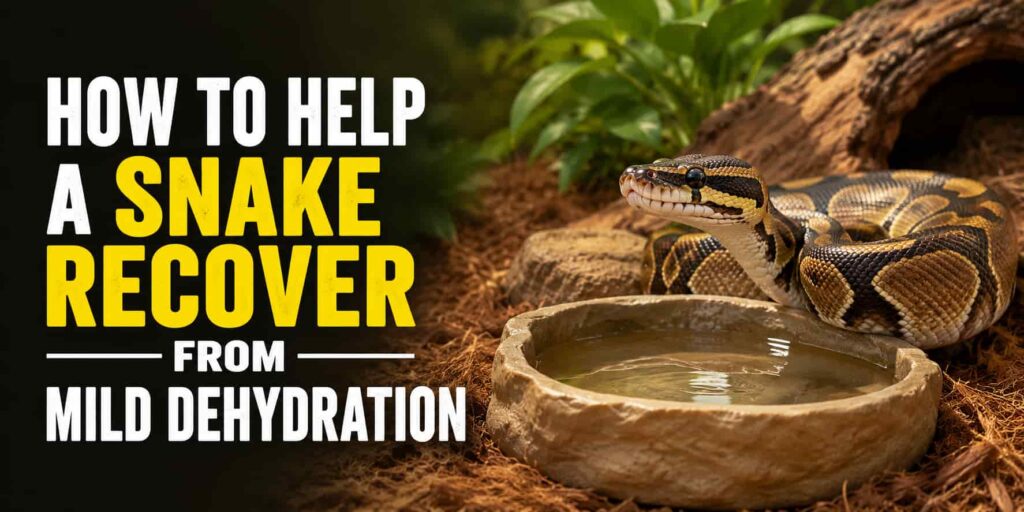
Mild dehydration in snakes can often be managed at home if the condition is not serious. The first step is to improve the humidity level inside the snake’s enclosure. Use a hygrometer to check the moisture in the air and keep the humidity at 60% or higher, depending on your snake’s species.
Another helpful step is to create a moist hide. You can do this by placing damp sphagnum moss inside one or both of the snake’s hides. This gives your snake a humid place to rest and helps it absorb more moisture from the surrounding air.
Always provide a clean bowl of fresh water. The bowl should be large enough for the snake to soak in comfortably. Soaking can help support rehydration, especially when the snake is losing too much body moisture.
You may also give your snake an electrolyte soak to help restore lost fluids and support recovery. This can be useful when the snake needs extra hydration support.
Items Needed for an Electrolyte Soak
If the snake shows serious signs such as extreme weakness, sunken eyes, stuck shed, or no improvement after basic care, it is best to contact a reptile veterinarian. Severe dehydration can become dangerous and may need professional treatment.
Safe Electrolyte Soak for a Dehydrated Snake
To prepare an electrolyte soak, set the heating pad to 82–84°F and place the plastic storage tub on top of it. Add the soaking mixture to about one inch deep. The mixture should contain three parts electrolyte supplement and one part water.
Allow the liquid to warm for about 15 minutes before placing your snake inside. This gives the solution enough time to reach a safe and comfortable temperature. Once ready, gently place the snake in the tub, close the lid securely, and let it soak for up to one hour. During this time, the snake can absorb moisture, fluids, and helpful electrolytes.
After the soak, carefully remove your snake from the tub. Use a damp washcloth to wipe away any leftover electrolyte solution from its body. Then gently dry the snake before placing it back into its clean and properly heated enclosure.
Read Also Snake Shedding Change Causes [Care Guide]When Veterinary Care Is Needed
In more serious cases, home care may not be enough. If your snake is very weak, has sunken eyes, severe stuck shed, dry skin, or does not improve after soaking, take it to a reptile veterinarian.
A vet may treat dehydration by placing the snake in a humidity chamber, giving a controlled hydration bath, or providing fluid therapy. In severe cases, the vet may also give intravenous fluids to restore the snake’s body fluids safely.
Final Thoughts
If your snake is drinking much more water than usual, there may be several possible reasons. The temperature in the enclosure may be too high, or the humidity level may be too low. Your snake may also be getting ready to shed, which can increase its need for moisture.However, frequent drinking can also be a sign of dehydration. Always check the snake’s habitat conditions, provide fresh water, maintain proper humidity, and watch for warning signs. If the symptoms look serious or continue, contact a reptile vet as soon as possible.
FAQs: Why Is My Snake Drinking So Much? [Common Causes]
Why is my snake drinking so much water?
Your snake may drink more water after you replace old or dirty water with fresh, clean water. Snakes often avoid stale water or an unclean water bowl, so they may drink more once the bowl is cleaned and refilled.
How often does my snake need water?
Your snake should always have fresh, clean water available in its enclosure. Even if it does not drink often, constant access helps prevent dehydration and supports proper hydration. Most pet snakes can survive about a week without water, but their water bowl should still be checked and refilled regularly.
What does an unhealthy snake look like?
An unhealthy snake may look too thin, with a visible skull, spine, ribs, sunken eyes, and loose wrinkled skin. These signs can happen because of poor husbandry, stress, injury, dehydration, illness, or organ problems. An overweight snake may look unusually round or thick.
How to destress a snake?
To destress a snake, use short, gentle handling sessions every few days. Move slowly, offer your hand calmly, and lightly stroke its back or side only if it seems comfortable. After that, give the snake quiet time in its enclosure so it can feel safe and relaxed.
What is too much food for a snake?
Too much food for a snake means feeding it too often or giving prey that is too large. The right feeding schedule depends on the snake’s species, age, and size. In general, hatchlings eat every 5–7 days, juveniles every 7–10 days, sub-adults every 10–14 days, and adults every 14–21 days. The prey size should be about the same width as the widest part of the snake’s body. Overfeeding can lead to obesity and poor health.


![Why Does My Snake Pee on Me [Owner Guide]](https://reptilesinfo.com/wp-content/uploads/2026/06/Why-Does-My-Snake-Pee-on-Me-Owner-Guide.jpg)
![Are Ball Pythons Active After Eating [Must Know]](https://reptilesinfo.com/wp-content/uploads/2026/06/Are-Ball-Pythons-Active-After-Eating-Must-Know.jpg)
![Why Is My Crested Gecko Going Crazy [Stress Alert]](https://reptilesinfo.com/wp-content/uploads/2026/06/Why-Is-My-Crested-Gecko-Going-Crazy-Stress-Alert.jpg)
![Why Is My Leopard Gecko Not Moving [Stress Alert]](https://reptilesinfo.com/wp-content/uploads/2026/06/Why-Is-My-Leopard-Gecko-Not-Moving-Stress-Alert.jpg)
![Why Is My Crested Gecko’s Mouth White [Danger Signs]](https://reptilesinfo.com/wp-content/uploads/2026/06/Why-Is-My-Crested-Geckos-Mouth-White-Danger-Signs.jpg)