
![Do Ball Pythons Get Darker With Age [Morph Facts]](https://reptilesinfo.com/wp-content/uploads/2026/05/Do-Ball-Pythons-Get-Darker-With-Age-Morph-Facts.jpg)
Yes, ball pythons often become darker in color as they grow older. Most have brighter and cleaner-looking patterns, but with time, their colors may become more muted, dull, or slightly darker. This is usually a normal part of their natural aging process.
However, age is not the only reason for a color change in a ball python. Their skin may also look dull before shedding, because the old skin becomes cloudy and loose. In some cases, darker patches can also be linked to health problems such as burns, scale rot, skin infection, or poor enclosure conditions.
So, if your ball pythons get darker with age are changing slowly over time, it is usually normal. But if the change happens suddenly, comes with damaged scales, swelling, bad smell, or unusual behavior, you should check the snake’s temperature, humidity, substrate, and overall health condition carefully.
Can Ball Pythons Change Color Over Time?
Yes, ball pythons can show color changes during their life. However, they do not change color quickly like a chameleon. Their skin color, patterns, and overall appearance may slowly change because of aging, shedding, burns, or scale rot.
Color Changes Caused by Aging
As ball pythons age, their colors often become less bright. Young hatchlings usually have the clearest and brightest patterns, but these colors may become more muted, dull, or slightly darker as the snake grows into an adult.
Their body patterns may also change with time. A young adult ball python, especially between 3 and 10 years old, often has strong color and better pattern symmetry. From around 11 to 20 years old, the colors may look less sharp, and the patterns may become less evenly aligned. After about 20 years, the color fading, pattern changes, and loss of symmetry can become more noticeable.
In most cases, slow color change with age is normal. But sudden dark patches, damaged scales, bad smell, swelling, or unusual behavior may point to a health issue such as burns, scale rot, skin infection, or poor enclosure conditions.
Read Also Snake Shedding Change Causes [Care Guide]How Do Ball Pythons Change as They Grow Older?
Ball pythons go through several natural changes as they age. The most obvious change is their body size. A young hatchling slowly becomes longer and heavier as it grows into an adult ball python. In most cases, their main growth stage is complete by around four years of age.
Head Growth in Older Ball Pythons
One interesting change is that a ball python’s head may continue to grow over time. Because of this, older snakes can sometimes have a slightly larger head compared to their body size. This difference is usually not easy to notice unless someone has experience with breeding ball pythons or comparing snakes of different ages.
Scars and Marks in Wild Ball Pythons
In the wild, older ball pythons may also show more scars, scratches, or small body marks. This happens because wild snakes face more risks, such as rough surfaces, predators, weather changes, and other natural dangers. These marks can sometimes make an older wild snake look more worn than a captive ball python.
Overall, aging in ball pythons can bring changes in size, weight, head shape, and physical appearance, but most of these changes are normal parts of their development.
Why Does a Ball Python Look Darker Before Shedding
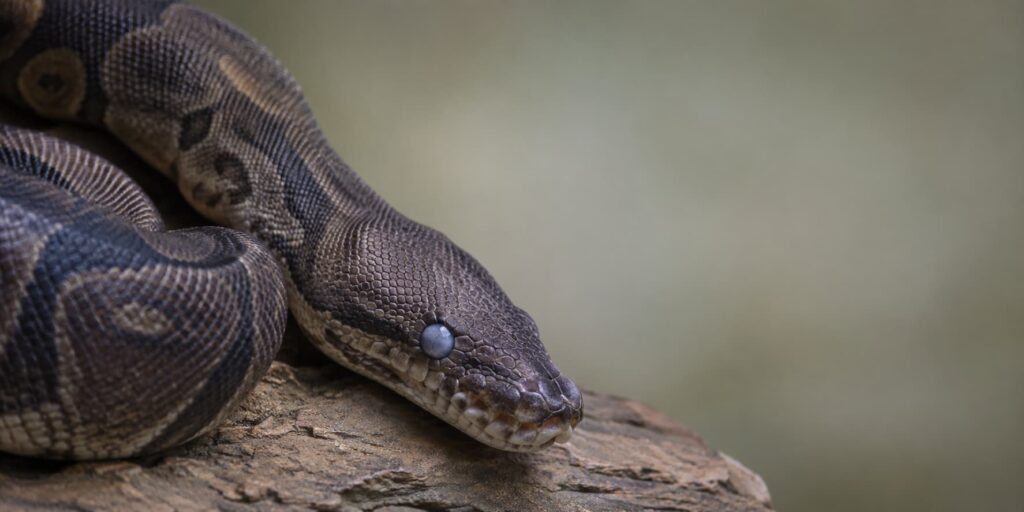
A ball python may look darker or duller when it is getting ready to shed its skin. During this stage, its bright colors can become faded, muted, or less clear. This is a normal part of the shedding process, also called ecdysis.
Before shedding, you may also notice a few other signs. The snake’s belly may look slightly pink or red, and its eyes may turn milky blue, cloudy, or white. These changes happen because a new layer of skin is forming under the old skin.
After the shed is complete, your ball python’s colors usually become brighter, cleaner, and more vivid again. However, as the snake grows older, its natural colors may still become gradually darker or less bright over time.
Can Burns Change a Ball Python’s Color?
Yes, burns can also cause color changes in a ball python. This is not a normal aging or shedding change. Burns may happen if the snake touches an unsafe heat source, such as an uncovered heat lamp, overheated heat mat, or poorly controlled enclosure heater.
A burned area may appear dark, red, damaged, swollen, or irritated. If you notice these signs, check the enclosure’s temperature, thermostat, humidity, and heating setup immediately, and contact a reptile veterinarian for proper care.
Common Reasons Ball Pythons Get Burned
Burns in ball pythons usually happen because of an unsafe or poorly controlled heat source. If the heater is too close to the snake or becomes too hot, it can damage the snake’s skin, belly scales, and soft tissue.
One major risk is using hot rocks inside the enclosure. These should be avoided, even if they are sold as safe for reptiles or ball pythons. Hot rocks can heat unevenly and may burn the snake when it rests on them for too long.
Under-tank heating pads can also cause burns, especially when they are not connected to a thermostat. If there is little or no substrate between the heat pad and the snake, the belly can receive too much direct heat. This may lead to redness, dark patches, blistering, or damaged scales.
To prevent thermal burns, every heating setup should be controlled with a reliable thermostat. It is also important to use accurate digital thermometers to check the warm side, cool side, and overall enclosure temperature regularly. Proper temperature control, safe heating equipment, and suitable substrate help keep your ball python healthy and protected from burns.
Read Also Beardie Food Digestion Explained [Beginner Guide]How to Recognize and Care for Ball Python Burns
A ball python burn is usually easy to notice. Light-colored areas of the snake’s body may become red, irritated, or swollen. In more serious cases, the snake may develop blisters, open wounds, damaged scales, or peeling burned tissue.
Minor burns in ball pythons may sometimes be managed at home, but deep, large, or worsening burns need immediate help from a reptile veterinarian. You should also visit a vet if your snake starts shedding burned skin, stops eating, becomes weak, or shows signs of infection.
For a small burn, the snake may be soaked daily in clean water mixed with povidone iodine. A short soak can help keep the injured area clean. After soaking, a safe antiseptic product such as Betadine may be used as advised. Fresh water should always be available so the snake stays hydrated during healing.
Burns can take a long time to heal. Even mild thermal burns may need several shedding cycles before the skin looks better. In some cases, the snake may be left with permanent scars.
For serious burns, a veterinarian may provide antibiotics, fluids, pain relief, wound care, and feeding support if needed. With proper treatment, many ball pythons can recover from burns, but quick care is important to prevent infection, stress, and long-term skin damage.
Can Scale Rot Change a Ball Python’s Color?
Yes, scale rot can cause visible color changes in a ball python. Scale rot is a type of skin infection or dermatitis that affects the snake’s scales. It may cause dark patches, redness, blisters, swelling, or damaged skin. Unlike normal aging or shedding, scale rot is a health problem and should not be ignored.
Why Do Ball Pythons Get Scale Rot?
Scale rot in ball pythons usually happens when the enclosure is not kept in proper condition. A dirty cage, too much humidity, poor ventilation, very high temperature, or wet substrate can create the perfect place for bacteria and fungi to grow.
When these harmful microorganisms increase, they can irritate the snake’s skin and weaken its natural defense system. The risk becomes higher if the ball python already has scratches, cuts, open wounds, or damaged scales.
To reduce the risk of scale rot, keep the enclosure clean, control the temperature and humidity, remove waste quickly, and make sure the snake has dry, safe bedding. If you notice unusual skin discoloration, blisters, bad smell, or worsening scale damage, contact a reptile veterinarian.
Read Also Ball Python Baby Chick Diet [Safe or Risky?]Common Signs of Scale Rot in Ball Pythons
Scale rot can cause several visible changes in a ball python’s skin and scales. It is important to notice these signs early because untreated scale infection can become painful and serious.
Unusual Scale Discoloration
One common symptom is discoloration. The affected scales may turn white, yellow, red, green, or brown. White or yellow areas may suggest pus or infection under the skin. Scale rot often appears on the underside of the snake’s body, especially near the cloaca, because this area touches the substrate more often.
Blisters on the Skin
Another warning sign is blisters. These look like small, fluid-filled bumps on the scales. In the early stage, blisters may look clear or slightly yellow. As the infection gets worse, they may become swollen, red, painful-looking, and may start leaking fluid. If ignored, these blisters can break open and turn into open wounds.
Raised or Lifted Scales
Raised scales can also be a sign of scale rot. This may happen when fluid or blood collects under the scales, making them lift from the skin. You may feel these raised areas if you gently run your hand along your ball python’s body.
If you notice skin discoloration, blisters, raised scales, leaking fluid, bad smell, or damaged skin, check the enclosure hygiene, humidity, temperature, and substrate immediately. A reptile veterinarian should be contacted if the symptoms are spreading or getting worse.
How to Treat Scale Rot in Ball Pythons
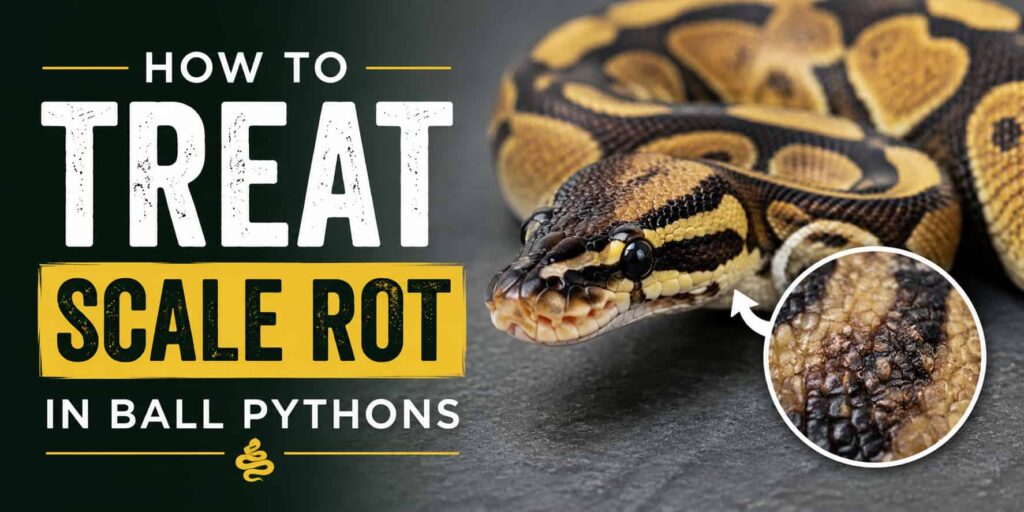
Scale rot should be treated as soon as you notice symptoms. Mild cases may sometimes be managed at home, but serious skin infections can become dangerous or even fatal for a ball python if ignored. If the infection is spreading, deep, swollen, leaking fluid, or causing weakness, a reptile veterinarian should be contacted immediately.
A mild case of scale rot may take three to six weeks to heal fully. More serious infections can take several months. The first step is to place your ball python in a clean quarantine enclosure. Use a simple tank lined with paper towels instead of loose substrate, so the skin stays clean and dry.
The affected area can be gently cleaned with a diluted chlorhexidine solution, usually once or twice daily. After cleaning, a safe antibiotic ointment may be applied, but avoid products with pain-relief chemicals unless a vet recommends them. During recovery, it is very important to keep the enclosure at the correct temperature, humidity, and hygiene level.
For severe scale rot, a vet may give antibiotics, drain abscesses, remove dead or infected tissue, and provide a proper treatment plan for home care. Quick treatment, clean housing, dry bedding, and correct husbandry help your ball python recover and prevent the infection from returning.
Final Thoughts on Ball Python Color Changes
If your ball python looks darker as it gets older, this is usually normal. Ball pythons often have their brightest colors when they are hatchlings, and their colors may slowly become more dull, faded, or muted as they age. Their scale patterns may also lose some symmetry over time.A ball python may also look dull or darker before shedding. This is a natural part of the shedding process, and the snake’s colors usually look brighter again after the old skin comes off.However, not every color change is harmless. Serious problems such as burns and scale rot can also change the appearance of your snake’s skin and scales. If you notice redness, blisters, dark patches, raised scales, open wounds, bad smell, or unusual behavior, contact a reptile veterinarian as soon as possible. Quick care can help protect your ball python’s health and prevent the problem from getting worse.
FAQs:Do Ball Pythons Get Darker With Age? [Morph Facts]
Do ball pythons get darker with age?
Yes, ball pythons can get darker with age. As they grow, their color, pattern, and pigmentation may slowly change. Some snakes may look darker, duller, or less bright than when they were young. This is normal and can be more noticeable in certain morphs. A shed cycle can also make a ball python look darker for a short time before its skin comes off.
Why does my snake look so dark?
Your snake may look darker because it is getting older, maturing, or preparing for a shed cycle. Before shedding, the skin can appear dull, dark, or cloudy. In many snakes, color changes, pigmentation, and scale patterns naturally change with age. This is usually normal, but if you notice burns, scale rot, swelling, or unusual behavior, check with a reptile vet.
What is the rarest ball python morph in the world?
The pastel zebra ball python morph is often considered one of the rarest ball python morphs in the world. It is known for its unique pastel coloring, unusual zebra-like pattern, and limited availability. Because this morph is uncommon, its cost can be much higher than many regular ball python morphs.
Do snakes lock during mating?
Yes, snakes can lock during mating. This is called a breeding lock or snake lock, and it means the male and female are successfully paired. A snake lock can last for several hours and sometimes up to three days. During this time, do not disturb them. Once they naturally unlock, you can carefully separate the snakes.
Why is my snake’s color fading?
A snake’s color may fade or look dull when it is getting ready to shed its skin. Before a shed cycle, fluid builds up between the old skin and the new skin, which can make the snake’s scales, pattern, and pigmentation appear cloudy, faded, or less bright. This is usually normal and should improve after the snake completes its shedding process.


![Why Does My Snake Pee on Me [Owner Guide]](https://reptilesinfo.com/wp-content/uploads/2026/06/Why-Does-My-Snake-Pee-on-Me-Owner-Guide.jpg)
![Are Ball Pythons Active After Eating [Must Know]](https://reptilesinfo.com/wp-content/uploads/2026/06/Are-Ball-Pythons-Active-After-Eating-Must-Know.jpg)
![Why Is My Crested Gecko Going Crazy [Stress Alert]](https://reptilesinfo.com/wp-content/uploads/2026/06/Why-Is-My-Crested-Gecko-Going-Crazy-Stress-Alert.jpg)
![Why Is My Leopard Gecko Not Moving [Stress Alert]](https://reptilesinfo.com/wp-content/uploads/2026/06/Why-Is-My-Leopard-Gecko-Not-Moving-Stress-Alert.jpg)
![Why Is My Crested Gecko’s Mouth White [Danger Signs]](https://reptilesinfo.com/wp-content/uploads/2026/06/Why-Is-My-Crested-Geckos-Mouth-White-Danger-Signs.jpg)