
![Ball Python Baby Chick Diet [Safe or Risky]](https://reptilesinfo.com/wp-content/uploads/2026/05/Ball-Python-Baby-Chick-Diet-Safe-or-Risky.jpg)
Yes, you can feed your ball python a baby chick, but it should not replace rats or mice as the main food. Rodents are usually the best and most balanced choice for a pet snake’s diet because they provide the right amount of protein, fat, and nutrients that ball pythons need to stay healthy.
A baby chick can be offered sometimes as a treat or for diet variety, especially if your ball python is being a picky eater or has stopped eating its usual frozen-thawed mice or rats. However, chicks are different from rodents in their bone structure, fat content, and overall nutrition, so they may not give your snake everything it needs if used too often.
Are Baby Chicks Good for Ball Pythons?
Baby chicks can be safe for ball pythons when they are properly sized, clean, and bought from a trusted feeder supplier. They may add variety to your snake’s feeding routine and can sometimes encourage a snake to eat when it refuses rodents. Still, they should only be used occasionally.
Rodents vs. Chicks for Ball Pythons
For most ball pythons, mice and rats are better as a regular food source. They are closer to the natural prey type that captive ball pythons commonly eat and are easier to balance in a feeding schedule. Chicks can be useful for variety, but they should not become the main part of the diet unless advised by a reptile veterinarian.
Can Ball Pythons Eat Baby Chicks?
Baby chicks can be a suitable food option for a ball python, but they should usually be offered as an occasional meal rather than the main diet. In the wild, ball pythons may sometimes climb trees and come across bird nests, so eating small birds or chicks can naturally happen. However, their regular diet is more commonly made up of rodents, such as mice and rats.
In captivity, most pet ball pythons are usually fed frozen-thawed mice or rats because these are easy to find, nutritionally balanced, and commonly accepted by snakes. Some ball pythons may also enjoy baby chicks, especially if they are picky eaters or need more variety in their feeding routine.
Baby chicks are considered a valid type of prey for ball pythons, but every snake has different food preferences. Some may accept chicks quickly, while others may refuse them. The best approach is to understand your snake’s behavior, try safe feeding options, and make sure any diet change supports its overall health, digestion, and nutrition.
Overall, baby chicks can be fed to a ball python occasionally, but rats and mice should remain the main food source for most captive ball pythons.
Safe Way to Feed a Baby Chick to a Ball Python
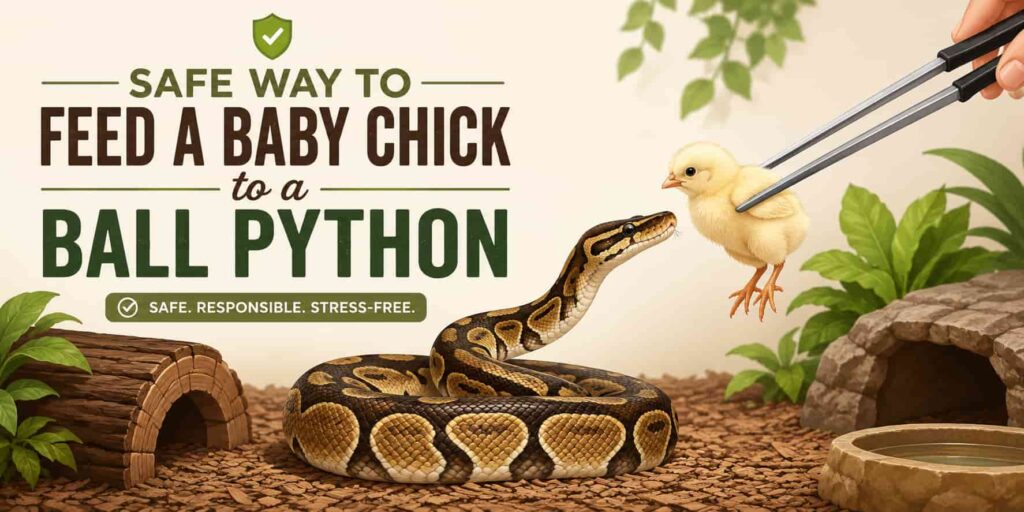
You can feed a baby chick to your ball python in two main ways: as frozen-thawed prey or, less commonly, as live prey. For most pet snakes, frozen-thawed chicks are the safer and more controlled option because they reduce the risk of injury and make feeding easier to manage.
Feeding a Frozen-Thawed Chick
If you are using frozen chicks, always thaw them properly before offering them to your pet ball python. The safest method is to move the chick from the freezer to the fridge and let it defrost slowly overnight. This helps keep the prey fresh and lowers the chance of bacterial growth.
Why Do Bearded Dragons Puff Up Their Beard?
Once the chick is fully warmed, offer it to your ball python using feeding tongs. This keeps your hands safe and helps the snake recognize the chick as prey food. Always make sure the chick is fully thawed, warm, and the right size for your snake before feeding.
Read Also Why Does My Crested Gecko Run Away From Me? [Quick Fixes]Feeding a Live Baby Chick to a Ball Python
Feeding a live baby chick to a ball python is possible, but it should be done with great care. Live prey can sometimes hurt a snake, so you should never leave the chick alone inside the enclosure with your pet.
A baby chick may look harmless, but it has a small sharp beak and claws that can scratch or injure your ball python if the feeding does not go smoothly. Because of this risk, you must watch the entire feeding process closely from start to finish.
If your snake does not eat the chick within 15 to 30 minutes, remove the chick from the cage. Do not force the feeding or leave the prey inside for too long. You can try again later with a fresh chick or choose a safer food option, such as a frozen-thawed chick, mouse, or rat.
Overall, live chicks can be used as prey for a pet ball python, but they are not the safest choice. For most owners, frozen-thawed prey is better because it lowers the risk of injury, reduces stress, and keeps the feeding routine more controlled.
Safe Feeding Tips for Ball Pythons
When feeding your ball python, keep the process calm, slow, and stress-free. Open the enclosure gently and avoid sudden movements, as this can scare your snake and make it less willing to eat.
Use long feeding tongs to hold the prey, such as a baby chick, mouse, or rat. Slowly place the prey in front of your python so it can notice the smell, movement, and warmth. Once the snake strikes, release the prey right away and carefully move your hand and tongs out of the cage.
Do not handle your ball python for a few hours before or after feeding. Snakes need a quiet environment to feel safe, eat properly, and complete digestion without stress. Handling too soon after a meal may cause discomfort or even regurgitation.
It is usually best to feed your snake inside its regular enclosure. Moving it to another place before feeding can cause stress, which may make it refuse food. Since ball pythons are natural ambush predators, they prefer to stay still, wait for prey to come close, and then strike suddenly.
Overall, a calm setup, proper feeding tools, and a peaceful environment can help your pet snake feed safely and comfortably.
Best Time and Method to Feed a Ball Python
A ball python is a nocturnal predator, which means it naturally hunts at night. For this reason, feeding your pet snake in the evening can make the process feel more natural. Keep the lights dim, reduce sudden movement, and make sure the room is quiet. Loud noises from people, other pets, or household activity may cause stress and make your snake refuse food.
You can also ask a reptile vet whether your baby chick should be lightly dusted with a safe calcium or vitamin supplement. This may help support proper nutrition, especially if chicks are being offered as part of the feeding routine. However, supplements should be used carefully, because too much can also cause problems.
Never feed your ball python a cooked chick. Snakes are designed to eat raw prey, whether it is frozen-thawed or live. Cooking changes the prey’s texture, smell, and nutritional value, making it unsuitable for a snake’s natural diet.
Even though your ball python lives in captivity, its feeding habits should stay as close as possible to its natural wild behavior. A calm environment, dim lighting, suitable prey, and proper feeding care can help your snake eat safely and stay healthy.
Benefits of Feeding Baby Chicks to a Ball Python
Before adding baby chicks to your ball python’s diet, it is important to look at the possible benefits and drawbacks. Like any feeding choice, it should support your snake’s health, nutrition, and natural feeding behavior.
One possible benefit is cost. In some areas, baby chicks may be cheaper and easier to find than rats or mice. This can make them a practical option for some snake owners. However, as your ball python grows, its food needs will also increase, so you may need to offer more prey depending on its age, weight, and size.
Another advantage is that many ball pythons accept chicks quite well. Some snakes may enjoy the smell and texture of chick prey, especially if they are bored with regular rodents or are refusing food. Baby chicks can also add variety to a captive snake’s feeding routine.
Overall, baby chicks can be used as an occasional supplement to rats and mice. In some cases, they may also be offered instead of rodents, but they should still be used carefully as part of a balanced and suitable reptile diet.
Read Also How Long Can a Turtle Live Without UVB? [Warning]Possible Problems with Feeding Baby Chicks to a Ball Python
Feeding baby chicks to a ball python can have some drawbacks. One common issue is the smell after digestion. Poultry-based prey may cause very strong-smelling snake waste, and the stool can sometimes become softer or runnier than usual. If you choose to feed chicks, be ready to clean the enclosure carefully afterward.
Another concern is nutrition. Baby chicks may not always provide the same balanced nutrients as rats or mice, which are commonly used as a main food source for pet ball pythons. To support better health, some owners may use safe calcium or vitamin supplements, but this should be done carefully and preferably with advice from a reptile vet.
For most snakes, baby chicks are better used as an occasional food option rather than the only diet. Adding rodents, such as mice and rats, can help keep your ball python’s feeding routine, diet, and overall nutritional balance more suitable.
Baby Chicks vs Rodents for Ball Python Feeding
When comparing baby chicks with rodents such as rats and mice, there are some important nutrition differences to consider. Many keepers prefer rodents because they usually contain higher levels of key vitamins and minerals, including vitamin A, vitamin E, calcium, and phosphorus. These nutrients help support a ball python’s health, growth, bones, muscles, and normal body function.
Baby chicks may contain more fat than rats or mice. This higher fat level may explain why some snakes produce stronger-smelling or softer feces after eating chicks. It may also suggest that some ball pythons do not digest a very fatty diet as easily, causing extra fat and some nutrients to pass through the body instead of being fully absorbed.
Some owners use calcium and vitamin supplements to improve the nutrient value of chick prey. However, supplements must be used carefully. Too much calcium can affect the snake’s stomach acid, which may make digestion less effective. Phosphorus is also important, but it is usually needed in a smaller amount than calcium.
That said, opinions are not all the same. Some breeders believe baby chicks, rats, and mice can be fairly similar as prey items when used correctly. For them, the choice depends on the owner’s feeding plan and the snake’s personal preference.
Overall, rodents are usually the safer main diet for most pet ball pythons, while baby chicks can be used as occasional variety or as part of a carefully managed feeding routine..
Final Thoughts on Feeding Baby Chicks to Ball Pythons
Feeding a baby chick to your ball python can be an option, but it should be done with care. Chicks may be offered as frozen-thawed prey or, in some cases, as live prey, but frozen-thawed food is usually safer and easier to manage.Before adding baby chicks to your snake’s diet, it is important to think about the main benefits and risks. Chicks may be cheaper and easier to find in some areas, but they may also cause strong-smelling waste and may not always provide the same balanced nutrition as rats or mice.You should also compare chick prey with rodents before making it a regular part of your snake’s feeding routine. Rodents are usually the preferred main food for most pet ball pythons, while chicks can be used occasionally for variety or for snakes that are picky eaters.
FAQs: Ball Python Baby Chick Diet [Safe or Risky?]
Can I feed my snake a chick?
Yes, you can feed your ball python a day-old chick as an occasional food option. Chicks can add diet variety because birds are part of a snake’s natural prey in the wild. However, they should be the right prey size, safely prepared, and offered as part of a balanced snake diet. For regular feeding, most ball pythons still do best with properly sized mice or rats as their main food.
Do pythons eat chickens?
Yes, some pythons can eat chickens, especially larger species that are strong enough to swallow a full-grown bird. Smaller snakes usually prefer easier prey, such as eggs, baby chicks, or small animals. This is why chicken owners sometimes notice missing eggs or young chicks when snakes enter a coop.
Would a ball python eat a chick?
Yes, a ball python may eat a baby chick, but chicks should not be used as its main diet. They can be offered as an occasional treat or for food variety, but they may not provide the complete nutrition a ball python needs long term. Properly sized mice or rats are usually better as the main prey for a healthy snake feeding routine.
What do pythons do at night?
Pythons, including ball pythons, are mostly nocturnal snakes, which means they are more active at night and usually rest during the day. At night, they may explore their habitat, watch for movement, and search for prey. Their night vision and strong senses help them understand their surroundings and hunt in low light.
What is killing my chickens at night?
Chickens can be attacked at night by predators such as owls, hawks, and other birds of prey, especially when there are no humans, dogs, or other threats nearby. These raptors can be hard to identify because they often leave very few signs after hunting. Other possible nighttime chicken predators may include foxes, raccoons, snakes, or weasels.


![Why Does My Snake Pee on Me [Owner Guide]](https://reptilesinfo.com/wp-content/uploads/2026/06/Why-Does-My-Snake-Pee-on-Me-Owner-Guide.jpg)
![Are Ball Pythons Active After Eating [Must Know]](https://reptilesinfo.com/wp-content/uploads/2026/06/Are-Ball-Pythons-Active-After-Eating-Must-Know.jpg)
![Why Is My Crested Gecko Going Crazy [Stress Alert]](https://reptilesinfo.com/wp-content/uploads/2026/06/Why-Is-My-Crested-Gecko-Going-Crazy-Stress-Alert.jpg)
![Why Is My Leopard Gecko Not Moving [Stress Alert]](https://reptilesinfo.com/wp-content/uploads/2026/06/Why-Is-My-Leopard-Gecko-Not-Moving-Stress-Alert.jpg)
![Why Is My Crested Gecko’s Mouth White [Danger Signs]](https://reptilesinfo.com/wp-content/uploads/2026/06/Why-Is-My-Crested-Geckos-Mouth-White-Danger-Signs.jpg)