
![Beardie Lamp Burning Out Again [Avoid This]](https://reptilesinfo.com/wp-content/uploads/2026/05/Beardie-Lamp-Burning-Out-Again-Avoid-This.jpg)
Changing your beardie lamp light bulb again and again can be frustrating and expensive. One day the bulb seems fine, and the next day it suddenly burns out with a small “pop.” If this keeps happening, there is usually an underlying problem with the tank lighting setup, bulb type, fixture, or heat management.
Common Reasons the Bulb Fails Quickly
A bearded dragon light may keep burning out because of vibration, sudden movement, overheating, poor electrical fittings, or a faulty lamp fixture. Touching certain bulbs with bare hands can also shorten their life because oil from your skin can create hot spots on the glass. In some cases, the wrong wattage, weak ceramic socket, or incorrect bulb placement may cause the bulb to fail faster than normal.
Why Proper Lighting Matters
Bearded dragons need the right UVB light, basking bulb, and temperature gradient to stay healthy. Good lighting helps with digestion, calcium absorption, vitamin D3 production, and overall reptile health. If the light is not installed correctly, your dragon may not get enough heat or UVB exposure, and the bulbs may also burn out too soon.
What You Should Check
To solve the problem, check the bulb quality, lamp fixture, socket condition, tank temperature, and distance between the bulb and basking spot. Using the correct reptile lighting accessories, such as a ceramic dome fixture, thermostat, or timer, can help protect the bulb and keep your bearded dragon’s habitat safe.
Why Bearded Dragon Lights Burn Out Quickly
Light bulbs used in a bearded dragon enclosure are delicate and can be damaged easily. Even a small jolt, shake, or rough movement while carrying the bulb home, removing it from the packaging, or placing it in the lamp fixture can weaken the inside parts of the bulb. This may reduce the bulb’s lifespan and cause it to burn out sooner than expected.
The same problem can happen after the bulb is installed in your bearded dragon tank. If the tank lid, light fixture, or reptile lamp is moved often, the repeated vibration can affect the bulb. Over time, this can lead to early bulb failure, especially with heat bulbs, basking bulbs, and other fragile reptile lighting products.
To help prevent this, handle every bearded dragon light bulb carefully, avoid shaking the fixture, and make sure the bulb is fitted securely in the correct ceramic socket or safe reptile lamp holder. This can help your tank lighting setup last longer and keep your bearded dragon’s habitat stable.
Heat and Electrical Problems That Damage Bearded Dragon Bulbs
A bearded dragon light bulb can burn out quickly when it becomes too hot. This may happen because of voltage fluctuations, using the wrong bulb wattage, or placing the bulb inside a poorly ventilated terrarium lid. When heat cannot escape properly, the bulb works under extra stress and may fail sooner.
To reduce this problem, use a reptile bulb with the correct wattage rating for your light fixture. Make sure the fixture can safely handle the bulb’s power level. If the lamp or socket has a lower capacity, a high-wattage basking bulb may overheat and burn out faster. It is also important to check that the electrical voltage is stable and suitable for your bearded dragon tank lighting setup.
Check the cords, wiring, socket, and plug carefully if your heat bulb, UVB light, or basking lamp keeps burning out. If you notice melted plastic, burning smells, loose connections, or damaged wires, stop using the fixture and replace it with a safe ceramic socket or proper reptile lighting fixture. This helps protect both the bulb and your bearded dragon’s habitat.
Read Also Do Bearded Dragons Miss Their Owners? [Real Signs]Handling and Fixture Problems That Shorten Bulb Life
Touching a bearded dragon light bulb with bare hands may reduce its lifespan, especially if the bulb gets very hot. Natural skin oils from your fingers can stay on the glass and create small hot spots when the bulb heats up. Over time, this extra heat stress may cause the reptile bulb, heat lamp, or basking bulb to burn out earlier than expected.
To protect the bulb, handle it with clean gloves, a paper towel, or a soft cloth. This is a simple way to keep the glass clean and support a safer bearded dragon tank lighting setup.
Loose or Poor Electrical Connections
Loose light fittings can also cause early bulb failure. If the socket, plug, or wiring connection is not tight, the bulb may receive uneven power. This can lead to intermittent voltage, flickering, overheating, or sudden burnout.
Check the lamp fixture, ceramic socket, cord, and electrical fittings carefully. If anything feels loose, damaged, or unsafe, it is better to stop using the fixture and ask a qualified electrician to inspect the wiring. Safe and stable reptile lighting is important for both the bulb’s lifespan and your bearded dragon’s health.
Bulb Quality and Correct Lighting for Bearded Dragons
Sometimes a bearded dragon light bulb burns out quickly because the bulb itself is poor quality. In some cases, you may receive a faulty bulb, a weak product, or even a bad batch from the manufacturer. If several bulbs from the same pack keep failing, the problem may not be your tank setup. It may be the bulb brand, bulb quality, or manufacturing defect.
If this happens, consider returning the bulbs or choosing a more reliable reptile lighting brand. High-quality basking bulbs, UVB bulbs, and heat lamps usually last longer and provide safer, more stable lighting for your bearded dragon’s enclosure.
Essential Lighting for a Bearded Dragon Tank
Bearded dragons come from the hot, sunny regions of Australia, so they need strong heat, UVA light, and UVB exposure to stay healthy. In captivity, their terrarium lighting should copy natural sunlight as closely as possible. Proper lighting supports digestion, calcium absorption, vitamin D3 production, bone health, activity levels, and overall reptile wellness.
A healthy bearded dragon habitat usually needs a basking light for warmth and UVA, a separate UVB light for calcium and bone support, and a ceramic heat emitter if the enclosure becomes too cold at night. The goal is to create a safe temperature gradient, with a warm basking area and a cooler side, so your bearded dragon can control its body temperature naturally.
UVA Light and Basking Heat

UVA light is important for a bearded dragon’s daily activity, mood, and appetite. It helps keep your beardie alert, active, and interested in food. The basking light also gives off heat, creating a warm area where your bearded dragon can rest, warm its body, and support normal digestion.
A bright white basking bulb is usually best because it copies natural daylight. This light should normally stay on for about 12 to 14 hours during the day and be turned off at night for a natural day and night cycle. A clear, bright bulb can work well as long as it provides the right basking temperature for your bearded dragon’s enclosure.
UVB Light for Calcium and Bone Health
UVB light is one of the most important parts of a healthy bearded dragon lighting setup. It helps your beardie produce and use vitamin D3, which allows the body to absorb calcium properly. Without enough UVB exposure, a bearded dragon can develop calcium deficiency and serious health problems such as metabolic bone disease.
Bearded dragons need stronger UVB radiation than many other pet lizards because they come from sunny, open environments. For this reason, it is important to use a high-quality reptile UVB bulb that provides enough UVB for your pet’s needs. The bulb should also be placed correctly in the terrarium so your bearded dragon receives safe and effective light.
Choosing the Right Lighting and Heating Bulbs
There are many types of reptile bulbs available, so it is important to choose the ones that match your bearded dragon’s needs. The right lighting setup should provide proper heat, UVA light, UVB exposure, and a safe temperature gradient between the warm basking area and the cooler side of the tank.
When selecting bulbs, focus on the bulb type, wattage, fixture safety, terrarium size, and the amount of light and warmth your bearded dragon needs. A good setup helps support digestion, calcium absorption, vitamin D3 production, activity levels, and overall reptile health.
Fluorescent Tube UVB Lights
Fluorescent tube bulbs are a popular choice for a bearded dragon enclosure because they usually provide strong and even UVB output. They work best when used together with a separate UVA basking bulb, which gives your beardie the warmth it needs for digestion, activity, and normal behavior.
Because of their long tube shape, fluorescent UVB lights can spread light across a large part of the terrarium. This helps your bearded dragon receive more even UVB exposure while moving around the tank. For best results, choose a tube that covers at least 80% of the terrarium length.
Most UVB fluorescent tubes should be replaced about every six months, even if they still look bright. Over time, the bulb may produce less UVB radiation, which can affect vitamin D3 production, calcium absorption, and bone health. If your bulb burns out before six months, check for problems such as overheating, loose fittings, voltage issues, or poor fixture quality.
Read Also Beardie Brumation With Open Eyes? [Warning Signs]Compact Fluorescent UVB Bulbs
Some owners use compact fluorescent bulbs or coil UVB bulbs because they use less electricity and take up less space. These bulbs can provide UVB light, but they may not spread it as evenly as a long fluorescent tube.
In some cases, poor-quality or incorrectly placed compact UVB bulbs have been linked to eye irritation, eye burns, and possible vision problems in reptiles. Some compact bulbs may also lose their UVB output after only one or two months. For this reason, many bearded dragon keepers prefer a high-quality linear UVB tube for safer and more consistent reptile lighting.
Mercury Vapor Bulbs for Bearded Dragons
Mercury vapor bulbs are usually more expensive than fluorescent UVB bulbs, but they often last longer. In many cases, they may only need replacement about once a year, depending on the brand, usage, and manufacturer’s guidance.
These bulbs can provide UVA light, UVB radiation, and heat in one lamp. This makes them a convenient option for some bearded dragon enclosures because they support basking, vitamin D3 production, calcium absorption, and normal reptile activity.
However, mercury vapor bulbs usually focus their light and heat on a smaller area of the tank. Unlike a long fluorescent tube, they do not spread UVB exposure across most of the terrarium. Your bearded dragon must sit directly under the bulb to receive the full benefits. For this reason, correct bulb placement, safe distance, and accurate temperature monitoring are very important.
Halogen Flood Bulbs for Basking
Halogen flood bulbs can also be a good choice for a bearded dragon basking light. They produce strong heat and bright visible light, helping create a warm basking area where your beardie can raise its body temperature, digest food, and stay active.
These bulbs are mainly used for basking heat, not as a complete UVB source. If you use a halogen basking bulb, you will still need a proper UVB light to support calcium metabolism, bone health, and protection against metabolic bone disease.
Proper Light Positioning in a Bearded Dragon Enclosure
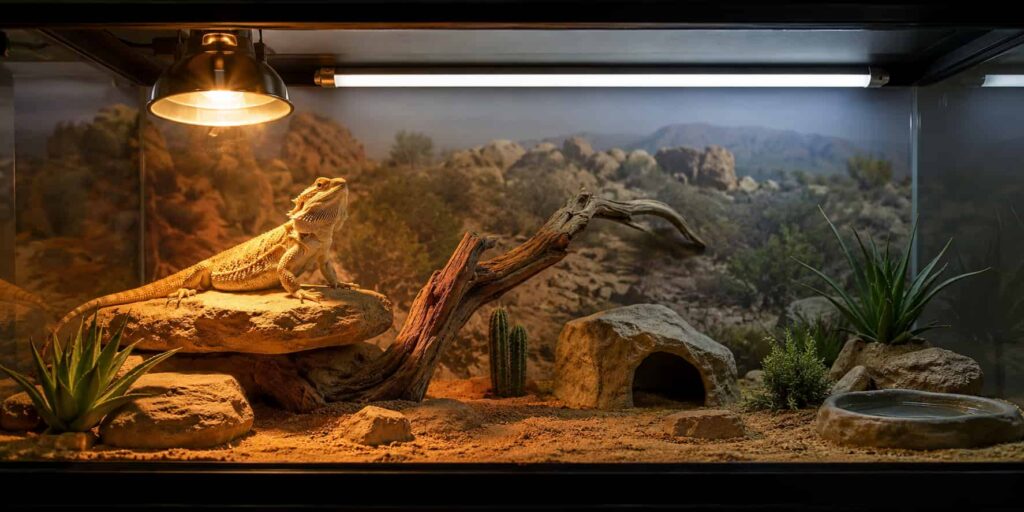
After choosing the right bearded dragon lighting, it is important to place each bulb in the correct position. Proper light placement helps your beardie receive enough UVA, UVB radiation, and basking heat without becoming too hot or uncomfortable.
The distance between the bulb and your bearded dragon matters because it affects how much UVB exposure and warmth your pet receives. If the light is too far away, your beardie may not get enough vitamin D3 support or calcium absorption. If it is too close, it may cause overheating or stress.
Recommended Distance for Common Bulbs
Fluorescent UVB tubes are usually placed about 6 to 12 inches from the basking area, depending on the bulb strength and fixture type. Mercury vapor bulbs are better for larger terrariums and are often placed around 20 inches from the floor or basking surface.
Avoid placing UVB bulbs above glass because glass can block the UV rays your bearded dragon needs for bone health, calcium metabolism, and protection from metabolic bone disease. A screen cover is usually a better option than glass, but you should still check whether the mesh reduces UVB output.
Always follow the manufacturer’s instructions for the exact bulb brand, wattage, and recommended distance. This helps keep your reptile lighting setup safe and effective.
Read Also Bearded Dragon Bath Poop Habit [Quick Fix]Useful Tools for Bearded Dragon Lighting Control
A light timer makes it easier to manage your bearded dragon’s lighting schedule. Instead of trying to remember how many hours the basking light, UVA lamp, or UVB light has been on each day, you can set the timer once and let it control the cycle automatically.
This helps create a steady day and night routine, which is important for your bearded dragon’s sleep cycle, activity level, appetite, and overall reptile health. A timer also reduces the risk of leaving the lights on too long or turning them off too early.
Heat and Light Dimmers
A dimmer can be connected to a suitable heat lamp or basking bulb to control the amount of heat output and light intensity. This is useful because the temperature in your home may change with the seasons.
Instead of changing the bulb every time the weather becomes hotter or colder, a dimmer allows you to adjust the basking temperature more easily. This helps maintain a safe temperature gradient inside the bearded dragon enclosure, with a warm basking area and a cooler side.
Final Thoughts on Bearded Dragon Light Bulb Problems
If your bearded dragon light bulbs keep burning out, it is a good idea to check the full lighting setup instead of only replacing the bulb again and again. Frequent bulb failure can happen because of rough handling, overheating, short circuits, loose light fittings, poor-quality bulbs, or the wrong reptile lighting fixture.To solve the problem, handle each bulb carefully, avoid touching the glass with bare hands, and check the socket, cord, wiring, and fixture for damage or loose connections. You may also need to choose a better bulb brand, use the correct wattage, or improve airflow around the terrarium light.
FAQs: Beardie Lamp Burning Out Again? [Avoid This]
Why does my bearded dragon heat lamp keep burning out?
Your bearded dragon heat lamp may keep burning out because the bulb wattage is too high for the lamp fixture, the bulb is placed at an angle, or the heat bulb is being moved while hot. Always use a bulb with power equal to or lower than the fixture’s rating, and position it so it points straight down. Avoid knocking, shaking, or moving the basking bulb after installation. If you need to adjust it, let it cool completely first to prevent early bulb failure and keep the reptile lighting setup safe.
What should I do if my bearded dragon’s heat lamp goes out?
If your bearded dragon heat lamp goes out, avoid feeding large meals because your dragon needs basking heat to digest food properly. Keep the enclosure temperature as stable as possible and offer fresh water, especially if you give dry pellet food, to help prevent dehydration. If the power outage or lamp problem lasts for a long time, move your bearded dragon to a warm, safe place, such as a friend’s home with working reptile heating and proper tank lighting.
How can I keep a heat lamp from catching fire?
To reduce heat lamp fire risk, plug the lamp into an Arc Fault Circuit Interrupter or other safe electrical protection that can shut off power if sparking occurs. Keep the heat lamp away from flammable surfaces, bedding, curtains, wood, paper, and loose materials. Use a secure lamp fixture, check the cords, plug, and socket for damage, and never place the lamp directly on anything that can burn. For extra safety, keep a fire extinguisher nearby and install a loud smoke detector so you can respond quickly if there is a problem.
What stresses a bearded dragon out?
A bearded dragon can become stressed when it sees a threat, faces a sudden environment change, hears loud noise, is handled too much, or notices something unfamiliar near its enclosure. Stress may cause signs like aggression, hiding, dark beard color, loss of appetite, glass surfing, or trying to bite. Even a calm beardie may act defensive if it feels unsafe, scared, or trapped in its habitat.
Are lizard heat lamps a fire hazard?
Improper Mounting: If the heat lamp is not securely mounted or falls, it could make contact with materials that can catch fire. Damaged Cords or Equipment: Frayed wires or damaged sockets can cause electrical shorts, leading to fires.


![Why Does My Snake Pee on Me [Owner Guide]](https://reptilesinfo.com/wp-content/uploads/2026/06/Why-Does-My-Snake-Pee-on-Me-Owner-Guide.jpg)
![Are Ball Pythons Active After Eating [Must Know]](https://reptilesinfo.com/wp-content/uploads/2026/06/Are-Ball-Pythons-Active-After-Eating-Must-Know.jpg)
![Why Is My Crested Gecko Going Crazy [Stress Alert]](https://reptilesinfo.com/wp-content/uploads/2026/06/Why-Is-My-Crested-Gecko-Going-Crazy-Stress-Alert.jpg)
![Why Is My Leopard Gecko Not Moving [Stress Alert]](https://reptilesinfo.com/wp-content/uploads/2026/06/Why-Is-My-Leopard-Gecko-Not-Moving-Stress-Alert.jpg)
![Why Is My Crested Gecko’s Mouth White [Danger Signs]](https://reptilesinfo.com/wp-content/uploads/2026/06/Why-Is-My-Crested-Geckos-Mouth-White-Danger-Signs.jpg)