
![Why Is My Bearded Dragon Missing Nails [Injury Signs]](https://reptilesinfo.com/wp-content/uploads/2026/06/Why-Is-My-Bearded-Dragon-Missing-Nails-Injury-Signs.jpg)
Seeing your bearded dragon with a missing nail can be worrying, especially if you do not know how it happened. You may wonder whether the claw will grow back, whether the toe needs treatment, or whether your pet should see a reptile vet.
A bearded dragon missing nails is usually not a rare problem. In many cases, it happens because of excessive digging, unsafe or rough substrate, or a fight with another bearded dragon. These situations can cause a nail to crack, loosen, or be pulled out completely.
This guide explains the most common reasons for nail loss in bearded dragons and what you can do if your pet has a ripped-out nail. You will also learn how to spot signs of infection, when to clean the area, and when a vet visit is the safest choice.
We will also cover other common toe injuries, including swollen toes, broken claws, bleeding, and damage caused by poor tank flooring or cage conditions.
Common Reasons Bearded Dragons Lose Their Nails
A bearded dragon losing a nail can look serious, but it is usually a common issue. Many bearded dragons may lose one or more claws during their life, especially if they are active, dig often, or live in an enclosure with rough surfaces.
There is no need to panic or blame yourself. The most important step is to find out why the nail broke, became loose, or fell off. Once you understand the cause, you can make changes to reduce the chance of another nail injury.
In most cases, missing nails in bearded dragons are linked to digging behavior, unsafe substrate, rough tank flooring, or minor accidents inside the enclosure. Sometimes, a nail can also be damaged during contact or fighting with another bearded dragon.
Below are the main reasons why a bearded dragon may lose a nail and what you can do to help prevent the same problem in the future.
Too Much Digging Can Damage Bearded Dragon Nails
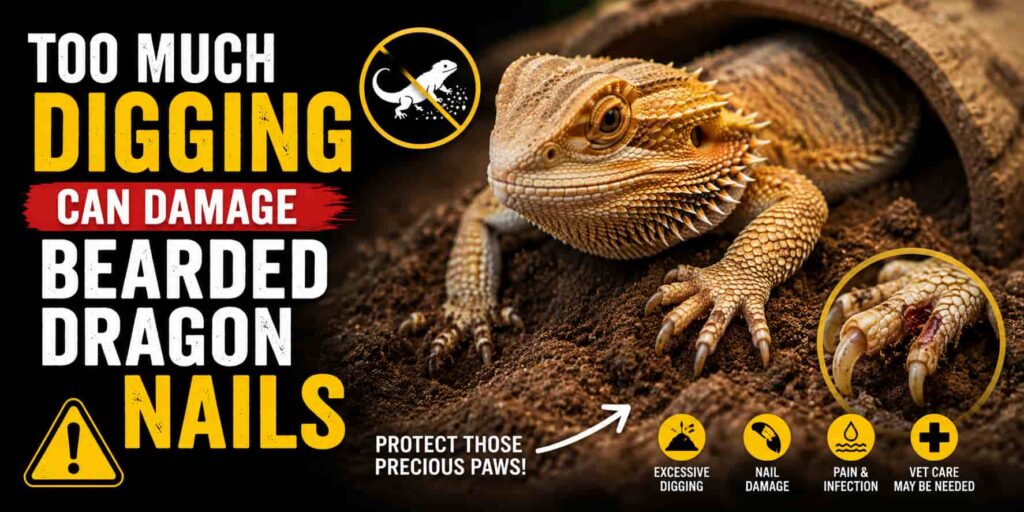
Excessive digging is one of the main reasons a bearded dragon may lose a nail. When your pet digs too often, its claws can scrape against the bottom of the tank, rough substrate, rocks, or other hard surfaces. Over time, this pressure can cause a broken nail, loose claw, or even a ripped-out nail.
A bearded dragon digging a lot may be trying to tell you something. Common reasons include:
High tank temperature: If the enclosure is too hot, your bearded dragon may dig or burrow under the substrate to escape the heat and find a cooler area.
Egg-laying behavior: A female bearded dragon may dig often when she is gravid, which means she is carrying eggs. This can happen even without mating. In that case, the eggs will be unfertilized. Digging before laying eggs is normal, so you should not stop it. Instead, provide safe digging material and a proper lay box.
Preparing for brumation: Brumation is a rest period similar to hibernation. Before this phase, your bearded dragon may dig a small space where it can settle down during the cooler months.
If your bearded dragon’s nail is missing, check the habitat setup, temperature, and substrate type. Making the enclosure safer can help prevent future nail injuries.
Read Also Do Leopard Geckos Poop in Corners? [Real Reason]Unsafe Substrate Can Cause Nail Injurya
The wrong substrate can be another reason your bearded dragon is missing a nail. Some flooring materials are not safe for normal digging, walking, scratching, or climbing. If the surface is too rough or easy to catch on, it can lead to a broken claw, torn nail, or toe injury.
Reptile carpet is a common problem. A bearded dragon’s claws can get stuck in the small loops of the carpet. When the dragon pulls away, the nail may bend, crack, or rip off. For this reason, carpet substrate is usually not the best choice for bearded dragon enclosures.
Safer Substrate Options for Bearded Dragons
Excavation clay is a popular option because it feels closer to a bearded dragon’s natural habitat. It supports safe burrowing behavior and allows your pet to dig without easily damaging its nails. It also has a lower risk of impaction, which happens when undigested material blocks the digestive system. However, it can cost more at first and may require a large amount for a big vivarium.
Substrate tiles are another safe choice. They are easy to clean and have no risk of impaction. They also prevent claws from getting trapped. The main downside is that tiles do not allow natural digging behavior, so you may need to provide a separate digging area.
Calcium sand allows a bearded dragon to dig, but it needs regular cleaning and careful monitoring. Even though it contains calcium, it may increase the risk of impaction if swallowed in large amounts.
How to Protect Your Bearded Dragon’s Nails
Choosing a safe tank flooring can help prevent future nail loss. You can also add branches, rocks, and climbing decorations inside the enclosure. These items help your bearded dragon stay active and naturally wear down its claws, reducing the chance of overgrown or damaged nails.
Housing Bearded Dragons Together Can Lead to Injuries
A bearded dragon may lose a nail if it lives with other bearded dragons. These reptiles can become territorial, especially when they are kept in the same enclosure. They may show dominance behavior, chase each other, bite, scratch, or fight. During these conflicts, a claw can break, loosen, or be pulled out.
In most cases, bearded dragons should not be housed together. They are naturally solitary reptiles, which means they do not need another dragon for company. Sharing the same tank can cause stress, and long-term stress may weaken their health or lead to illness.
Fighting can also happen when they compete for space, food, basking spots, hiding areas, or other important resources. To reduce the risk of missing nails, toe injuries, and stress-related problems, it is usually safer to keep each bearded dragon in its own properly arranged habitat.
How to Care for a Bearded Dragon with a Missing Nail
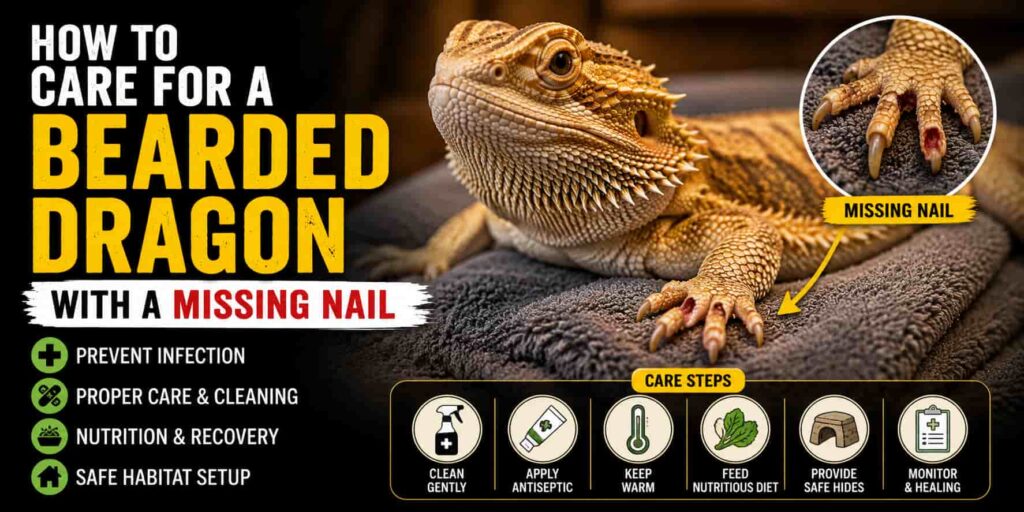
A missing nail is usually not a serious problem for a bearded dragon, so try not to panic. Even if the claw does not grow back, your pet can still live a normal and healthy life. A bearded dragon has 20 nails, with five on each foot, so losing one or even a few nails usually does not affect its overall health, movement, or daily activity.
Will the Nail Grow Back?
Whether the nail grows back depends on how badly it was damaged. If the nail was completely pulled out from the nail bed, there is only a small chance of full regrowth. However, if the claw was only broken or partly damaged, it will usually grow back over time.
The deeper the broken nail is, the longer it may take to return to its normal length. In most cases, a bearded dragon missing a nail should recover well with proper care and a clean enclosure.
What to Do If the Toe Is Bleeding
If the toe is bleeding because of a ripped-out nail or broken claw, you can use styptic powder to help stop the bleeding. After that, keep the area clean to reduce the risk of infection.
Some owners use a diluted Betadine bath and apply a small amount of plain Neosporin or reptile-safe ointment to the affected area. However, it is best to ask a reptile vet before using any product, especially if the wound looks deep, swollen, painful, or dirty.
If you notice signs of infection, such as swelling, redness, pus, bad smell, blackened tissue, or loss of appetite, take your bearded dragon to a veterinarian as soon as possible.
Diet Support for Stronger Nails
A diet rich in calcium can help support healthy bones, claws, and nail regrowth. A proper calcium supplement may help your bearded dragon get enough of this important nutrient. You can also include safe calcium-rich foods in its diet to support long-term nail health and overall wellbeing.
Read Also Types of Salamanders in Michigan [Backyard Guide]Common Toe Problems in Bearded Dragons
Besides a missing nail or ripped-out claw, a bearded dragon can also suffer from other toe injuries. Some problems may look minor at first, but they can become serious if there is infection, poor healing, or damage to the bone or skin.
One common issue is when the toes appear stuck together. This may happen after a past toe fracture, where the broken toes healed and fused together. If the injury is recent, dried or fresh blood may also make the toes look attached.
In some cases, a bearded dragon’s toe can fall off completely. This can happen because of shedding problems, retained shed, a toe getting trapped in the cage door, burns, infection, or direct injury.
Swollen toes are also a common warning sign. Swelling may be caused by broken bones, infection, trauma, injury, or stuck shed around the toe. A tight piece of retained shed can reduce blood flow and damage the tissue if it is not treated.
If you notice swelling, bleeding, stuck toes, blackened skin, pain, limping, or a toe that looks damaged, contact a reptile veterinarian. Some mild issues may be managed at home, but a vet can give the safest advice and help your bearded dragon heal properly.
Final Thoughts on Bearded Dragon Nail Loss
A missing nail in a bearded dragon is usually not a major problem, so there is no need to panic. In most cases, losing one claw does not harm your pet’s long-term health, movement, or quality of life,The most common causes of nail loss include excessive digging, unsafe substrate, rough tank flooring, and fights with another bearded dragon. Checking the enclosure setup, temperature, and living conditions can help prevent future toe injuries.The main goal during treatment is to keep the damaged area clean and prevent infection. A healthy diet, proper calcium intake, safe wound care, and a clean habitat can support healing.
FAQs: Why Is My Bearded Dragon Missing Nails? [Injury Signs]
Will a bearded dragon’s nails grow back?
Yes, bearded dragon nails can grow back if the nail bed or root is still healthy. If the root is badly damaged or removed, the toe may heal as a smooth nub, and the nail will not regrow.
Can bearded dragons feel pain?
Yes, bearded dragons can feel pain because they have a brain, central nervous system, and pain receptors. As prey animals, they may hide signs of pain, so owners should watch for changes in behavior, movement, or appetite.
How far can a bearded dragon fall without getting hurt?
There is no completely safe fall distance for a bearded dragon. Falls over 1 to 2 feet, especially onto hard surfaces like tile or wood, can cause fractures, broken ribs, or internal injuries. Always supervise your bearded dragon on beds, couches, tables, or shoulders.
Where should you not touch a bearded dragon?
Avoid touching a bearded dragon on the tail, belly, or directly on top of the head, as these areas may cause stress, fear, or injury. Approach gently from the side or below instead of from overhead, which can trigger predator instincts.
What does an overfed bearded dragon look like?
An overfed bearded dragon may have a round belly, plump tail, fat feet, and bulging head pads. To prevent obesity and health problems, feed more leafy greens and adjust insects based on its age.


![Why Does My Snake Pee on Me [Owner Guide]](https://reptilesinfo.com/wp-content/uploads/2026/06/Why-Does-My-Snake-Pee-on-Me-Owner-Guide.jpg)
![Are Ball Pythons Active After Eating [Must Know]](https://reptilesinfo.com/wp-content/uploads/2026/06/Are-Ball-Pythons-Active-After-Eating-Must-Know.jpg)
![Why Is My Crested Gecko Going Crazy [Stress Alert]](https://reptilesinfo.com/wp-content/uploads/2026/06/Why-Is-My-Crested-Gecko-Going-Crazy-Stress-Alert.jpg)
![Why Is My Leopard Gecko Not Moving [Stress Alert]](https://reptilesinfo.com/wp-content/uploads/2026/06/Why-Is-My-Leopard-Gecko-Not-Moving-Stress-Alert.jpg)
![Why Is My Crested Gecko’s Mouth White [Danger Signs]](https://reptilesinfo.com/wp-content/uploads/2026/06/Why-Is-My-Crested-Geckos-Mouth-White-Danger-Signs.jpg)