
![Orange Beard in Bearded Dragons [Hidden Signs]](https://reptilesinfo.com/wp-content/uploads/2026/05/Orange-Beard-in-Bearded-Dragons-Hidden-Signs.jpg)
As a bearded dragons grows, its skin color and beard color may naturally change. Some beardies look brown when they are young but later develop warmer shades like orange, red, or yellow. These changes may happen during shedding, while basking under UVB light, or as the reptile becomes more mature.
An orange beard usually means your bearded dragon is feeling calm, comfortable, and happy. In many cases, lighter beard colors show a positive mood, while dark colors, especially black, may point to stress, fear, illness, or discomfort.
However, color changes are not always about mood. They can also be linked to temperature regulation, lighting, breeding behavior, environmental conditions, or normal growth and development. For example, a bearded dragon may appear brighter after basking or during certain stages of skin shedding.
To understand your pet better, watch its full body language. A healthy and relaxed beardie may have bright eyes, normal appetite, active movement, smooth breathing, and a calm posture. If the orange beard comes with unusual signs like hiding, weakness, loss of appetite, or a very dark beard, it may be time to check its habitat, temperature, UVB setup, and overall reptile health.
Why Bearded Dragons Change Their Skin Color
Bearded dragons can change color for several natural reasons, even though they are not as famous for it as chameleons. Their skin contains special pigment cells called chromatophores, which help reflect light and create different skin colors.
A bearded dragon may change the color of one body area, such as the head, neck, chest, belly, back, or tail, or it may change color across the whole body. One major reason for this is thermoregulation, which means controlling body temperature. For example, a darker color can help absorb more heat, while a lighter color may help the reptile stay cooler.
Color changes are also a form of communication. Bearded dragons may change color during mating behavior, territorial displays, or interactions with other dragons. These changes can show mood, dominance, stress, or readiness to breed.
Sometimes, a change in color may also point to stress, illness, poor habitat conditions, or discomfort. However, brighter colors are not always a warning sign. A bearded dragon may look more colorful after shedding, under strong UVB lighting, or as it grows older.
Overall, bearded dragon color changes can be linked to temperature control, mood, communication, health, lighting, shedding, and normal growth and development.
Read Also Beardie Lamp Burning Out Again? [Avoid This]Color Change for Body Temperature Control
Bearded dragons often change color to help control their body temperature. This process is called thermoregulation. Because they are cold-blooded reptiles, they depend on their surroundings, such as heat, sunlight, UVB rays, and shaded areas, to stay at a healthy temperature.
When a bearded dragon feels cold, it may darken the color of its back to shades like brown, dark gray, or black. Darker colors absorb more heat, helping the dragon warm up faster while basking under the sun or a heat lamp. This can reduce the amount of time it needs to spend basking.
When a bearded dragon gets too warm, its body may become lighter, sometimes showing shades of yellow, tan, or pale brown. Lighter colors reflect more light and heat, which can help the reptile cool down.
It is important to understand that thermoregulation usually affects the color of the back more than the beard or chest. The beard and chest area usually change color during social communication, mating behavior, territorial displays, stress, or interaction with other bearded dragons.
Color Change for Social Signals
During mating season, a male bearded dragon may puff out and darken his beard to look stronger and more attractive to a potential mate. This display can show confidence, dominance, and breeding interest.
Bearded dragons may also change color during territorial disputes or when trying to establish dominance. A darker beard or chest can be a warning sign during conflict, especially if the dragon feels challenged, threatened, or ready to defend its space.
Overall, changes in the beard color and chest color are often linked to communication, mating behavior, territory defense, dominance displays, and interaction with other bearded dragons.
Stress-Related Color Changes in Bearded Dragons
Other common stress signs include sudden loss of appetite, low activity levels, hiding more than usual, restless movement, and scratching or clawing at the sides of the enclosure. These behaviors may show that something in the dragon’s habitat is causing discomfort.
If your bearded dragon looks stressed, try to find the reason as soon as possible. Check the tank temperature, UVB lighting, handling routine, noise level, enclosure size, diet, and nearby pets. Long-term reptile stress can weaken the immune system and may lead to illness, poor eating, or other health problems.
In short, a dark or black beard can be a warning sign that your bearded dragon is not feeling safe, relaxed, or healthy. Always watch its body language, behavior, and environmental conditions closely.
Illness-Related Color Changes in Bearded Dragons
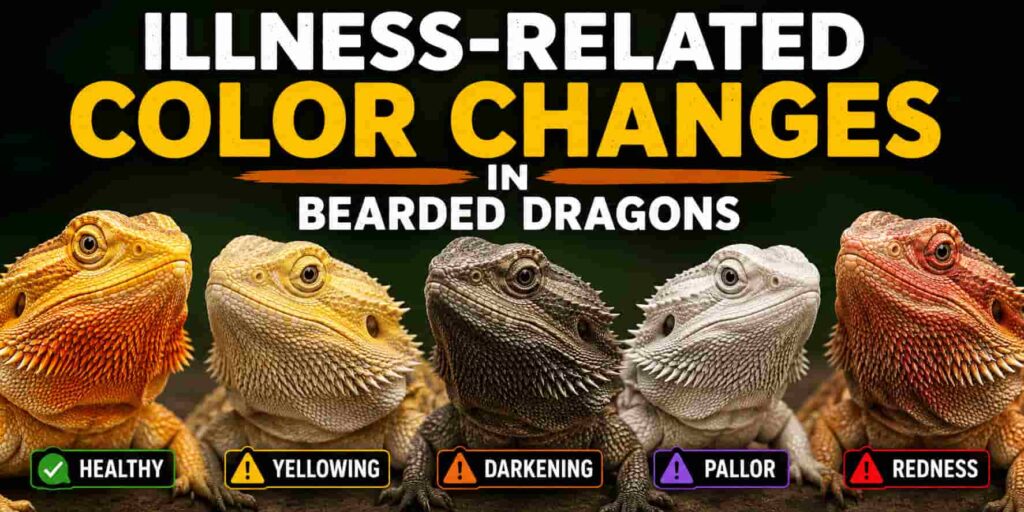
A bearded dragon may turn darker or even black when it is feeling unwell. While color change can happen for normal reasons, a sudden dark body color, black beard, or dull appearance may sometimes be a warning sign of illness, pain, or discomfort.
Watch for other health symptoms along with the color change. Mucus, discharge, or wetness around the eyes and nose may suggest a respiratory infection. A very dark belly can sometimes be linked to impaction, which is a type of constipation, or egg-laying problems in female bearded dragons.
Other important signs include loss of appetite, low energy, unusual hiding, weak movement, and lethargy. If these symptoms continue, it is best to contact a reptile veterinarian as soon as possible.
In short, a darker color can be a sign that your bearded dragon is sick, especially when it appears with breathing problems, digestive issues, appetite loss, or reduced activity. Always check your pet’s behavior, habitat conditions, and overall reptile health carefully.
If your bearded dragon shows signs of illness, such as mucus, eye or nose discharge, a dark belly, loss of appetite, weakness, or lethargy, you should take it to a reptile veterinarian as soon as possible. Many health problems can be treated successfully, but delaying care may make the condition worse. Quick treatment is important for your pet’s reptile health, comfort, and recovery.
Color Changes as Bearded Dragons Grow
Young bearded dragons often become brighter as they grow. Their skin color, body patterns, and natural markings may change after each shed. Before shedding, a bearded dragon may look duller or darker because the old skin is ready to come off. After shedding, its colors often appear cleaner, lighter, and more vibrant.
By around 18 months of age, most bearded dragons reach adult size, and their main color patterns usually become more stable. However, small changes may still happen because of temperature, mood, UVB lighting, stress, health, or normal environmental conditions.
What Different Colors May Mean
Many owners wonder if a bearded dragon’s color works like a mood signal. While color can give helpful clues, it should not be judged alone. To understand what your pet may be feeling, always look at its beard color, body language, activity level, appetite, basking behavior, and overall habitat conditions. Different colors may be linked to happiness, stress, thermoregulation, illness, shedding, or social communication.
Read Also Do Bearded Dragons Miss Their Owners? [Real Signs]Orange Beard Color
An orange beard usually means your bearded dragon feels happy, calm, and comfortable. This color often shows that your pet does not feel stressed, scared, or threatened. If your dragon is active, eating well, and behaving normally, an orange beard is usually a positive sign of good mood, relaxation, and overall reptile health.
Yellow or Light Brown Color
Yellow or light brown coloring can also suggest that your bearded dragon feels safe, relaxed, and content. These lighter shades are often linked to comfort, happiness, and normal skin coloration.
However, be careful if the yellow color appears as uneven patches, spots, or rough areas. Patchy yellow marks may sometimes be linked to a fungal infection or other skin problems. If the color is smooth and spread evenly, it is usually normal. But if the yellow areas look unusual, crusty, swollen, or irritated, it is best to contact a reptile veterinarian.
Green Color on a Bearded Dragon
A green color on a bearded dragon is not always a normal skin change. In some cases, it may happen because of algae growth, especially if the dragon lives in an enclosure with very high humidity and not enough UVB light.
If your bearded dragon looks green, check its habitat conditions carefully. Make sure the humidity level, temperature, lighting setup, and UVB exposure are suitable for a healthy reptile environment. Poor enclosure conditions can affect your dragon’s skin health and overall comfort.
It is also a good idea to contact a reptile veterinarian, especially if the green color looks unusual, spreads, or appears with other signs of illness.
Darker Color Changes
When a bearded dragon turns darker, it may be feeling stressed, scared, threatened, or uncomfortable. Dark shades can appear on the beard, chin, belly, or other parts of the body.
Common stress signs include lethargy, reduced movement, loss of appetite, hiding, and glass surfing, which means scratching or running along the enclosure glass. Some bearded dragons also develop dark marks or patterns on their stomach and chin when they are upset.
Possible causes of stress include poor tank temperature, wrong humidity levels, weak UVB lighting, illness, loud surroundings, other pets, or too much handling. If the dark color continues, check the dragon’s environment, behavior, diet, and overall reptile health.
Read Also Beardie Brumation With Open Eyes? [Warning Signs]Signs Your Bearded Dragon Feels Happy and Safe
An orange beard is often a good sign that your bearded dragon feels calm, secure, and content. However, color is not the only clue. You can also understand your pet’s mood by watching its body language, daily behavior, and overall reptile health.
A happy bearded dragon may close its eyes when you are nearby. This can show trust, comfort, and a sense of safety. If your dragon stays relaxed around you, it likely feels safe in its environment.
Good health is another strong sign of happiness. A content bearded dragon usually looks alert, active, and interested in its surroundings. Its normal routine, including eating, sleeping, pooping, and basking, should also happen regularly. These healthy habits show that its body is working properly.
A relaxed bearded dragon will usually not show aggressive behavior. If your pet does not hiss, bite, puff out its beard, or bob its head at you, it probably feels comfortable. It may also allow you to pick it up without fear, struggling, or trying to escape.
Another positive sign is when your bearded dragon enjoys sitting or resting on you for a longer time. This shows a high level of comfort, bonding, and trust. Since bearded dragons are naturally careful animals, they may run away when they feel unsafe. So, if your dragon does not run from you, it is usually a strong sign that it feels happy, safe, and relaxed in your care.
Final Thoughts on Bearded Dragon Beard Color
The most common reason your bearded dragon’s beard turns orange is that it feels happy, relaxed, and comfortable. In many cases, an orange beard is a positive sign that your pet feels safe in its environment and is not showing signs of stress or fear.Different colors can give clues about your dragon’s mood, health, and behavior. Lighter colors, such as orange, yellow, or light brown, often show comfort and happiness. Darker shades, especially a black beard, may mean your dragon feels stressed, threatened, cold, sick, or uncomfortable.Some color changes should be watched carefully. Patchy yellow skin may sometimes point to a fungal infection, while a green color may be linked to algae growth, especially in a humid enclosure with poor UVB lighting.
FAQs: Orange Beard in Bearded Dragons [Hidden Signs]
What does it mean if a bearded dragon’s beard is orange?
An orange beard in a bearded dragon usually means the reptile is relaxed, healthy, and comfortable. This color often blends with its normal rusty red, soft yellow, muted orange, brown, or dark beard shades. However, if the beard turns black, becomes puffed up, or the dragon acts stressed, it may signal fear, discomfort, illness, or environmental stress. Always check its behavior, appetite, temperature, lighting, and enclosure conditions to make sure your pet is doing well.
What are the signs of calcium deficiency in bearded dragons?
Signs of calcium deficiency in bearded dragons may include weak legs, tremors, shaking, a soft jaw, swollen limbs, poor movement, and difficulty climbing. This problem is often linked to low calcium, poor UVB lighting, an improper diet, or metabolic bone disease. If these symptoms appear, a reptile vet should check your bearded dragon as soon as possible.
What does a beard turning orange mean?
An orange beard usually means your facial hair has more pheomelanin, the natural pigment that creates red, ginger, copper, and orange tones. Hair color also depends on eumelanin, which gives brown and black shades. When your beard has less eumelanin and more pheomelanin, it may look orange, reddish, or lighter than the hair on your head. This is usually a normal genetic hair color variation, not a health problem.
Is an orange bearded dragon rare?
An orange bearded dragon is considered rare, but not extremely rare. This color morph is popular because of its bright orange scales, calm temperament, and friendly pet reptile nature. Most orange bearded dragons are docile, easy to handle, and rarely show aggressive behavior in captivity. Because they are uncommon but still available, their price is usually higher than a standard bearded dragon but still fair for many reptile owners.
Do bearded dragons recognise you?
Yes, bearded dragons can learn to recognise their owner through sight, smell, and regular handling. Over time, they may become more comfortable, show trust, and react when you enter the room because they connect you with food, safety, or free-roaming time. While they do not bond like dogs or cats, many bearded dragons can become calm and familiar with their human caretaker.


![Why Does My Snake Pee on Me [Owner Guide]](https://reptilesinfo.com/wp-content/uploads/2026/06/Why-Does-My-Snake-Pee-on-Me-Owner-Guide.jpg)
![Are Ball Pythons Active After Eating [Must Know]](https://reptilesinfo.com/wp-content/uploads/2026/06/Are-Ball-Pythons-Active-After-Eating-Must-Know.jpg)
![Why Is My Crested Gecko Going Crazy [Stress Alert]](https://reptilesinfo.com/wp-content/uploads/2026/06/Why-Is-My-Crested-Gecko-Going-Crazy-Stress-Alert.jpg)
![Why Is My Leopard Gecko Not Moving [Stress Alert]](https://reptilesinfo.com/wp-content/uploads/2026/06/Why-Is-My-Leopard-Gecko-Not-Moving-Stress-Alert.jpg)
![Why Is My Crested Gecko’s Mouth White [Danger Signs]](https://reptilesinfo.com/wp-content/uploads/2026/06/Why-Is-My-Crested-Geckos-Mouth-White-Danger-Signs.jpg)