
![Why Is My Leopard Gecko Not Moving [Stress Alert]](https://reptilesinfo.com/wp-content/uploads/2026/06/Why-Is-My-Leopard-Gecko-Not-Moving-Stress-Alert.jpg)
Leopard gecko are usually easy reptiles to care for, but their health can change quickly when something in their environment is wrong. A problem with tank temperature, calcium intake, hydration, feeding, or lighting can make your gecko weak, inactive, or unwilling to move.
Why Is My Leopard Gecko Not Moving?
A leopard gecko may stop moving for several reasons, but one of the most common causes is an incorrect terrarium temperature. Leopard geckos need both a warm side and a cool side in their tank. Each side helps them control their body temperature, digest food, and stay comfortable.
These reptiles are not difficult pets, but their bodies need the right care. They need proper nutrition, enough vitamins, safe tank equipment, clean surroundings, and a stable habitat setup. When these needs are not met, your gecko may show signs of stress, weakness, loss of appetite, or unusual behavior.
Check the Tank Temperature First
In the wild, leopard geckos move between warm and shaded areas to keep their body temperature balanced. In a home tank, they depend on you to create that same balance. If the tank is too cold, your gecko may not digest food properly and may become slow or inactive. If the tank is too hot, it may hide constantly to escape the heat.
Wrong temperatures can cause serious reptile health problems, including stress, poor digestion, lethargy, and, in severe cases, death. This is why it is important to check the heat mat, heat lamp, UVB light, and overall tank setup regularly.
Read Also Why Does My Crested Gecko Run Away From Me? [Quick Fixes]Use a Thermostat for Safer Care
Heating equipment should never be set up and ignored. A thermostat can help control the temperature inside the leopard gecko enclosure and keep it within a safe range. This makes care easier and reduces the risk of overheating or chilling your pet.
If your leopard gecko is not moving or not eating, start by checking the temperature on both sides of the tank. A correct temperature gradient, proper reptile heating, clean water, calcium, and a safe environment can help your gecko stay active, healthy, and comfortable.
Light Misting Can Help Cool a Hot Leopard Gecko
If your leopard gecko becomes too hot, it may stay inside its hide and avoid coming out. This can happen when the tank temperature is too high or the warm side of the enclosure becomes uncomfortable. In this situation, a very light mist can help your gecko cool down safely.
Use a clean spray bottle and give only a gentle, light mist. Do not soak your gecko or make the tank too wet. Misting can be helpful during very hot days or when the terrarium heat level rises more than usual.
However, misting should only be a short-term solution. The main fix is to adjust the temperature gradient, check the heat mat, heat lamp, and thermostat, and make sure the cool side of the tank is comfortable.
When spraying, keep the nozzle at a safe distance. Do not spray too close to your leopard gecko’s face, eyes, or nose, because this may cause stress or irritation. A soft mist from a distance is enough to help with cooling, hydration support, and reptile comfort.
Calcium Deficiency and Bone Weakness
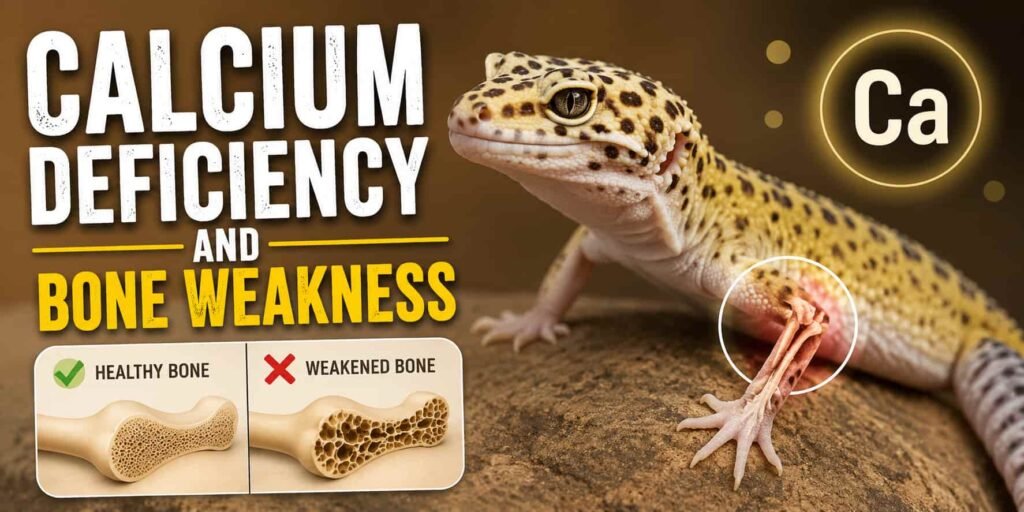
One serious reason a leopard gecko may stop moving is metabolic bone disease, also called MBD. This condition usually happens when a gecko does not get enough calcium, vitamin D3, or proper UVB lighting. Without these, the body cannot build strong bones.
A leopard gecko with metabolic bone disease may become weak, fragile, shaky, tired, or unable to walk normally. In severe cases, the legs, spine, or jaw may look soft or deformed. This is a serious reptile health problem and should not be ignored.
If you think your gecko has MBD, check its calcium supplement, diet, UVB exposure, and tank setup. It is also best to contact a reptile vet as soon as possible because early treatment can prevent the condition from getting worse.
Unsafe Substrate and Impaction Risk
Another possible reason your leopard gecko is not moving is impaction. This happens when a gecko eats something it cannot digest, such as loose substrate, sand, small stones, or other unsafe tank materials. Once swallowed, these materials can block the digestive system.
Impaction in leopard geckos is dangerous and can become life-threatening. Common signs may include loss of appetite, swollen belly, constipation, low energy, and reduced movement.
To reduce the risk, choose a safe leopard gecko substrate that is easy to clean and unlikely to be swallowed. Many owners use paper towels, reptile carpet, tile, or other solid surfaces instead of loose bedding. A safe terrarium floor, proper heating, clean water, and a balanced diet can help protect your gecko from serious digestive problems.
Read Also Ball Python Baby Chick Diet [Safe or Risky?]Normal Daytime Sleeping
Sometimes a leopard gecko is not moving simply because it is sleeping. This can worry new owners, especially if they only check their gecko during the day.
Leopard geckos are mostly active in the evening and at night. During the day, they often stay inside their hide, rest, and avoid bright light. This is normal behavior and does not always mean your gecko is sick.
In the wild, this sleeping pattern helps them avoid strong heat and stay safe from predators. Their eyes and senses are also designed to help them move, hunt, and explore in low-light conditions.
If your leopard gecko sleeps during the day but becomes active at night, eats normally, drinks water, and looks healthy, there is usually no need to worry.
Stress Can Make a Leopard Gecko Hide
Stress is another common reason why a leopard gecko may stop moving. A stressed gecko may hide more than usual, avoid handling, refuse food, or stay still for long periods.
Stress can happen because of an incorrect tank temperature, loud noise, too much handling, sudden changes in the terrarium setup, poor hiding places, illness, shedding, or fear. Large pets such as cats and dogs can also scare your gecko because leopard geckos may see them as predators.
To reduce leopard gecko stress, keep the enclosure calm, provide safe hides, avoid rough handling, and keep other animals away from the tank. A peaceful habitat, proper temperature gradient, clean water, and a safe environment can help your gecko feel secure again.
When Should You Be Concerned?
There are many reasons why a leopard gecko is not moving. The first thing to check is the tank temperature, because heat problems are one of the most common causes of low activity. If the tank is too hot or too cold, your gecko may hide, stop eating, or become weak.If the temperature is correct, look for other possible causes such as stress, shedding, calcium deficiency, metabolic bone disease, impaction, dehydration, or illness.Hiding is a natural defense behavior, but if your gecko remains inactive for a long time, refuses food, looks weak, loses weight, has trouble walking, or shows signs of pain, contact a reptile veterinarian as soon as possible. A vet can help find the real cause and give the right treatment before the problem becomes serious.
Final Thoughts
A leopard gecko not moving can happen for many reasons, but the first thing you should check is the tank temperature. If the warm side or cool side is not correct, your gecko may hide, stop eating, or become less active.If the terrarium temperature is normal, look for other possible causes such as stress, shedding, illness, calcium deficiency, metabolic bone disease, dehydration, or impaction. Hiding is a natural defense behavior, especially when a leopard gecko feels unsafe, scared, or uncomfortable.Make sure the enclosure setup is calm, clean, and safe. Provide proper hides, fresh water, a healthy diet, safe substrate, and the right reptile heating. If your gecko still does not move, refuses food, looks weak, loses weight, or shows unusual behavior, contact a reptile veterinarian as soon as possible.
FAQS: Why Is My Leopard Gecko Not Moving? [Stress Alert]
Why isn’t my leopard gecko moving?
A leopard gecko not moving may be resting, but it can also signal a serious health problem. Common causes include incorrect tank temperature, dehydration, gut impaction, unsafe substrate, or metabolic bone disease. Check the warm side, cool side, water, and overall terrarium setup. If your gecko looks weak, refuses food, or stays still for too long, contact a reptile veterinarian quickly.
What is the common cause of death for leopard geckos?
Common causes of death in leopard geckos include gut impaction, parasitic infections, metabolic bone disease, and incorrect tank temperatures. Most of these problems are linked to poor husbandry, unsafe substrate, lack of calcium, poor hydration, or an unhealthy terrarium setup. With proper care, many of these serious reptile health issues can be prevented.
How do I destress my leopard gecko?
To reduce leopard gecko stress, keep your pet in a quiet, dark, and calm room for 1–2 weeks with little or no handling. Make sure the terrarium setup has three safe hides: a warm hide, cool hide, and moist hide for shedding. Reduce loud noise, avoid sudden movement, and cover most tank sides to help your leopard gecko feel safe, secure, and comfortable.
What are the signs of a sick leopard gecko?
A sick leopard gecko may show changes in behavior, appetite, and appearance. Common warning signs include a quickly thinning tail, sunken eyes, closed eyes, lethargy, weight loss, and refusing food for more than 10 days. If these reptile health symptoms appear, contact a reptile veterinarian for proper care.
Can geckos hear you?
Yes, geckos can hear sounds around them, including your voice, footsteps, and movement near their enclosure. They have sensitive hearing and can also feel low vibrations through their body and inner ear. Because of this, loud noise, sudden movement, or heavy footsteps may cause stress or make your gecko hide.


![Why Does My Snake Pee on Me [Owner Guide]](https://reptilesinfo.com/wp-content/uploads/2026/06/Why-Does-My-Snake-Pee-on-Me-Owner-Guide.jpg)
![Are Ball Pythons Active After Eating [Must Know]](https://reptilesinfo.com/wp-content/uploads/2026/06/Are-Ball-Pythons-Active-After-Eating-Must-Know.jpg)
![Why Is My Crested Gecko Going Crazy [Stress Alert]](https://reptilesinfo.com/wp-content/uploads/2026/06/Why-Is-My-Crested-Gecko-Going-Crazy-Stress-Alert.jpg)
![Why Is My Crested Gecko’s Mouth White [Danger Signs]](https://reptilesinfo.com/wp-content/uploads/2026/06/Why-Is-My-Crested-Geckos-Mouth-White-Danger-Signs.jpg)