
![Why Does My Crested Gecko Run Away From Me [Quick Fixes]](https://reptilesinfo.com/wp-content/uploads/2026/06/Why-Does-My-Crested-Gecko-Run-Away-From-Me-Quick-Fixes.jpg)
Bringing home a new crested gecko is exciting, and most owners look forward to building a bond with their new pet reptile. However, it can be disappointing when your gecko seems to avoid you and quickly runs away whenever you approach.
If you’re asking, “Why does my crested gecko run away from me?” the most common reason is stress, fear, or a lack of familiarity with handling. Your gecko may still be adjusting to its new home, learning to trust you, or simply showing its natural behavior. Some geckos are naturally more cautious and take longer to become comfortable around people.
Understanding Your Gecko’s Behavior
A crested gecko may run away when it feels threatened, uncomfortable, or uncertain about its surroundings. This behavior is especially common in newly adopted geckos that are still adapting to a different habitat, enclosure, and daily routine. In many cases, the gecko is not rejecting you—it simply needs time to feel safe and secure.
Every gecko has its own personality. While some become comfortable with handling fairly quickly, others remain more reserved and require extra patience before they develop trust.
How to Help Your Gecko Feel More Comfortable
Learning to recognize signs of stress and understanding your gecko’s natural instincts can help you build a stronger relationship with your pet. With gentle interactions, proper care, and a calm environment, your gecko will be more likely to gain confidence over time.
The following sections will explain how to identify a stressed crested gecko, ways to reduce anxiety, and the best handling techniques to make interactions safer and more enjoyable for both you and your pet.
Signs of Stress in a Crested Gecko
One of the most common reasons a crested gecko runs away from its owner is stress, fear, or feeling unsafe. Understanding the signs of gecko stress can help you respond appropriately and create a more comfortable environment for your pet.
One of the clearest indicators of extreme stress or fear in a crested gecko is tail dropping (also called tail loss or autotomy). This natural defense mechanism allows the gecko to escape from a perceived threat.
When a gecko feels cornered or frightened, it may detach its tail to distract a predator. The separated tail often continues moving for a short time, giving the gecko an opportunity to escape and find a safe hiding spot.
Adjusting to Life Without a Tail
A gecko may seem slightly awkward or less balanced for a few days after losing its tail. This is normal. Over time, most crested geckos adapt very well and continue to climb, jump, and move around their enclosure normally.
While tail loss is usually not a health emergency, it is a strong signal that your gecko has experienced significant stress, anxiety, or fear. Identifying and removing the source of that stress is the best way to support your pet’s long-term well-being and behavioral health.
Read Also How Long Can a Turtle Live Without UVB? [Warning]Common Reasons for Stress in a Crested Gecko
While some crested geckos may feel stressed during handling, one of the most common causes of ongoing stress is an improper tank setup. Providing the right habitat conditions is essential for your gecko’s health, comfort, and overall well-being.
Successful crested gecko care starts with proper husbandry. Your goal should be to create an environment that closely matches the gecko’s natural habitat, helping it feel secure and reducing unnecessary stress.
Provide Safe and Secure
A lack of hides can make a gecko feel exposed and vulnerable. To create a sense of security, place two similar hiding spots inside the enclosure—one on the warm side and one on the cool side.
This setup allows your crested gecko to feel safe regardless of where it chooses to rest. Access to proper shelter, cover, and hiding areas can significantly reduce anxiety and stress-related behaviors.
Keep the Enclosure Clean
A clean reptile enclosure is essential for both physical and mental health. Dirty living conditions can increase stress, encourage harmful bacteria, and raise the risk of illness and infection.
Follow a consistent cleaning routine by removing waste, replacing dirty substrate when needed, and regularly disinfecting enclosure accessories. Maintaining a clean and healthy environment helps support your gecko’s long-term well-being and quality of life.
Creating a Low-Stress Habitat
Most stress-related issues in crested geckos can be prevented through proper husbandry, correct temperature and humidity, secure hiding places, and regular enclosure maintenance. When these basic needs are met, your gecko is more likely to feel safe, comfortable, and confident in its environment.
Best Practices for Handling a Crested Gecko
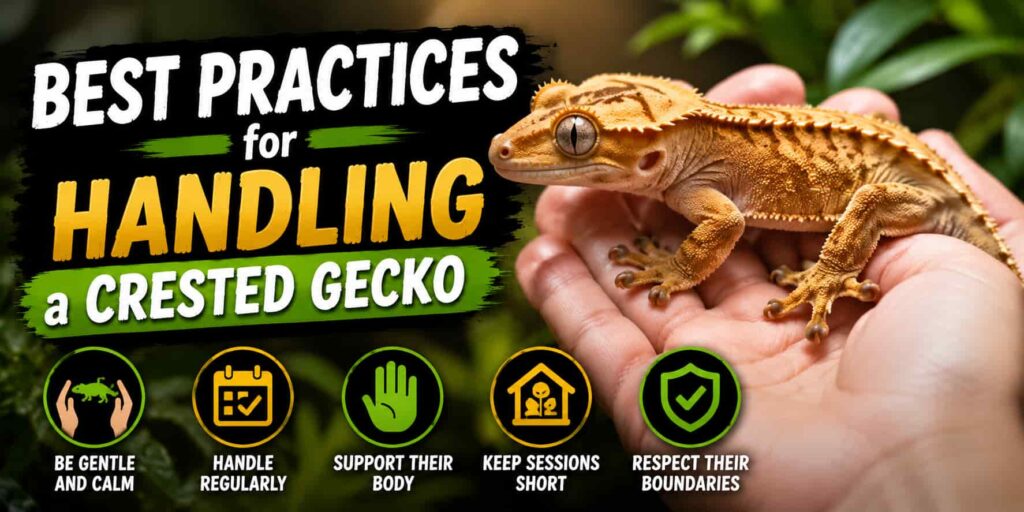
Before you begin handling your crested gecko, it is important to understand its natural behavior. Unlike dogs or cats, crested geckos do not form strong emotional bonds with their owners. While they can become comfortable with regular interaction, most geckos simply learn to tolerate handling rather than seek it out.
Every crested gecko has a unique personality. Some are naturally calm and curious, while others are more cautious and easily stressed. Understanding your pet’s individual temperament can help you build trust and create a more positive experience for both of you.
Allow Time for
One of the most important steps in successful crested gecko care is giving your pet enough time to adjust to its new surroundings.
After bringing a gecko home, avoid handling it immediately. Instead, allow at least two weeks of acclimation before attempting regular interaction. During this period, your gecko is adapting to a new enclosure, unfamiliar smells, different sounds, and a completely new environment.
Moving to a new habitat can be a significant source of stress for reptiles. Frequent handling during this adjustment period may increase anxiety, slow the acclimation process, and make it harder for your gecko to feel secure.
Build Trust Gradually
Patience plays a major role in developing a positive relationship with your pet reptile. Give your gecko time to explore its environment, establish a routine, and become familiar with your presence.
Once your gecko appears calm, active, and comfortable in its enclosure, you can begin introducing short and gentle handling sessions. A slow and consistent approach helps reduce stress, encourages trust-building, and supports healthy behavioral adjustment.
Read Also Why Does My Tortoise Sit on His Food? [Shocking]Focus on Comfort and Safety
Successful crested gecko handling is based on respecting your pet’s comfort level. Rushing the process can cause fear and defensive behaviors, while patience and proper reptile husbandry can help your gecko feel more secure over time.
By allowing a proper adjustment period, minimizing unnecessary stress, and introducing handling gradually, you can create a safer and more comfortable experience that supports your gecko’s long-term well-being, confidence, and overall health.
Create a Calm Environment During Handling
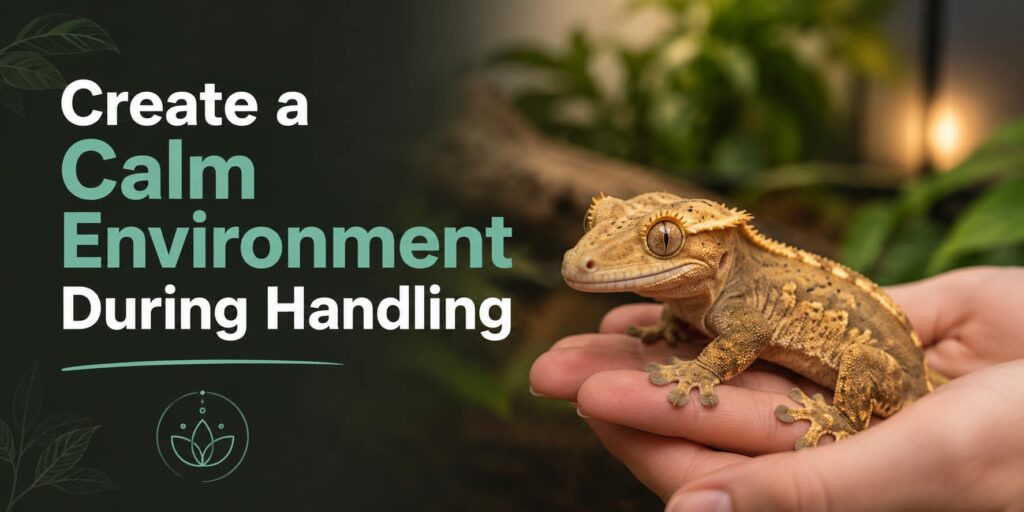
Proper crested gecko handling begins with creating a calm and stress-free environment. These reptiles are naturally alert and can become nervous when exposed to sudden changes around them. Gentle interactions help build trust, reduce stress, and improve your gecko’s overall comfort level.
Wait Before Handling Young Geckos
It is generally best to avoid handling very young or baby crested geckos. Because of their small size, delicate bodies, and natural tendency to jump, they are more vulnerable to accidental falls and injuries.
Most keepers recommend waiting until a juvenile gecko reaches approximately 3 inches (7.5 cm) in length or weighs between 8 and 15 grams before introducing regular handling sessions. At this stage, the gecko is usually stronger, more stable, and easier to handle safely.
Respect Your Gecko’s Boundaries
One of the most important aspects of reptile care is recognizing when your gecko does not want to interact. If your crested gecko attempts to run away, hide, jump, or shows signs of stress, avoid forcing the interaction.
Unwanted handling can increase anxiety, weaken trust, and make future interactions more difficult. Instead, give your gecko time to relax and try again later when it appears calmer and more comfortable.
Encourage Trust Through Patience
Building a positive relationship with a crested gecko takes time. Successful trust-building comes from patience, consistency, and respect for your pet’s natural behavior. By minimizing stress triggers, handling your gecko gently, and allowing it to interact at its own pace, you can help it feel safer, more secure, and more confident in its environment.
A patient approach not only improves the handling experience but also supports your gecko’s long-term health, well-being, and overall behavioral comfort.
Successful crested gecko handling depends on creating a safe environment, building trust gradually, and paying attention to your pet’s comfort level. By following a few simple practices, you can reduce stress, improve confidence, and make handling a positive experience for both you and your gecko.
Choose a Secure Handling Area
Always select a safe and controlled location before handling your crested gecko. Since these reptiles are excellent jumpers, accidental falls can happen if they become startled.
A good option is to sit on a bed, couch, or floor where the risk of injury is lower if your gecko jumps from your hands. It is also important to handle your pet in a room with closed doors and limited escape routes. This helps prevent your gecko from running into unsafe areas if it becomes frightened.
A secure environment supports safer reptile handling and reduces unnecessary anxiety.
Keep Handling Sessions Short
Short and positive interactions are more effective than long handling sessions. When introducing your gecko to handling, start with just a few minutes at a time.
Allow your crested gecko to walk calmly from one hand to the other before returning it to its enclosure. As your pet becomes more familiar with you, you can gradually increase handling time to around 15–20 minutes.
The goal is to build trust without causing stress, overstimulation, or discomfort.
Stay Calm and Confident
Your behavior can influence your gecko’s response during handling. If you appear nervous, make sudden movements, or hesitate frequently, your pet may become more alert and stressed.
Fortunately, crested geckos are generally gentle reptiles and rarely bite. Remaining calm, patient, and gentle can help your gecko feel more secure and comfortable during interactions.
A relaxed approach encourages positive human-animal interaction and supports healthy behavioral conditioning.
Read Also Do Sounds Scare Leopard Geckos? [Shocking Signs]Build Positive Associations with Treats
Using occasional treats can help create a positive connection between your presence and rewarding experiences. This technique is often effective for trust-building and reducing handling-related fear.
Safe treats such as small amounts of banana or papaya can be offered occasionally as part of a balanced diet. Over time, your gecko may begin to associate your hands with food, making handling less stressful and more familiar.
Always offer treats in moderation and as part of proper crested gecko nutrition.
Encourage Long-Term Trust and Comfort
Building a strong relationship with a crested gecko takes patience and consistency. By providing a secure handling environment, keeping sessions short, offering positive reinforcement, and monitoring your pet’s condition regularly, you can help reduce stress and improve overall well-being.
A calm, respectful approach encourages trust, supports healthy behavior, and helps your gecko feel safe and comfortable during every interaction.
Final Thoughts on Crested Gecko Behavior
If your crested gecko frequently runs away from you, the most likely causes are stress, fear, shyness, or a lack of experience with handling. This behavior is especially common in newly adopted geckos that are still adjusting to a new environment, enclosure, and daily routine.It is important to remember that every crested gecko has a unique personality. Some geckos become comfortable with human interaction relatively quickly, while others need more time to develop trust and confidence.
FAQs:Why Does My Crested Gecko Run Away From Me? [Quick Fixes]
Why Is My Crested Gecko Running Away From Me?
Your crested gecko may run away because it naturally sees humans as potential predators. As a prey animal, its instinct is to hide, escape, or avoid anything that feels threatening. This behavior can also be caused by stress, fear, young age, lack of socialization, or improper handling techniques. With patience, gentle handling, and a comfortable habitat, most geckos become more relaxed and confident over time.
Can I Handle My Crested Gecko During the Day?
Yes, you can handle your crested gecko during the day if it is already awake and active. However, because crested geckos are crepuscular reptiles, they are most active during dawn, dusk, and nighttime. Waking a sleeping gecko for handling can cause unnecessary stress, anxiety, and discomfort. For the best experience, handle your gecko when it is naturally alert and responsive.
Are Crested Geckos Easy to Keep Alive?
Yes, crested geckos are widely considered one of the most beginner-friendly reptiles. They are hardy, adaptable, and relatively easy to care for when provided with proper husbandry, appropriate temperature, humidity, and a well-maintained enclosure. Their simple care requirements make them an excellent choice for both new and experienced reptile owners.
Can Geckos Hear You?
Yes, geckos have well-developed hearing and can detect many sounds, including the human voice. They are also sensitive to low-frequency vibrations, such as footsteps or movement nearby. Their advanced sensory system helps them stay alert to potential threats, making them highly aware of activity in their environment.
How Often Does a Gecko Poop?
A gecko typically passes feces every 1 to 3 days, although the frequency depends on its age, diet, and overall digestive health. Baby geckos usually poop more often because they eat daily, while adult geckos generally defecate about 2 to 3 times per week due to their less frequent feeding schedule.


![Why Does My Snake Pee on Me [Owner Guide]](https://reptilesinfo.com/wp-content/uploads/2026/06/Why-Does-My-Snake-Pee-on-Me-Owner-Guide.jpg)
![Are Ball Pythons Active After Eating [Must Know]](https://reptilesinfo.com/wp-content/uploads/2026/06/Are-Ball-Pythons-Active-After-Eating-Must-Know.jpg)
![Why Is My Crested Gecko Going Crazy [Stress Alert]](https://reptilesinfo.com/wp-content/uploads/2026/06/Why-Is-My-Crested-Gecko-Going-Crazy-Stress-Alert.jpg)
![Why Is My Leopard Gecko Not Moving [Stress Alert]](https://reptilesinfo.com/wp-content/uploads/2026/06/Why-Is-My-Leopard-Gecko-Not-Moving-Stress-Alert.jpg)
![Why Is My Crested Gecko’s Mouth White [Danger Signs]](https://reptilesinfo.com/wp-content/uploads/2026/06/Why-Is-My-Crested-Geckos-Mouth-White-Danger-Signs.jpg)