
![Why Does My Snake Pee on Me [Owner Guide]](https://reptilesinfo.com/wp-content/uploads/2026/06/Why-Does-My-Snake-Pee-on-Me-Owner-Guide.jpg)
Many snake pee owners experience this: you are calmly holding your pet snake, and suddenly your clothes or lap feel wet. If this happens more than once, it is natural to wonder why your snake keeps doing it.
A snake pee on you for a few common reasons. It could be feeling nervous, stressed, or uncomfortable while being handled. Some snakes may also prefer to relieve themselves outside their enclosure, especially if they are used to being taken out. In other cases, your snake may simply need to urinate at that exact moment.
Understanding your snake’s behavior, body language, and handling routine can help you reduce this problem. You should also learn when snakes usually pee, how their urinary system works, and what normal snake waste looks like. This can help you tell the difference between normal urination and a possible health issue.
In this guide, we will explain the main reasons your snake may pee on you, what it means, and the simple steps you can take to handle your snake more safely and comfortably.
Snake Urinating Because of Stress or Fear
A pet snake may seem calm on the outside, but it can still feel nervous, stressed, or unsafe when being handled. If your snake often pees shortly after you pick it up, this may be a sign of handling stress or fear.
Snakes are not fully domesticated like cats or dogs. They are still wild reptiles by nature, so they need time to become comfortable with human touch. Regular, gentle handling can help your snake become more tame, relaxed, and used to your presence.
When picking up your snake, move slowly and avoid sudden actions. Approach from the front or side where it can see you coming. Do not grab it quickly, squeeze its body, or press on the abdomen, as this can cause discomfort and make the snake feel threatened.
To reduce snake urination during handling, stay calm, support its body properly, and keep each handling session gentle and stress-free. Over time, your snake may become more confident and less likely to pee when you hold it.
Read Also Why Does My Crested Gecko Run Away From Me? [Quick Fixes]Snake Urinating Outside Its Enclosure
Some pet snakes may prefer to pee after they are taken out of their terrarium or enclosure. This can happen because the snake feels more relaxed outside its usual living space, or because it naturally avoids soiling the area where it spends most of its time.
For some snakes, being removed from the cage can become a urination cue. In simple words, your snake may learn that handling time or time outside the enclosure is the right moment to relieve itself. While this may feel unpleasant if it happens on you, it can also mean less cage cleaning and a cleaner habitat.
The best solution is to understand your snake’s routine, behavior pattern, and personal preferences. If your snake often pees soon after being taken out, place it on a towel, washable surface, or safe handling area for a few minutes before holding it closely. This can help prevent mess while keeping your snake comfortable.
By watching your snake’s body language and habits, you can create a handling routine that works well for both you and your reptile pet.
Snake Peeing Because of Natural Timing
Sometimes, snake peeing on you is not caused by stress, fear, or bad handling. It may simply happen because your pet snake needed to urinate at the same time you were holding it. This is normal and can be part of caring for a reptile pet.
Snakes do not always follow a clear bathroom schedule, so urination during handling can sometimes be accidental. If your snake has recently eaten, drank water, or has not relieved itself for a while, it may pee when it is outside the enclosure.
To make handling easier, watch your snake’s routine, body language, and bathroom habits. You can place your snake on a towel, paper towel, or safe washable surface for a few minutes before holding it closely. This gives it a chance to pee before it reaches your lap or clothes.
With time, you may understand when your snake is more likely to urinate. This can help you create a cleaner, calmer, and more comfortable snake handling routine.
Tips and Precautions to Deal With a Peeing Snake
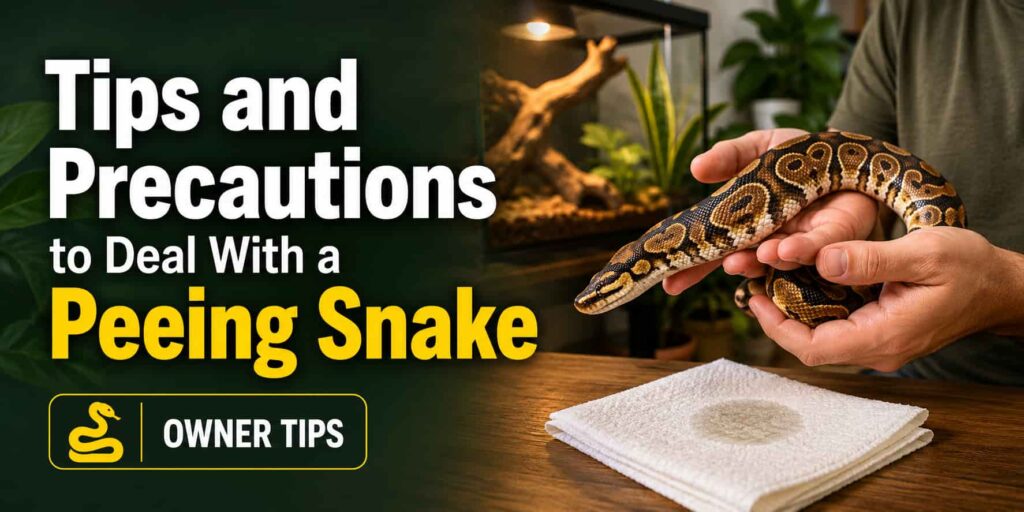
Pet snakes cannot tell you when they are about to pee, so small accidents can happen during handling. Just like caring for a baby or any other pet, you may get surprised when your snake suddenly releases liquid waste.
To stay prepared, keep a thick towel, soft cloth, or washable cover nearby whenever you hold your snake. Placing a towel on your lap should become a normal part of your snake handling routine. This helps protect your clothes, furniture, and skin if your snake urinates unexpectedly.
Using a towel also makes cleanup easier and keeps the experience more comfortable for both you and your reptile pet. It is a simple precaution that can prevent mess and make regular snake care less stressful..
Use an Easy-to-Clean Bathroom Spot
With time, many snake owners learn to notice the small signs that their pet snake may be about to pee or pass waste. These signs can include restlessness, body movement changes, or the snake becoming more active while being handled.
When you recognize these behavior cues, gently move your snake to a safe and easy-to-clean place. This could be a washable surface, a lined container, a toilet bowl area, or a safe outdoor spot such as the garden. The goal is to let your snake relieve itself without making a mess on your clothes, furniture, or floor.
Some experienced reptile keepers build this into their normal snake handling routine. They learn their snake’s timing and take it to a suitable place before an accident happens. This simple habit can make snake care, cleanup, and handling much easier for both you and your reptile pet.
Stay Calm and Clean Up Properly
If your pet snake pees on you, try not to panic or feel upset. Snake urination is a normal body function, just like it is for any other animal. It does not always mean your snake is sick or misbehaving.
Simply remove the affected clothes, towel, or fabric and put them in the laundry as soon as possible. Wash the area with soap and water if the urine touches your skin. This helps keep your snake handling routine clean, safe, and hygienic.
Accidents are a normal part of reptile care, especially when you are still learning your snake’s behavior, bathroom habits, and body signals. Staying calm will make the experience easier for both you and your snake.
Handle Your Snake Gently and Be Patient
A pet snake may need time to feel safe during handling. The more gently and calmly you hold your snake, the more likely it is to understand that you are not a threat.
If your snake is peeing because of stress, fear, or nervousness, this behavior may reduce over time. Regular, careful handling can help your snake become more comfortable, confident, and used to human contact.
Always move slowly, support the snake’s body properly, and avoid squeezing or rushing the process. Building trust takes patience, but a calm snake handling routine can make your reptile pet feel safer and less likely to urinate from handling stress..
How Do Snakes Actually Pee?
To understand snake urination, it is helpful to know how a snake’s body works. Snakes are reptiles, so their anatomy is different from mammals like humans, cats, or dogs.
A pet snake does not pee in the same way many other animals do. Snakes pass waste through one opening called the cloaca. This opening is used for releasing urine, feces, and reproductive fluids.
When a snake pees, it may release liquid waste along with white, chalky material called urates. This is a normal part of the reptile urinary system. The amount and timing of snake pee can depend on hydration, feeding schedule, temperature, stress, and handling.
Knowing why, where, when, and how snakes pee can help you better understand your snake’s health, behavior, and normal waste habits. This also makes snake care and cleaning much easier for every snake owner.
The Cloaca: The Main Waste Opening in Snakes
A snake’s cloaca is the main opening used for several important body functions. Through this single vent, a snake passes urine, feces, and reproductive fluids. In female snakes, the cloaca is also involved in egg laying.
The cloaca is located near the base of the tail and looks like a small flap or vent. Unlike many mammals, snakes do not urinate through a separate opening. Their digestive system, kidneys, and reproductive system all connect to this one area.
Snakes also do not store liquid urine in the same way humans do. Instead, waste from the kidneys and digestive tract leaves the body through the cloaca. This is why snake pee may come out along with urates, which are the white or chalky waste often seen in a snake’s enclosure.
Understanding the reptile cloaca helps snake owners know what is normal during snake urination, pooping, and overall reptile care.
Snake Pee, Urates, Poop, and Musk: What Is the Difference?
Snakes do not need to pee or poop every day like many other pets. Depending on their feeding schedule, hydration, temperature, and metabolism, some snakes may pass waste after several days, while others may take weeks.
Snake pee is not always a clear liquid. In many cases, snakes release a white, soft, chalky waste called urates. These urates are a concentrated form of urine and help snakes save water, especially species that come from dry, desert, or arid environments. Even captive snakes with regular access to water may still pass urates because this is part of their natural reptile biology.
Snake poop is usually brown and may come out at the same time as the urates or shortly after. When a snake is properly hydrated, the poop and urates may have a moist or slimy coating. After being exposed to air, this waste can become dry, firm, or chalky.
Musk is different from pee, urates, and poop. It is a strong-smelling liquid that some snakes release when they feel scared, threatened, or stressed. Snakes may also use musk for territory marking, mating signals, or defense against predators.
Understanding the difference between snake urine, urates, feces, and musk can help snake owners monitor their pet’s health, waste habits, and normal reptile behavior.
What Does Snake Urine Look Like?
Snake pee can appear in two main forms: liquid urine or solid urates. Liquid urine is usually clear or light yellow, similar to the urine of many other animals.
When a snake releases urates, they usually look white, cream, or yellowish. These urates are often soft, chalky, and lumpy. Sometimes they come out as one large piece, while other times they appear as several smaller blobs.
The texture, color, and smell of snake waste can vary depending on your snake’s hydration, diet, temperature, and overall reptile health. If your pet snake pees on you often, you may already recognize the look, feel, and odor of both liquid urine and chalky urates.
Knowing what normal snake urine and urates look like can help snake owners spot possible changes in their pet’s waste habits and general health.
Read Also How Long Can a Turtle Live Without UVB? [Warning]Does Snake Urine Have a Strong Smell?
Yes, snake pee can have a noticeable and unpleasant smell. Like urine from many animals, it may have a sharp odor, but snake urine can sometimes smell stronger because it is highly concentrated.
When urine or urates stay in the enclosure for too long, the smell can become stronger. Bacteria can break down the uric acid in the waste and create an ammonia-like odor. This may sometimes smell fishy, sour, or very unpleasant.
If your pet snake, bedding, or cage starts to smell bad, it is usually a sign that the habitat needs cleaning. Remove old snake waste, replace dirty substrate, and clean the enclosure properly. If safe for your snake species, a gentle bath may also help remove odor from your pet’s body.
Regular enclosure cleaning, fresh water, and good reptile
can help control smell and keep your snake care routine healthier and more comfortable.
What Should You Do If Your Snake Is Not Peeing?
If your pet snake is not peeing often, it is usually not a major concern. Unlike many other pets, snakes have a slow digestive system and do not need to urinate or poop every day. Some snakes may go several days or even weeks without passing visible waste.
In some cases, your snake may not release much liquid urine at all. Instead, it may pass white or chalky urates, which are a solid form of concentrated urine. It is also possible that your snake has already peed in the substrate or bedding, and you simply did not notice it.
However, you should still watch your snake’s hydration, feeding schedule, behavior, and overall reptile health. If your snake seems weak, refuses food for a long time, looks dehydrated, has swelling, or has not passed any urine, urates, or feces for an unusually long period, contact a reptile vet or an experienced snake breeder for advice.
Regular observation, clean bedding, fresh water, and proper enclosure conditions can help you understand your snake’s normal waste habits and spot any possible health problems early.
Final Thoughts on Why Snakes Pee on Their Owners
Now you understand the common reasons why your pet snake may keep peeing on you. In many cases, this behavior is normal and does not always mean something is wrong.Your snake may urinate because of stress, nervousness, or fear, especially if it is not fully used to being handled. It may also prefer to relieve itself outside its enclosure to keep its living space clean. Sometimes, it is simply a matter of timing because your snake needed to pee while you were holding it.Simple precautions can make snake handling easier. Keep a towel nearby.
FAQs: Why Does My Snake Pee on Me? [Owner Guide]
Do snakes get attached to their owners?
Snakes do not form emotional attachment or feel love the same way mammals do. However, a pet snake can become familiar with its owner through regular, gentle handling. Over time, it may feel more comfortable, show less stress, and stop seeing the owner as a threat. This is called habituation, not true bonding.
Are snakes attracted to the smell of urine?
Yes, some snakes may be attracted to the smell of urine, especially if it comes from prey animals like mice or rats. Snakes use their strong sense of smell and chemical detection to track prey scents. Since rodent urine can carry scent molecules, it may help a snake locate food or identify nearby prey activity.
How can you tell if a snake is calm?
A calm snake usually moves slowly and smoothly when being handled. If your pet snake feels safe, it will stay relaxed, avoid sudden movements, and not try to escape quickly. A comfortable snake also does not hyper-focus on you, nearby objects, or possible threats. Instead, its body language looks loose, steady, and less defensive, showing that it is not feeling stressed, scared, or threatened.
Do snakes like being stroked?
Some snakes may tolerate gentle stroking, petting, or calm handling, but they do not usually seek affection like mammals. Every pet snake has a different personality and comfort level. If your snake dislikes being touched, that is normal. You can still support its reptile care, well-being, and enrichment with a safe enclosure, proper temperature, fresh water, hiding spots, and stress-free handling.
How long before a snake starves?
A snake can survive without food for a long time because it can slow its metabolism, especially in cool conditions or when food is limited. Small snakes may live for about one to two months without eating, while large species such as pythons, boas, and anacondas can survive much longer, sometimes several months or even up to a year after a large meal. However, a pet snake that refuses food for too long should be checked by a reptile vet to rule out stress, illness, poor temperature, or other health problems.


![Are Ball Pythons Active After Eating [Must Know]](https://reptilesinfo.com/wp-content/uploads/2026/06/Are-Ball-Pythons-Active-After-Eating-Must-Know.jpg)
![Why Is My Crested Gecko Going Crazy [Stress Alert]](https://reptilesinfo.com/wp-content/uploads/2026/06/Why-Is-My-Crested-Gecko-Going-Crazy-Stress-Alert.jpg)
![Why Is My Leopard Gecko Not Moving [Stress Alert]](https://reptilesinfo.com/wp-content/uploads/2026/06/Why-Is-My-Leopard-Gecko-Not-Moving-Stress-Alert.jpg)
![Why Is My Crested Gecko’s Mouth White [Danger Signs]](https://reptilesinfo.com/wp-content/uploads/2026/06/Why-Is-My-Crested-Geckos-Mouth-White-Danger-Signs.jpg)