
![How Long Can a Turtle Live Without UVB [Warning]](https://reptilesinfo.com/wp-content/uploads/2026/06/How-Long-Can-a-Turtle-Live-Without-UVB-Warning.jpg)
Most turtle owners use a UVB light in their turtle’s enclosure because it helps support healthy shell growth, strong bones, and proper calcium absorption. UVB also helps turtles make vitamin D3, which is important for their overall health, activity, and immune system.
A turtle may survive for a short time without a UVB lamp, especially if it has access to safe natural sunlight. However, keeping a turtle without UVB for too long is risky. Without enough UVB exposure, turtles can develop metabolic bone disease, weak shells, soft bones, poor growth, and other serious health problems.
Some people believe turtles can live without artificial UVB if their diet, calcium supplements, and outdoor sunlight are managed well. Still, for most indoor pet turtles, a proper UVB bulb is highly recommended. It should not be considered optional because it plays a major role in long-term reptile care.
In this article, we will explain why UVB lighting matters, how it helps turtles stay healthy, what can happen when they do not get enough UVB, and how to recognize signs of metabolic bone disease.
Why Is UVB Light Important for Turtles?
UVB light helps turtles stay healthy by copying the effect of natural sunlight in the wild. In an indoor turtle enclosure, a good UVB bulb and heat lamp support normal basking behavior, healthy shell condition, and proper body function.
Turtles need UVB exposure for three main reasons. First, it helps them warm their body because turtles are cold-blooded reptiles and depend on outside heat to control their body temperature. Second, basking under light helps dry their shell and skin after swimming, which can reduce the risk of shell problems, fungus, and skin irritation. Third, UVB allows turtles to produce vitamin D3, which helps their body absorb and use calcium.
Without enough UVB rays, turtles may suffer from weak bones, soft shells, poor growth, low energy, and metabolic bone disease. For indoor pet turtles, proper reptile lighting, a safe basking area, and a balanced calcium-rich diet are important parts of good turtle care.
Helping Turtles Control Their Body Temperature
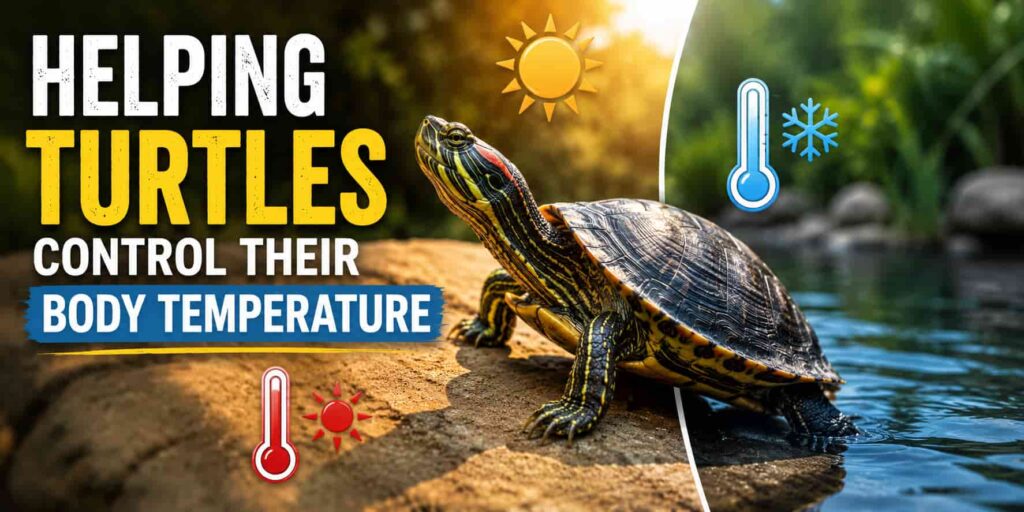
Turtles are cold-blooded reptiles, which means they cannot control their body temperature the same way humans do. They depend on their surroundings to stay warm or cool. This process is called thermoregulation.
In the wild, turtles warm themselves by basking under natural sunlight. When they get too hot, they move into the shade or water to cool down. Pet turtles need the same choice inside their aquarium or turtle enclosure.
A proper basking area should be dry, warm, and easy for the turtle to reach. Regular basking under a safe heat lamp and UVB light helps support normal digestion, activity, immune health, and overall reptile wellness. Warmth also helps keep the turtle’s body functioning properly and may reduce the risk of some bacterial, skin, and shell problems.
Read Also Why Does My Tortoise Sit on His Food? [Shocking]Keeping the Shell and Skin Dry
Many aquatic turtles spend most of their time in water, so they need a dry basking area where they can fully dry their skin and shell. If a turtle stays wet for too long, bacteria, fungus, and other germs can build up, which may lead to shell rot, skin irritation, or other health problems.
Basking under a safe heat lamp and UVB light helps the turtle dry properly and supports better shell health, skin condition, and overall reptile care. A warm, dry spot in the turtle enclosure is important for preventing moisture-related issues.
UVB and heat also help support your turtle’s circadian rhythm, which means its natural day and night cycle. To copy natural sunlight, keep the light schedule consistent. Most turtle owners use a 12-hour light cycle and a 12-hour dark cycle, or they turn the light on in the morning and off in the evening.
Safe UVB Lighting Tips for Turtles
A UVB light must be used safely and replaced regularly to keep your turtle healthy. Most UVB bulbs become weaker after six months to one year, even if they still produce visible light. For this reason, turtle owners should follow the bulb’s instructions and replace it on time.
Do not place your turtle beside a sunny window as a replacement for UVB exposure. Glass blocks most UVB rays, so your turtle may feel warmth but will not receive enough vitamin D3 support for proper calcium absorption, bone strength, and shell health.
The UVB lamp should usually be placed about 12 to 15 inches above the basking area, unless the bulb instructions say otherwise. Keep the light secure so it cannot fall into the water, because this can cause a serious electric shock risk. Also, never look directly at a UV light, as strong rays can damage your eyesight.
How Long Can a Turtle Safely Stay Without UVB Light?
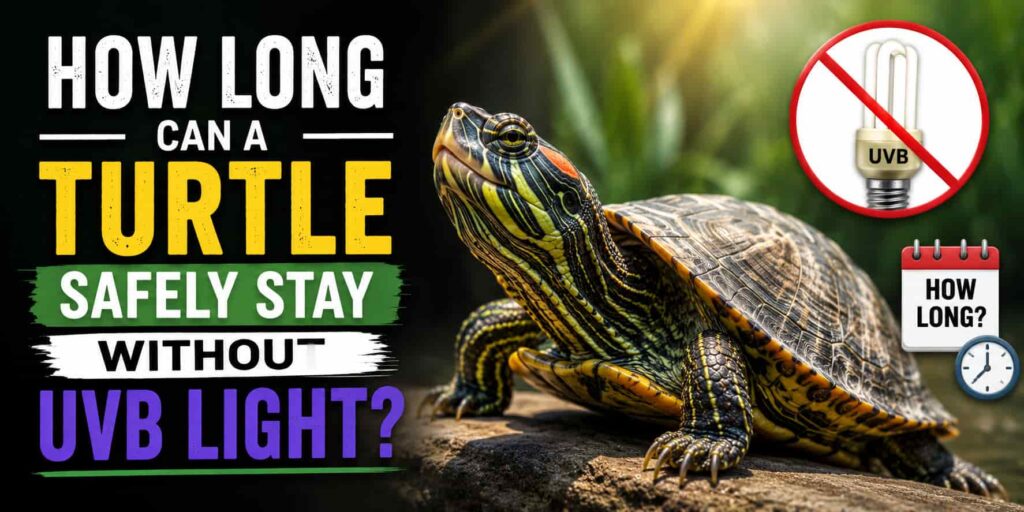
A turtle should not stay without UVB light for longer than necessary. Missing UVB exposure for a day or two may not cause instant harm, especially if the turtle is otherwise healthy. However, a long period without UVB can lead to serious shell, bone, growth, and development problems.
Why Many Turtle Keepers Recommend UVB
UVB rays help turtles produce vitamin D3, which allows their body to absorb and use calcium properly. This is important for strong bones, a healthy shell, normal growth, and good overall reptile health.
Some owners use vitamin D3 supplements, but too much D3 can be risky. A proper UVB lamp is usually safer because it supports natural calcium metabolism without the same overdose risk. UV lighting also helps copy natural sunlight and supports basking behavior, thermoregulation, mood, metabolism, and breeding activity.
Why Some Owners Avoid UVB Lights
Some turtle owners believe a UVB bulb is not needed if the turtle’s diet already contains enough vitamin D3 and calcium. In theory, this may help prevent calcium deficiency and poor growth. However, it can be difficult to balance supplements correctly without veterinary guidance.
Does a Pet Turtle Really Need UVB?
For most indoor turtles, UVB lighting is highly recommended. Without enough UVB rays or vitamin D3, a turtle cannot use calcium properly. Over time, this can cause a soft shell, weak bones, poor movement, slow growth, and metabolic bone disease.
Health Problems Caused by Low UVB
The most serious problem linked to poor UVB exposure is metabolic bone disease. This condition can become life-threatening if it is not treated. Common warning signs may include a soft or deformed shell, weak legs, swelling, poor appetite, low energy, shaking, trouble walking, and broken bones.
Read Also Do Sounds Scare Leopard Geckos? [Shocking Signs]How Metabolic Bone Disease Is Treated
The best treatment is prevention. A turtle should have a proper UVB light, a warm basking area, a healthy calcium-rich diet, and a regular day and night cycle.
If metabolic bone disease is suspected, a reptile veterinarian should check the turtle. Treatment may include improved UVB lighting, calcium supplements, vitamin D3 support, better nutrition, fluid therapy, or calcium injections in serious cases. If bones are damaged or broken, extra care such as splints may be needed.
With early treatment, many turtles can improve. Still, it is safer to prevent the problem by giving your turtle the right UVB exposure, diet, and enclosure setup from the beginning.
Final Thoughts on UVB Light for Turtles
UVB light is important for most indoor turtles because it helps copy natural sunlight. It supports thermoregulation, helps dry the turtle’s skin and shell after swimming, and provides UVA and UVB rays that support healthy metabolism, calcium absorption, vitamin D3 production, and overall reptile health.Some turtles may get vitamin D3 through supplements, but this should be managed carefully because too much or too little can cause health problems. Without enough UVB exposure or vitamin D3, turtles may struggle to use calcium properly, which can lead to weak bones, a soft shell, poor growth, and metabolic bone disease
FAQs: How Long Can a Turtle Live Without UVB? [Warning]
How long can a turtle go without UVB?
A turtle should not be kept without UVB light for long. If the UVB bulb breaks, a healthy turtle may be okay for one or two days while you replace it, but longer gaps can harm its shell health, bone strength, calcium absorption, and vitamin D3 production. Without proper UVB exposure, turtles may suffer from poor digestion, weakness, metabolic bone disease, severe deformities, or even death.
How long to keep UVB light on for turtles?
Keep a turtle’s UVB light on for about 10 to 12 hours daily. A regular day and night cycle helps copy natural sunlight, supports vitamin D3 production, improves calcium absorption, and protects shell health, bone strength, and overall turtle care.
Do turtles really need UVB light?
Yes, most turtles need UVB light to stay healthy, especially indoor pet turtles. UVB exposure helps them produce vitamin D3, absorb calcium, build strong bones, and maintain a healthy shell. Without proper UVB lighting, turtles can develop metabolic bone disease, soft shells, weakness, and skeletal deformities.
Can a tortoise live without UV light?
A tortoise should not live without proper UVB light. UVB exposure helps the body produce vitamin D3, which is needed for calcium absorption, strong bones, healthy shell growth, and normal reptile health. Without enough UV light, a tortoise may develop weakness, soft shell, poor growth, and metabolic bone disease.
Do turtles need UVB 5 or 10?
Most aquatic turtles usually do well with a 10.0 UVB bulb, but the best choice depends on the turtle’s species, tank size, and basking distance. UVB 5.0 is often used for lower-light or tropical species, while UVB 10.0 gives stronger UVB exposure to support vitamin D3 production, calcium absorption, healthy shell growth, and strong bones.


![Why Does My Snake Pee on Me [Owner Guide]](https://reptilesinfo.com/wp-content/uploads/2026/06/Why-Does-My-Snake-Pee-on-Me-Owner-Guide.jpg)
![Are Ball Pythons Active After Eating [Must Know]](https://reptilesinfo.com/wp-content/uploads/2026/06/Are-Ball-Pythons-Active-After-Eating-Must-Know.jpg)
![Why Is My Crested Gecko Going Crazy [Stress Alert]](https://reptilesinfo.com/wp-content/uploads/2026/06/Why-Is-My-Crested-Gecko-Going-Crazy-Stress-Alert.jpg)
![Why Is My Leopard Gecko Not Moving [Stress Alert]](https://reptilesinfo.com/wp-content/uploads/2026/06/Why-Is-My-Leopard-Gecko-Not-Moving-Stress-Alert.jpg)
![Why Is My Crested Gecko’s Mouth White [Danger Signs]](https://reptilesinfo.com/wp-content/uploads/2026/06/Why-Is-My-Crested-Geckos-Mouth-White-Danger-Signs.jpg)