
![Why Is My Crested Gecko Getting Black Spots [Health Alert]](https://reptilesinfo.com/wp-content/uploads/2026/06/Why-Is-My-Crested-Gecko-Getting-Black-Spots-Health-Alert.jpg)
Black spots on a crested gecko are often normal, but they should still be watched carefully. Many crested geckos naturally develop new skin patterns, oil spots, or dalmatian spots as they grow. These marks can make your gecko look darker, brighter, or more colorful over time.
However, not every dark mark is harmless. In some cases, small black dots may be linked to mites, external parasites, or a possible mite infestation. If the spots move, spread quickly, or appear with signs of stress, itching, weakness, or unusual behavior, it is best to check your gecko closely and contact a reptile vet.
Common Reasons for Black Spots
A crested gecko’s coloration can change for several normal reasons. Young geckos may develop new markings as they mature. Some geckos also change shade when they are firing up or firing down, which means their body color becomes darker or lighter depending on mood, temperature, light, or activity level.
Shedding can also affect your gecko’s appearance. Before or during a shed, the skin may look dull, patchy, or slightly different in color. This is usually normal if the gecko is eating well, moving normally, and shedding properly.
When to Be Concerned
You should be more careful if the black spots look like tiny moving dots, appear around the eyes, mouth, legs, or skin folds, or if your gecko seems uncomfortable. These may be signs of mites, parasites, or another skin health problem. A clean enclosure, proper humidity, and regular health checks can help prevent many issues.
Why Do Crested Geckos Change Color?
Color changes in crested geckos are usually normal and often happen as they grow. A gecko’s skin color, pattern, and markings can change during development, shedding, or natural behavior such as firing up and firing down. These changes may make your gecko look darker, lighter, brighter, or more patterned than before.
Color Development in Young Crested Geckos
Baby crested geckos are often born with shades of orange, red, or similar warm colors. However, it is not possible to know their final adult color when they first hatch. During the first year, their body color, spots, skin pattern, and coloration may continue to change.
Most crested geckos develop their more stable adult color by around one year of age. Before that, you may notice new spots, darker areas, lighter patches, or different shades appearing on the skin. In most cases, this is a normal part of growth, development, and natural morph changes.
Common Skin Markings
As your crested gecko matures, you may see different types of markings, such as dalmatian spots, oil spots, darker patches, or small changes in its skin pattern. These marks are usually harmless if your gecko is active, eating well, shedding properly, and behaving normally.
Read Also Types of Snakes in Minnesota [Easy ID Guide]Types of Spots on Crested Geckos
Crested geckos can develop different kinds of skin spots, body markings, and color patterns as they grow. Some spots are part of normal morph development, while others may become more visible after each shed. The most common types include dalmatian spots, oil spots, and peppered or freckled markings.
A dalmatian crested gecko is simply a crested gecko with spots. These dalmatian spots can appear on almost any morph, and a gecko does not always need to be born with them. In many cases, new spots slowly appear as the gecko grows and sheds.
After each successful shedding cycle, you may notice more black spots developing on the body. Many crested geckos finish developing most of their dalmatian markings once they reach around 20 grams in weight.
A gecko with only a few spots may be called a speckled dalmatian. A regular dalmatian gecko usually has a moderate number of spots. A super dalmatian crested gecko has heavy spotting across large areas of the body.
Oil-Like Skin Spots
Oil spots look different from dark dalmatian spots. They are usually lighter and may appear gray, greenish, or like a small oil stain on the skin. These marks are often early-stage black spots that have not fully darkened yet.
In many crested geckos, oil spots become darker after each shed and may eventually turn into clear black dalmatian spots. However, some oil-like marks never turn fully black and may stay as lighter skin markings throughout the gecko’s life.
Tiny Freckles and Peppering
The words peppered and freckled describe crested geckos with very small spots. These tiny skin markings can appear in different colors and may show up anywhere on the body.
A peppered crested gecko may have only a few small dots, while another may have many. The main point is the size of the spots. If the markings are tiny instead of large, the gecko is usually described as freckled or peppered.
Other Spot Patterns and Shedding Changes in Crested Geckos
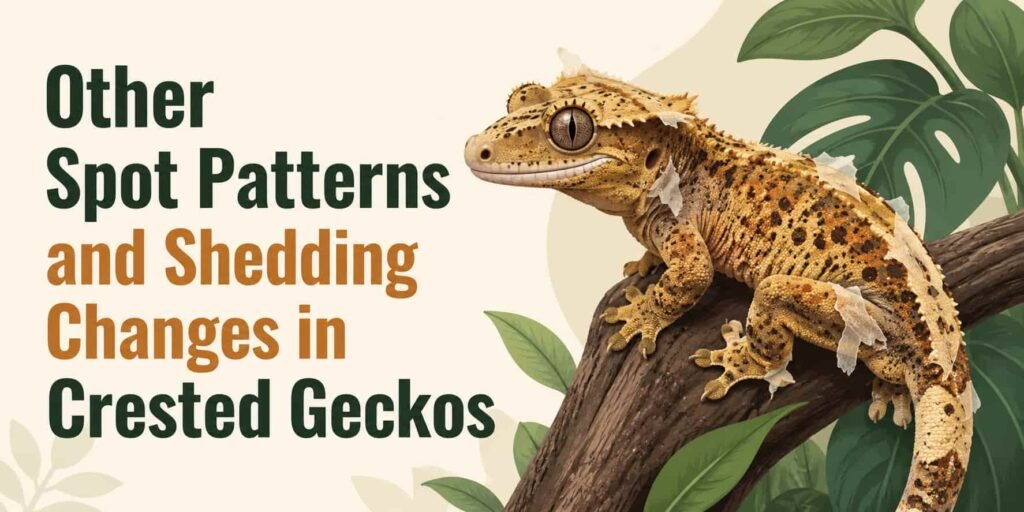
Crested geckos can show different types of skin markings, body spots, and color changes. Some marks are normal parts of their morph, while others may appear more noticeable during growth or shedding.
Ink-Like Blotches
Ink spots on a crested gecko are large, uneven, and irregular-shaped markings. They may also be called ink blotches or inkblot spots because they can look similar to random ink marks. These spots can appear in different colors and may be present in small or large numbers.
Unlike tiny freckles or peppered markings, ink spots are usually bigger and less uniform in shape. In most cases, they are simply part of the gecko’s natural skin pattern and coloration.
White-Looking Marks
Some owners may think their crested gecko has white spots, but true white spotting is not considered a standard trait in this species. What looks like white spots are usually portholes.
Portholes are special elongated body scales that do not contain much pigment. Because of this lack of color, they can look white or pale compared to the rest of the gecko’s skin.
Color Changes During Shedding
Shedding is a normal process that can temporarily change a crested gecko’s color. A few days before shedding, your gecko may look dull, grayish, lighter, or less vibrant than usual. This happens because the old skin is preparing to come off.
After a healthy and complete shed, the gecko’s colors, patterns, and skin markings usually look brighter and cleaner again.
Humidity and Healthy Shedding
Proper humidity is very important for a successful shed. A crested gecko terrarium should usually have enough moisture to support healthy skin and prevent problems. If the enclosure is too dry, your gecko may develop stuck shed, dry skin, or dehydration.
Keeping the humidity around 60%, with safe regular misting and a clean habitat, can help your crested gecko shed more easily and stay healthy.
Why Do Crested Geckos Fire Up and Fire Down?
Firing up and firing down are normal color-changing behaviors in many crested geckos. When a gecko fires up, its skin color, body pattern, and markings may look darker, brighter, or more intense. When it fires down, the colors usually become lighter, softer, or duller.
This color shift is linked to the gecko’s environment, activity level, mood, and stress response. However, not every crested gecko changes color in the same way. Some geckos fire up often, while others show only small changes.
What Does Firing Up Mean?
A crested gecko usually fires up when it is alert, active, excited, stressed, or responding to changes around it. During this time, its coloration may look more vivid, and its patterns may stand out more clearly.
What Does Firing Down Mean?
Firing down usually happens when a crested gecko is calm, relaxed, sleeping, or resting. Its colors may look paler, softer, or less noticeable. This is normal and does not usually mean the gecko is sick.
Common Reasons for Firing Up
Warmer temperatures can cause a crested gecko to fire up, especially when the enclosure becomes warmer than usual. Some owners notice stronger color around 80°F. However, you should not make the terrarium too hot just to see a color change, because overheating can harm your gecko’s health.
Higher humidity may also make a crested gecko fire up. When humidity rises to around 70%, some geckos become brighter or darker. Still, very high humidity should not be kept all the time, as it may cause respiratory issues, poor enclosure conditions, or other health problems.
Lighting changes can also affect crested gecko coloration. Many geckos look more vibrant at night because they are naturally more active in low light. Some owners also notice stronger color when their gecko is exposed to safe UVB lighting.
Activity and alertness are common causes of firing up. A gecko that is climbing, exploring, hunting, or moving around may show brighter body colors. A sleepy or resting gecko usually fires down.
Stress, fear, or aggression can also make a crested gecko fire up. This may happen after moving to a new enclosure, changes in the habitat, too much handling, poor living conditions, breeding behavior, or feeling threatened.
Read Also Tortoise Ate Dog Poop? [What Owners Must Know]Mites or Normal Spots: How to Tell the Difference
New spots on a crested gecko are usually harmless, but some dark marks may be a sign of mites. If the dots are flat and part of the skin, they are more likely to be natural dalmatian spots, oil spots, or normal color changes. However, if the spots are raised, moving, or sitting on top of the skin, your gecko may have a mite infestation.
Signs of Mites in Crested Geckos
Mites are tiny external parasites that can appear black, brown, or red. They may look similar in size to small dalmatian spots, which is why some owners confuse them with normal markings.
These parasites often appear first around the eyes, mouth corners, skin folds, and other soft areas of the body. They are usually small, round, and may move if you look closely. If your crested gecko is rubbing its body, acting stressed, eating less, or showing discomfort, mites could be the reason.
What to Do If Your Gecko Has Mites
If you think your crested gecko has mites, the safest step is to contact a reptile veterinarian. A vet can confirm the problem and recommend the right mite treatment for your pet.
You should also deep-clean the terrarium, decorations, hides, branches, and any enclosure accessories. This is important because mites lay eggs, and new mites can hatch even after the visible ones are removed. Without proper cleaning, the infestation may return and continue to affect your gecko’s skin health and comfort.
Most new black spots on a crested gecko are normal and are often linked to dalmatian spots, morph development, shedding, firing up, or firing down. Young geckos especially may change color during their first year of life.
Still, you should watch the spots carefully. If the dots move, look raised, appear near the eyes or mouth, or your gecko seems uncomfortable, they may be mites instead of natural skin markings. In that case, visit a reptile vet and clean the enclosure fully to help prevent the problem from coming back.
Final Thoughts on Black Spots in Crested Geckos
New black spots on a crested gecko are usually not a serious problem. In most cases, they are normal dalmatian spots or part of your gecko’s natural color pattern. Young crested geckos often change color during their first year, and their skin may also look different during shedding, firing up, or firing down.However, you should still check the spots closely. If the dots are raised, moving, or sitting on top of the skin, they may be mites instead of normal markings. Mites can irritate your gecko and may spread inside the terrarium. If you suspect mites, take your crested gecko to a reptile vet and clean the entire enclosure properly.Overall, most spot changes, skin color changes, and shedding changes are harmless, but moving or raised spots should always be treated as a possible health warning.
FAQs: Why Is My Crested Gecko Getting Black Spots? [Health Alert]
What does it mean when your crested gecko has black spots?
Black spots on a crested gecko are usually normal, especially if they are flat and appear as the gecko grows. These marks are often linked to genetics, natural pigmentation, or dalmatian spotting, and they are commonly called beauty marks. In most cases, they are not a health problem. However, if the spots are raised, moving, or appear with skin irritation, swelling, or unusual behavior, it is better to check with a reptile vet.
What are the common health problems in crested geckos?
Crested geckos are usually strong reptiles, but they can still develop health issues if their diet, humidity, temperature, or enclosure setup is not right. The most common problems include Metabolic Bone Disease (MBD), Floppy Tail Syndrome (FTS), dehydration, intestinal impaction, and stuck shed. Regular care, a balanced reptile diet, and proper habitat conditions can help prevent many of these issues.
How can you tell if a crested gecko is unhealthy?
An unhealthy crested gecko may show small but serious warning signs. Common red flags include sudden weight loss, low energy, sunken eyes, closed eyes, difficulty breathing, loss of appetite, and a soft or rubbery jaw, which may suggest Metabolic Bone Disease (MBD). If you notice these symptoms, contact an exotic pet vet or reptile veterinarian as soon as possible.
How can you tell if a crested gecko has Metabolic Bone Disease?
A crested gecko with Metabolic Bone Disease (MBD) may show signs like a soft or rubbery jaw, weak legs, shaking, bent limbs, trouble climbing, low energy, and sudden weight loss. This serious reptile health problem is often linked to poor calcium, phosphorus, or vitamin D3 balance. If you notice these symptoms, contact an exotic pet vet or reptile veterinarian quickly
Do crested geckos carry diseases?
Yes, crested geckos and other pet reptiles can carry Salmonella bacteria, even if they look healthy. These germs can spread to humans through handling, cage cleaning, or contact with reptile waste. To stay safe, always wash your hands after touching your gecko, its enclosure, food bowls, or accessories.iles.


![Why Does My Snake Pee on Me [Owner Guide]](https://reptilesinfo.com/wp-content/uploads/2026/06/Why-Does-My-Snake-Pee-on-Me-Owner-Guide.jpg)
![Are Ball Pythons Active After Eating [Must Know]](https://reptilesinfo.com/wp-content/uploads/2026/06/Are-Ball-Pythons-Active-After-Eating-Must-Know.jpg)
![Why Is My Crested Gecko Going Crazy [Stress Alert]](https://reptilesinfo.com/wp-content/uploads/2026/06/Why-Is-My-Crested-Gecko-Going-Crazy-Stress-Alert.jpg)
![Why Is My Leopard Gecko Not Moving [Stress Alert]](https://reptilesinfo.com/wp-content/uploads/2026/06/Why-Is-My-Leopard-Gecko-Not-Moving-Stress-Alert.jpg)
![Why Is My Crested Gecko’s Mouth White [Danger Signs]](https://reptilesinfo.com/wp-content/uploads/2026/06/Why-Is-My-Crested-Geckos-Mouth-White-Danger-Signs.jpg)