
![Tortoise Ate Dog Poop [What Owners Must Know]](https://reptilesinfo.com/wp-content/uploads/2026/06/Tortoise-Ate-Dog-Poop-What-Owners-Must-Know.jpg)
Seeing your tortoise eating dog poop can feel unpleasant and confusing, but this behavior is not unusual in animals. The habit of eating feces is called coprophagy, and it can happen in many species, including tortoises. Even though it may be a natural behavior, it is still important to understand why it happens and whether it is safe for your pet.
A tortoise may eat dog poop because its regular food does not provide enough nutrients, fiber, or diet variety. Sometimes, tortoises explore their surroundings by tasting different things, especially if they find strong smells interesting. However, dog feces should not become a regular part of a tortoise’s diet because it can carry bacteria, parasites, and other harmful organisms.
Is Dog Poop Safe for Tortoises?
Although some tortoises may eat feces in the wild, allowing your pet tortoise to eat dog poop is not recommended. Dog waste can expose your tortoise to health risks, including stomach upset, infection, and possible intestinal parasites. This is especially risky if the dog has recently eaten processed food, medication, or anything toxic.
What Your Tortoise May Be Missing
In this article, we will explain why tortoises eat dog poop, whether this behavior is normal, and what problems it may cause. We will also discuss the ideal foods for tortoises so you can make sure your pet gets the right nutrition, stays healthy, and avoids unsafe eating habits.
What This Guide Will Explain
If your tortoise keeps eating poop, it may be a sign that its diet needs improvement. A healthy tortoise diet should include suitable leafy greens, safe weeds, grasses, vegetables, proper calcium, and enough roughage. Giving your tortoise a more balanced diet can reduce this unwanted behavior and support better reptile health.
Why Tortoises May Eat Dog Poop
Seeing your tortoise eating dog poop can be unpleasant and surprising, but this behavior is not rare in animals. The act of eating feces is called coprophagy, and it can happen in tortoises for different reasons. In many cases, it is linked to hunger, curiosity, or an unbalanced tortoise diet.
Nutrient Deficiency or Hunger
One common reason a tortoise may eat dog poop is a lack of proper nutrition. If your tortoise is not getting enough food, or if its meals do not contain the right balance of fiber, minerals, calcium, and plant-based nutrients, it may start looking for other food sources. A hungry tortoise may eat almost anything it finds, including dog feces.
Sometimes, animal waste can still contain small amounts of undigested nutrients. Because of this, a tortoise may try to eat poop to recover nutrients that are missing from its regular food. However, this does not mean dog poop is healthy or safe for your pet.
Why This Behavior Can Be Harmful
Although eating poop once may not always cause serious illness, it should not become a regular habit. Dog poop can contain harmful bacteria, intestinal parasites, toxins, and waste products that the dog’s body has already removed. If your tortoise eats dog waste repeatedly, these harmful substances may affect its digestive system and overall reptile health.
Read Also Black Snakes in Pennsylvania [Scary but Useful]What Tortoise Owners Should Understand
If your tortoise keeps eating dog poop, it may be a sign that its diet or feeding routine needs improvement. A healthy tortoise diet should include safe grasses, weeds, leafy greens, vegetables, proper calcium supplementation, and clean water. Keeping the enclosure clean and removing dog waste quickly can also help stop this unsafe habit.
In simple words, coprophagy in tortoises may happen because of missing nutrients or hunger, but dog poop is not a safe food source. A balanced diet and clean environment are the best ways to protect your tortoise.
Limited Food Variety
A lack of diet variety can also cause a tortoise to eat dog poop or other waste. Tortoises naturally enjoy different types of food, and when their meals are too repetitive, they may begin searching for something new to taste.
In the wild, tortoises spend much of their time grazing over large areas. They eat many kinds of grasses, weeds, leafy greens, flowers, and safe plants. This natural variety helps support their digestion, nutrition, and overall reptile health.
A pet tortoise, however, has limited choices inside its enclosure. If it is given the same food every day, it may try to explore other available materials, including feces, animal waste, or dog poop. This behavior, known as coprophagy, may happen because the tortoise is bored, curious, or not satisfied with its regular meals.
To reduce this habit, try to copy a more natural tortoise diet. Offer a safe mix of grasses, weeds, leafy greens, vegetables, and proper calcium sources. A varied and balanced diet can make your tortoise less interested in unsafe items and help keep it healthy.
Do Tortoises Eat Other Animals’ Poop?
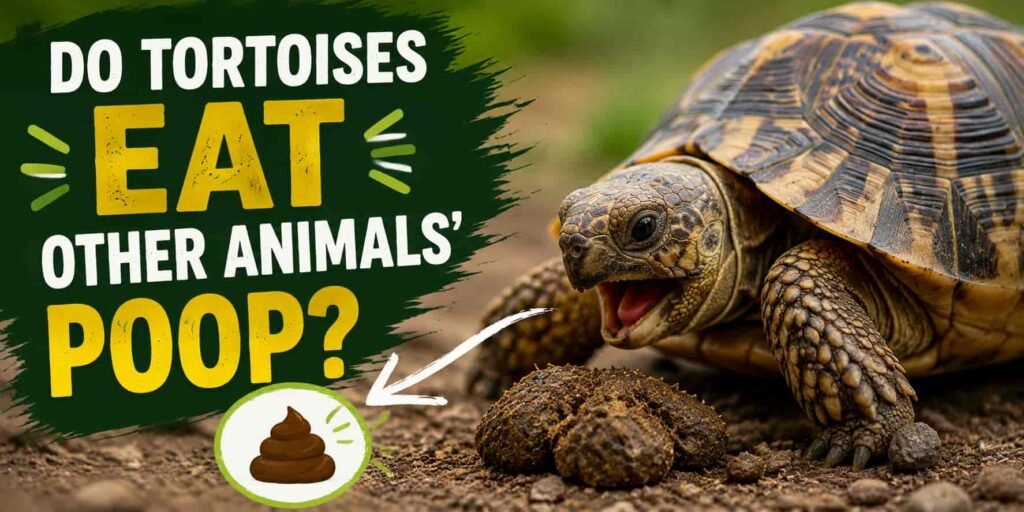
Yes, tortoises may eat feces from other animals, including the waste of other tortoises. This behavior is called coprophagy, and it can happen when tortoises are curious, hungry, lacking diet variety, or searching for extra nutrients.
If you keep more than one tortoise in the same enclosure, they may sometimes eat each other’s poop. This is usually less concerning when the tortoises are the same species, have lived together for a long time, and are healthy. However, it can become risky when different tortoise species are kept together or when a tortoise shares space with another type of animal.
Why Eating Other Animal Waste Can Be Risky
Different animals naturally carry different types of bacteria, parasites, and microorganisms in their waste. When a tortoise eats another animal’s feces, these new bacteria can enter its digestive system and may disturb its normal gut balance.
This can lead to health problems, such as stomach upset, infection, poor digestion, or exposure to intestinal parasites. For this reason, it is best to keep your tortoise’s enclosure clean and remove animal waste as soon as possible.
In simple words, tortoises may eat other types of poop, but it is not a safe habit. A clean habitat, proper tortoise diet, and good reptile care can help reduce this behavior and protect your pet’s health.
Is It Safe for a Tortoise to Eat Its Own Poop?
Seeing your tortoise eating its own poop may look worrying, but it is not always an emergency. This behavior is known as coprophagy, and it can happen in tortoises from time to time. However, it should not become a regular habit.
Although a small amount of feces may still contain traces of undigested nutrients, the risks are usually greater than the benefits. Tortoise waste can contain bacteria, parasites, toxins, and other materials that the body has already removed. If your tortoise eats its waste often, it may increase the chance of digestive problems, infection, or poor reptile health.
How to Prevent This Habit
The best way to stop this behavior is to keep the enclosure clean. Check your tortoise’s habitat daily and remove feces as soon as you see it. A clean living space lowers the risk of bacterial exposure and helps prevent your tortoise from developing unsafe eating habits.
In simple words, you do not need to panic if it happens once, but you should not allow your tortoise to eat poop regularly. Good enclosure hygiene, a balanced tortoise diet, clean water, and proper reptile care are the best ways to keep your pet healthy.
Health Risks of Tortoises Eating Poop
Yes, tortoises eating poop can lead to health problems, especially if it becomes a regular habit. The main concern is parasites, which can seriously affect your tortoise’s digestive system, appetite, energy, and overall reptile health.
Feces may contain harmful bacteria, intestinal parasites, toxins, and waste materials that the body has already removed. When a tortoise eats poop, these organisms can enter its body and may cause illness. This risk is higher if the poop comes from another tortoise, a different animal, or a pet with an unknown health condition.
Common Signs of Parasites in Tortoises
A tortoise with parasites may show several warning signs. These can include loss of appetite, weight loss, diarrhea, vomiting, weakness, low energy, and changes in normal behavior. Some tortoises may also become less active or stop eating as much as usual.
When to Visit a Reptile Vet
To protect your tortoise’s health, it is a good idea to take a stool sample to a reptile vet once or twice a year. The vet can check the sample under a microscope to see whether parasites are present.
If you think your tortoise has parasites, do not wait too long. A reptile vet can test your pet and prescribe the right parasite treatment or medication. You should also deep-clean the enclosure, remove old feces, replace dirty bedding, and disinfect safe surfaces to help prevent the problem from coming back.
In simple words, eating poop may seem like normal coprophagy, but it can expose your tortoise to parasites and infection. Clean housing, regular fecal checks, and proper tortoise care are the best ways to keep your pet healthy.
What a Healthy Tortoise Diet Should Include
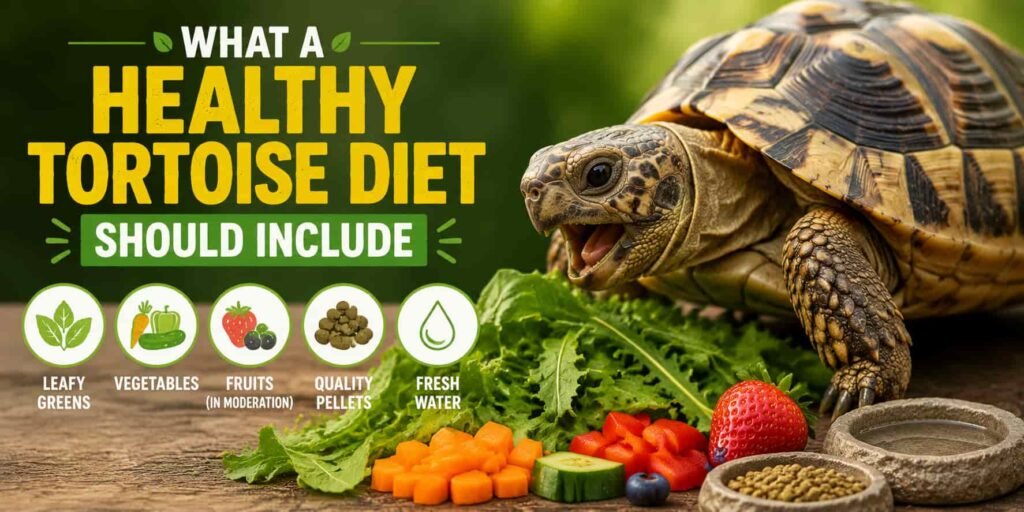
A balanced and varied tortoise diet is one of the best ways to stop your pet from eating its own poop or other animal waste. When a tortoise receives enough nutrients, fiber, calcium, and food variety, it is less likely to look for unsafe things to eat, such as feces or dog poop.
In the wild, most tortoises eat mainly plant-based foods. Their diet usually includes grasses, safe weeds, leafy greens, flowers, and other natural plant material. Pet tortoises should also be given a diet that is close to what they would eat in their natural habitat. This helps support healthy digestion, steady growth, strong bones, and good reptile health.
Why Calcium Is Important
Calcium is very important for tortoises because it helps build a strong shell and healthy bones. It also supports normal growth and body development. Many tortoises benefit from having their food lightly dusted with a calcium supplement once or twice a week. A non-phosphorus calcium powder with added vitamin D3 may be helpful, especially for tortoises that do not get enough natural sunlight or proper UVB lighting.
How Often Should Tortoises Eat?
Feeding frequency depends on the age, size, health, and species of your tortoise. Baby and juvenile tortoises usually need food every day because they are still growing. Older tortoises may eat every other day or a few times per week, depending on their needs.
There is no single feeding rule that fits every tortoise. The best approach is to watch your pet’s appetite, weight, activity level, and stool quality. If your tortoise keeps trying to eat poop, it may need more diet variety, better nutrition, or a cleaner enclosure.
In simple words, a healthy tortoise needs a natural, plant-based diet, proper calcium, clean water, and safe feeding habits. A well-fed tortoise is much less likely to develop unsafe behaviors like coprophagy.
Best Foods for Sulcata Tortoises
A Sulcata tortoise needs a high-fiber, plant-based diet that is mainly made up of grasses, safe weeds, and hay. These foods are close to what Sulcatas naturally eat in the wild and help support healthy digestion, strong growth, and good overall reptile health.
Hay is especially useful because it provides roughage and keeps the digestive system working properly. Safe grasses and weeds should make up most of the diet, while treats should only be offered occasionally.
Some healthy occasional foods for Sulcata tortoises include hibiscus leaves and prickly pear cactus. These can add useful diet variety, but they should not replace the main diet of grasses and hay.
Vegetables can also be added from time to time, but they should be given in small amounts. A Sulcata’s diet should stay natural, high in fiber, and low in rich or watery foods. Feeding the right foods can also reduce unsafe behaviors like eating feces or animal waste.
Diet Needs for Galapagos, Leopard, and Aldabra Tortoises
Galapagos tortoises, Leopard tortoises, and Aldabra tortoises need a natural, high-fiber diet based mainly on grasses and hay. These foods should make up about two-thirds to three-fourths of their daily diet because they support healthy digestion, steady growth, and strong overall reptile health.
The remaining part of their diet can include safe leafy greens, edible weeds, and suitable flowers. These foods add important diet variety and help provide extra nutrients, fiber, and minerals.
Before giving your tortoise any new plant, always check whether it is safe. Some plants may look harmless but can be toxic to tortoises. Researching new foods first is one of the best ways to protect your pet’s digestive system, prevent illness, and maintain a healthy tortoise diet.
Diet Needs for Russian Tortoises
Russian tortoises have slightly different feeding needs compared with many grass-eating tortoise species. They do not rely heavily on grass as a main food source. In most cases, grass should make up only a small part of their diet, usually no more than about 10%.
Most of a Russian tortoise’s meals should include safe leafy greens, suitable vegetables, edible weeds, and other healthy plant-based foods. These foods provide important nutrients, fiber, and minerals that support proper digestion, shell strength, and overall reptile health.
A balanced Russian tortoise diet should be varied but not too rich. Offering the same food every day can lead to poor nutrition or unwanted eating habits, including interest in feces or other unsafe materials. To keep your tortoise healthy, provide fresh greens, clean water, proper calcium, and safe foods that match its natural feeding needs.
Read Also Types of Sea Turtles in Australia [Wild Facts]How to Give Your Tortoise More Diet Variety
A healthy tortoise diet should include a wide range of safe, plant-based foods. In the wild, tortoises may eat many different types of plants, including grasses, weeds, leaves, and flowers. This natural variety helps support strong digestion, better nutrition, and overall reptile health.
Pet tortoises can become bored or nutritionally unbalanced if they eat the same food every day. To prevent this, offer a mix of safe leafy greens, grasses, edible weeds, vegetables, and suitable flowers. Always check that a new plant is safe before feeding it, because some plants can be toxic to tortoises.
Fruit Should Be Limited
Fruit should only be given in small amounts and only as an occasional treat. It should not be part of your tortoise’s regular diet because too much fruit can upset the digestive system and cause health problems. Citrus fruits should be avoided completely, as they are not suitable for most tortoises.
Should You Use Commercial Tortoise Food?
Commercial tortoise food can be convenient, but it should not replace fresh, natural foods. Many packaged foods may fill your tortoise’s stomach, but they may not provide the same quality of fiber, minerals, and nutrients found in real grasses, greens, and vegetables.
Fresh plant material is usually the better choice for daily feeding. However, if you want to include commercial food as a small part of a varied diet, trusted options such as Zoo Med and Mazuri are commonly used by tortoise owners.
In simple words, the best way to keep your tortoise healthy is to copy its natural feeding habits as much as possible. A varied, plant-based diet with safe greens, grasses, weeds, calcium, and clean water can help reduce unsafe behaviors like coprophagy and support long-term tortoise care.
Foods That Are Unsafe for Tortoises
Some foods and plants should never be given to a tortoise because they can be toxic and may seriously harm your pet’s health. Even a small amount of the wrong plant can affect the digestive system, cause illness, or lead to dangerous poisoning.
Before adding any new plant, flower, fruit, or vegetable to your tortoise diet, always check that it is safe for your tortoise’s species. The list below is not complete, but these foods and plants should be avoided:
Amaryllis, avocado, buttercup, calla lily, daffodil, ficus, ivy, and poinsettia.
These plants are not suitable for reptile care and should be kept away from your tortoise’s enclosure. A safe diet should focus on approved grasses, leafy greens, edible weeds, suitable vegetables, clean water, and proper calcium. Choosing safe foods helps protect your tortoise from toxins, stomach problems, and other serious health risks.
Final Thoughts on Tortoises Eating Dog Poop
If your tortoise eats dog poop, try not to panic. This behavior, known as coprophagy, is fairly common in captive tortoises. However, it should not be ignored if it happens often.Frequent poop-eating may be a sign that your tortoise needs a better diet, more food variety, or extra nutrients. A tortoise that does not get enough fiber, calcium, safe leafy greens, grasses, weeds, and plant-based foods may become more likely to eat feces or other unsafe materials.It is also important to remember that dog feces and other types of animal waste can carry harmful bacteria, intestinal parasites, and toxins.
FAQs: Tortoise Ate Dog Poop? [What Owners Must Know]
Is Dog Poop Safe for Tortoises to Eat?
No, tortoises should not eat dog poop. Even if they are attracted to its smell, it can contain harmful bacteria, parasites, pathogens, and traces of medications from the dog’s diet. Eating it can make a tortoise sick.
What Happens When a Tortoise Eats Its Own Feces?
When a tortoise practices coprophagy, it consumes its own feces to obtain beneficial bacteria that aid in digestion. This process helps the tortoise break down food more efficiently and extract additional nutrients and energy that were not absorbed the first time.
Can Tortoises Recognize Their Owners?
Yes, tortoises can recognize their regular caregivers. They do not bond like mammals, but they can identify familiar people through smell, sight, and hearing, especially when linked with food, safety, and routine.
Is Tortoise Poop Harmful to Dogs?
Usually, tortoise poop is not seriously harmful to dogs. Some tortoises may carry pinworms, but these parasites normally live only in tortoise intestines and usually cannot infect dogs or humans. Still, it is best to stop dogs from eating feces to avoid bacteria, stomach upset, or other health risks.
Do Tortoises Form Bonds with Humans?
Tortoises do not create emotional bonds like dogs or cats, but they can develop familiarity, trust, and attachment through routine care. Over time, they recognize their primary caregiver and associate them with safety and food.


![Why Does My Snake Pee on Me [Owner Guide]](https://reptilesinfo.com/wp-content/uploads/2026/06/Why-Does-My-Snake-Pee-on-Me-Owner-Guide.jpg)
![Are Ball Pythons Active After Eating [Must Know]](https://reptilesinfo.com/wp-content/uploads/2026/06/Are-Ball-Pythons-Active-After-Eating-Must-Know.jpg)
![Why Is My Crested Gecko Going Crazy [Stress Alert]](https://reptilesinfo.com/wp-content/uploads/2026/06/Why-Is-My-Crested-Gecko-Going-Crazy-Stress-Alert.jpg)
![Why Is My Leopard Gecko Not Moving [Stress Alert]](https://reptilesinfo.com/wp-content/uploads/2026/06/Why-Is-My-Leopard-Gecko-Not-Moving-Stress-Alert.jpg)
![Why Is My Crested Gecko’s Mouth White [Danger Signs]](https://reptilesinfo.com/wp-content/uploads/2026/06/Why-Is-My-Crested-Geckos-Mouth-White-Danger-Signs.jpg)