
![Beardie Brumation With Open Eyes [Warning Signs]](https://reptilesinfo.com/wp-content/uploads/2026/06/Beardie-Brumation-With-Open-Eyes-Warning-Signs.jpg)
Many new owners know about hibernation,beardie but brumation in bearded dragons can feel confusing at first. During this natural resting period, your beardie may sleep more, eat less, move slowly, or hide for long hours.
So, do beardie brumation dragons brumate with their eyes open? Yes, some bearded dragons may keep their eyes open while brumating, while others keep them closed most of the time. Both behaviors can be normal, depending on the individual reptile.
What This Means for Your Bearded Dragon
If your bearded dragon is quiet, resting, and showing normal signs of brumation, open eyes are usually not a problem. However, you should still watch for signs of stress, dehydration, illness, weight loss, or unusual behavior.
Read Also Bearded Dragon Bath Poop Habit [Quick Fix]Basic Care During Brumation
During the brumation period, keep your beardie’s enclosure safe, clean, and comfortable. Check the temperature, provide fresh water, avoid unnecessary handling, and monitor your pet’s health. If your bearded dragon seems weak, sick, or loses too much weight, contact a reptile vet.
Do Bearded Dragons Brumate With Open Eyes?
Yes, some bearded dragons can brumate with their eyes open, while others may keep their eyes closed for most of the brumation period. Every beardie behaves differently. Some sleep deeply for weeks, while others take long rests, wake up sometimes, open their eyes, and then go back to resting.
Some owners also notice partial brumation. This means the bearded dragon may stay inside its hide, move very little, and look inactive, but it may still be awake at times.
What Brumation Means in Bearded Dragons
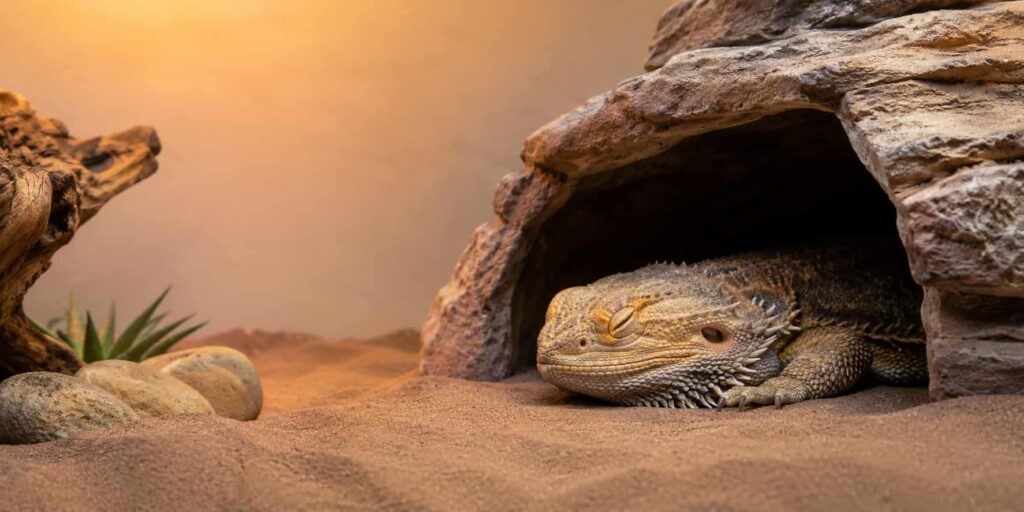
Brumation is the reptile version of hibernation, but it is not exactly the same. Mammals often go into a deeper shutdown during hibernation, while reptiles like bearded dragons usually become slow, quiet, and less active.
- Eat less or stop eating
- Drink less than usual
- Move slowly or stay still
- Poop less often
- Spend more time in a hide
- Rest on the cool side of the enclosure
- Sleep under substrate or in a dark, quiet area
Is This Normal Behavior?
In many cases, this is normal brumation behavior. A bearded dragon may rest with its eyes open, half-open, or fully closed. What matters most is its overall health. If your beardie is losing too much weight, seems weak, looks dehydrated, or acts sick, it is best to contact a reptile vet for safety.
Do All Bearded Dragons Go Through Brumation?
No, not all bearded dragons go through brumation. Every beardie is different. Some may brumate every year, while others may never do it at all. This usually depends on the reptile’s natural instincts, age, health, environment, and seasonal changes.
Both male and female bearded dragons can brumate. In many cases, male bearded dragons may wake up from brumation earlier than females.
Should You Stop a Bearded Dragon From Brumating?
In most cases, you should not stop your bearded dragon from brumating. Brumation is a natural behavior, and healthy adult beardies should usually be allowed to follow their body’s normal cycle.
However, there are two important situations where extra care is needed. First, if your bearded dragon is sick, weak, underweight, dehydrated, or not healthy enough, brumation may be risky. Second, if your beardie is still a baby or juvenile, you should be careful because young bearded dragons may not have enough stored energy and nutrients to safely rest for a long period.
Read Also Bearded Dragon Outdoor Rage [Calm Him Fast]What to Do Before Preventing Brumation
Some owners try to prevent baby bearded dragons from brumating by increasing lighting, keeping the enclosure routine active, and offering more gentle handling. However, this should not be done without proper guidance.
The safest choice is to speak with a reptile veterinarian before trying to stop brumation. A vet can check your beardie’s health, weight, hydration, and overall condition, then guide you on whether brumation prevention is safe or necessary.
How Long Can Bearded Dragon Brumation Last?
Brumation can last for a few days, several weeks, or even a few months. Every bearded dragon is different, so there is no exact time limit that fits all beardies. Some may wake up sometimes to eat, drink, or move around, while others may stay hidden and inactive for most of the brumation period.
Although brumation is most common during the fall and winter months, a bearded dragon can brumate at any time of the year. Cooler weather, shorter daylight hours, and natural seasonal changes often trigger this behavior. However, some captive beardies may also brumate during spring or summer, which is not always a reason to panic.
Why Bearded Dragons Enter Brumation
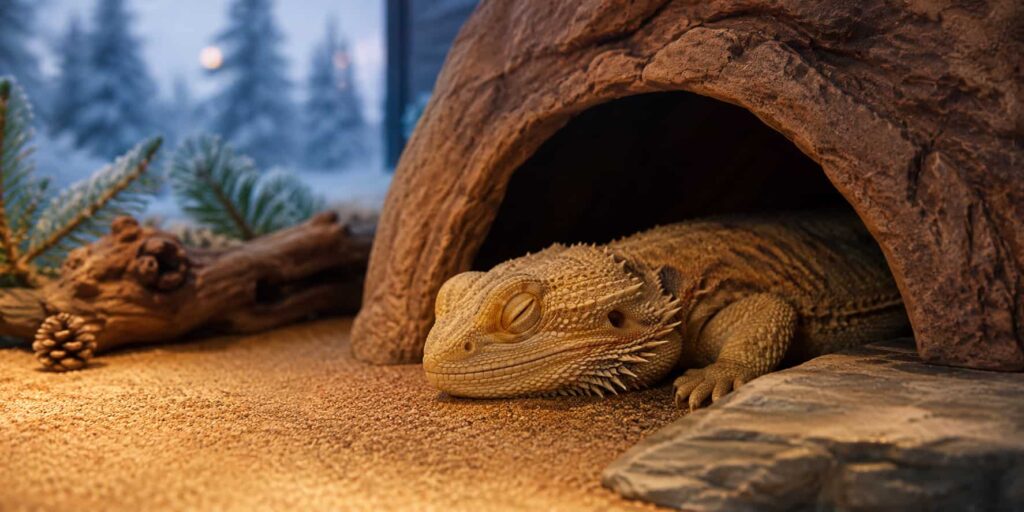
In the wild, bearded dragons brumate to survive colder months when food sources become limited. During fall and winter, many insects disappear, plants die, and the environment becomes cooler. To save energy, bearded dragons slow down, hide, and wait until warmer weather returns.
Even in captivity, your beardie still carries strong natural instincts. Its body has a type of biological clock that tells it when to rest, reduce activity, and conserve energy during certain seasons.
Brumation and Breeding Behavior
Brumation may also support reproduction. During this resting phase, female bearded dragons may prepare for ovulation, while males may develop stronger breeding readiness. After brumation, many healthy adult beardies become more active and may show more mating behavior.
Overall, brumation is a normal part of a bearded dragon’s natural life cycle. As long as your beardie appears healthy, maintains a safe weight, and shows no signs of illness, dehydration, or extreme weakness, this quiet resting period is usually nothing to worry about.
Signs Your Bearded Dragon May Be Preparing for Brumation
A bearded dragon usually shows more behavioral changes than physical changes before brumation. If your beardie is healthy but suddenly becomes quieter, less active, and spends more time hiding, it may be getting ready for its natural brumation perio
- Sleeping more during the day or going to sleep earlier than usual
- Showing little or no interest in food and water
- Becoming less active, slow, lazy, or lethargic
- Digging into the substrate or hiding more often
- Spending less time basking and more time on the cool side of the enclosure
- Avoiding handling or acting uncomfortable when touched
- Pooping less because it is eating less
- Acting more irritable, stressed, or withdrawn
What These Signs Mean
These behaviors can be normal when a bearded dragon is preparing to brumate. During this time, your beardie may slow down, rest more, and conserve energy. However, similar signs can also appear with illness, dehydration, poor temperature, or enclosure problems.
If your bearded dragon looks weak, loses weight quickly, has sunken eyes, refuses all water, or seems sick, it is best to contact a reptile veterinarian before assuming it is only brumation.
How to Care for a Bearded Dragon During Brumation
If you think your bearded dragon is getting ready for brumation, the first step is to make sure it is healthy. Some health problems can look like brumation signs, so check for impaction, parasites, stress, poor appetite, sudden weight loss, and incorrect enclosure conditions.
The safest option is to visit a reptile vet before your beardie fully enters brumation. A vet can confirm that your bearded dragon is strong enough to brumate and does not have any hidden illness.
Read Also Why Is My Snake Drinking So Much? [Common Causes]Set Up the Enclosure Properly
Before brumation starts, prepare a safe and comfortable bearded dragon enclosure. Your beardie should have a large hide where its whole body can fit. Place this hide on the cool side of the tank, so your pet can rest in a darker and calmer area.
Keep the cool side temperature around 75–80°F, and keep the basking area around 95–105°F. These temperatures help your bearded dragon stay safe while its body slows down.
Adjust the Light Cycle
A normal light schedule is often 12 hours on and 12 hours off. During brumation, you can reduce the lighting to about 8 hours on and 16 hours off. This shorter day and night cycle feels more natural and can help copy the seasonal changes your beardie would experience in the wild.
During this time, avoid too much handling, keep fresh water available, and monitor your bearded dragon’s health, weight, and behavior. If your beardie seems weak, dehydrated, or sick, contact a reptile veterinarian.
Food and Water During Brumation
Even if your bearded dragon is not interested in eating or drinking during brumation, fresh water should always be available in the enclosure. Once a week, you can offer a small amount of leafy greens. It is normal if your beardie refuses food, but offering it gives your pet the chance to eat if it wants to.
If your bearded dragon eats during brumation, make sure it has enough time to bask and digest the food properly. You may need to gently wake your beardie each day so it can warm up under the basking light or have a short warm soak until it passes stool. Without proper digestion, food may stay in the stomach too long and could lead to serious health problems, such as digestive discomfort or impaction.
Weekly Warm Baths for Hydration
During brumation, a bearded dragon’s skin can become dry. A weekly warm water soak can help support hydration, skin health, and overall comfort. Your beardie may stay sleepy during the soak, and that is usually normal.
Use a bathtub or clean plastic tub with warm water filled up to your pet’s shoulder level. Let your bearded dragon soak for about 20–30 minutes. After the bath, gently dry it with a soft towel and place it in the basking area so it can fully dry before going back into its hide. This helps keep your beardie safe, warm, and comfortable during the brumation period.
Handle Less and Check Weight During Brumation
During brumation, it is best to reduce handling as much as possible. Your bearded dragon needs quiet rest, and too much handling can cause unnecessary stress. However, when you take your beardie out for a weekly warm soak, you can also check its weight at the same time.
A healthy bearded dragon should not lose much weight during the brumation period. If you notice clear weight loss, weakness, dehydration, or unusual behavior, contact a reptile veterinarian. Weight loss during brumation can sometimes mean parasites, illness, poor enclosure conditions, or another hidden health problem.
Is My Bearded Dragon Brumating or Dead?
Sometimes, it can be difficult to tell whether a bearded dragon is deeply brumating or has passed away. A brumating beardie may look very still, feel relaxed or limp, and may not respond much when disturbed.
A dead bearded dragon, however, may become stiff, lose normal body color, have sunken eyes, a drooping body, or an open mouth. These signs are serious and should not be ignored.
If you are unsure, gently check for breathing, small body movements, or response to touch. Some owners briefly place their beardie on its back to see if it tries to turn over, but this can be stressful, so do it only for a second and with care. If there is any doubt, contact a reptile vet immediately for safe advice.
Final Thoughts on Bearded Dragon Brumation
Every bearded dragon behaves differently during brumation. Some beardies may keep their eyes open, some may open them only sometimes, and others may keep their eyes closed for most of the resting period. These differences are usually normal as long as your pet stays healthy.During brumation, make sure your bearded dragon has the right lighting, safe temperatures, and a quiet place to rest. Fresh water should always be available, even if your beardie does not drink often. You can also offer leafy greens once a week, but do not worry if your pet refuses to eat.A weekly warm soak can help with hydration and skin health. This is also a good time to check your beardie’s weight. A healthy bearded dragon should not lose much weight during brumation. If you notice weight loss, weakness, dehydration, or unusual behavior, contact a reptile veterinarian.
FAQs: Beardie Brumation With Open Eyes? [Warning Signs]
Is it okay to handle a bearded dragon during brumation?
It is best to avoid handling your bearded dragon during brumation unless it is necessary. During this natural resting period, your beardie may sleep for weeks or even months, move less, and eat very little. Too much handling can cause stress and disturb its normal brumation cycle. Let your bearded dragon rest quietly, but gently check its health, weight, hydration, and enclosure conditions when needed.
What are the signs of calcium deficiency in bearded dragons?
Signs of calcium deficiency in bearded dragons may include weak legs, shaking, tremors, a soft jaw, swollen limbs, poor movement, and trouble climbing or walking. This problem is often linked to low calcium, poor UVB lighting, an unbalanced diet, or lack of proper supplements. If these signs appear, metabolic bone disease may be a concern, so it is best to contact a reptile veterinarian quickly.
Do bearded dragons stay awake during brumation?
Most bearded dragons sleep much more during brumation, but they may not stay asleep the entire time. Some beardies may briefly wake up, open their eyes, shift position, or drink water before resting again. This is usually normal brumation behavior. However, because a deeply resting beardie can look very still, owners may worry whether it is brumating or sick. If your bearded dragon has sunken eyes, severe weight loss, stiffness, dehydration, or no signs of breathing, contact a reptile veterinarian immediately.
What triggers brumation in bearded dragons?
Brumation in bearded dragons is usually triggered by seasonal changes, especially cooler temperatures, shorter daylight hours, and changes in their natural biological clock. In the wild, this resting state helps reptiles survive difficult conditions such as cold weather, limited food, drought, or extreme heat. During this time, a healthy bearded dragon may become slow, inactive, sleepy, and less interested in eating.
What are the 10 signs of low calcium?
Low calcium levels can affect the nerves, muscles, and heart. Common signs may include tingling in the lips, tongue, fingers, or feet, muscle aches, muscle cramps, throat spasms, breathing difficulty, stiff muscles, tetany, seizures, abnormal heart rhythms, and unusual weakness or tiredness. Severe calcium deficiency can be serious, so medical help is needed if symptoms are strong or sudden.


![Why Does My Snake Pee on Me [Owner Guide]](https://reptilesinfo.com/wp-content/uploads/2026/06/Why-Does-My-Snake-Pee-on-Me-Owner-Guide.jpg)
![Are Ball Pythons Active After Eating [Must Know]](https://reptilesinfo.com/wp-content/uploads/2026/06/Are-Ball-Pythons-Active-After-Eating-Must-Know.jpg)
![Why Is My Crested Gecko Going Crazy [Stress Alert]](https://reptilesinfo.com/wp-content/uploads/2026/06/Why-Is-My-Crested-Gecko-Going-Crazy-Stress-Alert.jpg)
![Why Is My Leopard Gecko Not Moving [Stress Alert]](https://reptilesinfo.com/wp-content/uploads/2026/06/Why-Is-My-Leopard-Gecko-Not-Moving-Stress-Alert.jpg)
![Why Is My Crested Gecko’s Mouth White [Danger Signs]](https://reptilesinfo.com/wp-content/uploads/2026/06/Why-Is-My-Crested-Geckos-Mouth-White-Danger-Signs.jpg)