
![Bearded Dragon Bites Tank Decor [Causes & Fixes]](https://reptilesinfo.com/wp-content/uploads/2026/06/Bearded-Dragon-Bites-Tank-Decor-Causes-Fixes.jpg)
A bearded dragon may sometimes chew or bite objects inside its terrarium, such as logs, rocks, branches, or other enclosure ornaments. At first, this behavior may look harmless, but if your beardie starts biting many items repeatedly, it can be a sign that something is wrong.
The most common reasons for biting ornaments include hunger, calcium deficiency, mouth irritation, territorial behavior, mating or courting behavior, shedding discomfort, or a reaction to a perceived threat. In many cases, this action may also be linked to stress, aggression, or discomfort inside the habitat.
To understand the cause, check your bearded dragon’s diet, calcium intake, mouth health, tank setup, temperature, lighting, and overall behavior patterns. A healthy beardie needs a safe enclosure, proper UVB lighting, balanced nutrition, enough space, and a calm environment.
In this guide, we will explain the main reasons why a bearded dragon bites decorations, how to reduce aggressive behavior, and what essentials every beardie needs to stay healthy and comfortable.
Biting Tank Decorations Because of Hunger
A bearded dragon may bite ornaments, logs, rocks, or other tank decorations when it is feeling hungry. Since biting is naturally connected to feeding behavior, your beardie may be searching for something to chew or eat inside the enclosure.
Watch when this behavior happens. If your bearded dragon bites objects mostly before its regular feeding time, hunger may be the main reason. This is more common in baby bearded dragons and juvenile bearded dragons because they grow quickly and need more nutrition, protein, and frequent meals.
To reduce this behavior, review your beardie’s feeding schedule, portion size, and overall diet plan. Make sure it is getting enough suitable insects, vegetables, calcium, and balanced food according to its age and growth stage.
Biting Tank Decorations Because of Calcium Deficiency
Another possible reason is a mineral deficiency, especially a lack of calcium. When a beardie is not getting enough calcium supplements, vitamins, or proper UVB lighting, it may try to chew objects in the cage as a way of searching for missing nutrients
To prevent this, check your bearded dragon’s diet, supplement routine, calcium intake, and UVB setup. Make sure your beardie is receiving the correct amount of calcium powder, balanced nutrition, and age-appropriate food to support healthy bones, growth, and overall reptile health.
Biting Tank Decorations Because of Mouth Discomfort
A bearded dragon may bite tank ornaments, rocks, logs, or other enclosure decorations if it has mouth irritation or sore gums. Just like young children chew on hard objects when their gums hurt, a beardie may also chew items inside the terrarium to reduce oral discomfort.
This behavior may happen if there is a small injury, swelling, infection, stuck food, or another mouth health problem. If your bearded dragon keeps biting objects, gently check inside its mouth for signs of redness, sores, bleeding, swelling, or unusual discharge.
If you notice anything abnormal, contact a reptile vet or an experienced bearded dragon breeder. Early care can help prevent the problem from becoming more serious and keep your beardie healthy.
Read Also Bearded Dragon Euthanasia – Avoid Mistakes Every Owner Makes [Tips]Biting Tank Decorations During Mating Season
A bearded dragon may also bite ornaments because of courting behavior or breeding season hormones. Male bearded dragons can become more active, restless, and aggressive when they are looking for a mate.
During this time, your beardie may bite objects in the enclosure, move around more than usual, show dominance behavior, or react strongly to reflections, other reptiles, or movement nearby. This is usually connected to mating instincts, territorial aggression, and changes in normal behavior patterns. Keeping the environment calm and reducing visible threats can help your beardie feel safer.
Biting Tank Decorations During Shedding
A bearded dragon may bite tank ornaments, rocks, logs, or other enclosure decorations during shedding. Shedding can be uncomfortable because the old skin must come off properly so new skin can grow underneath.
During this time, your beardie may feel stress, itchiness, or irritation. Biting objects inside the terrarium may be a way to release frustration or help rub against rough surfaces. This behavior is usually temporary, but you should still check that the humidity, temperature, and tank setup are suitable for healthy shedding.
Biting Tank Decorations Because of Fear or Stress
A bearded dragon may also bite ornaments if it feels scared, unsafe, or threatened. This can happen when the beardie is new to your home, placed in a different habitat, or exposed to sudden changes in its environment.
Common stress triggers include loud noises, nearby construction, strong vibrations, bright movement, or a new pet such as a cat or dog. These changes can make your dragon feel defensive, leading to stress behavior, aggression, glass surfing, hiding, or biting objects in the enclosure.
To help your beardie calm down, keep the terrarium environment quiet, stable, and secure. Remove possible threats, reduce noise, and give your pet time to adjust comfortably.
How to Calm an Aggressive Bearded Dragon
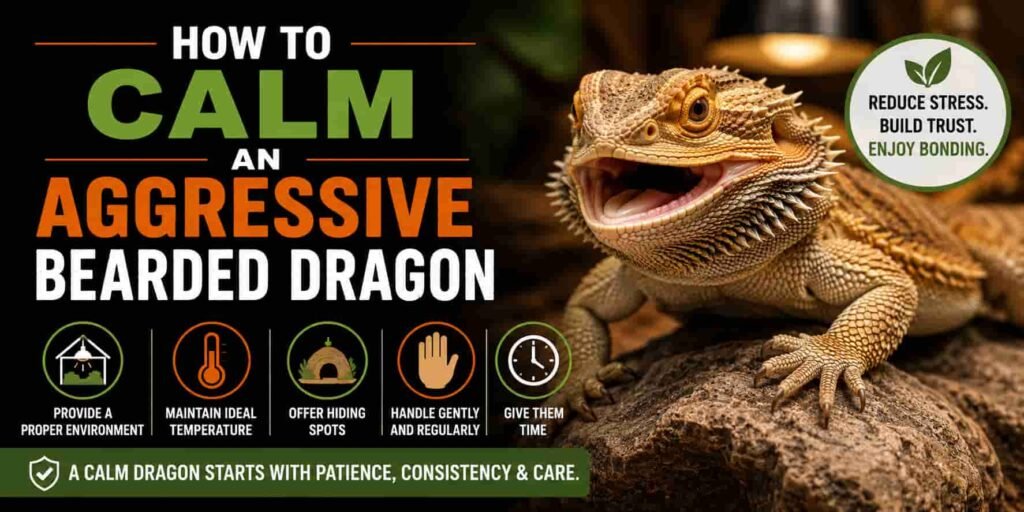
When a bearded dragon starts biting tank ornaments, it may be showing a form of aggression, stress, or discomfort. As a pet owner, the main goal is to make the terrarium environment safer, calmer, and more comfortable so your beardie feels secure.
Improve the Enclosure Setup
Start by checking your bearded dragon’s enclosure carefully. If the tank is too crowded with logs, rocks, hides, branches, or other decorations, your beardie may feel trapped or stressed. Removing extra items can create more open space and help your dragon move around freely without feeling overwhelmed.
You can also add a few safe edible plants or beardie-friendly greens inside the terrarium. This may help if the biting behavior is linked to hunger, foraging behavior, or the need to chew on something safe.
Also, make sure the temperature, basking area, and cool side of the tank are properly balanced. Although bearded dragons come from warm Australian environments, too much heat can cause stress, irritability, and aggressive behavior. A clean, spacious, and well-regulated habitat can help your beardie feel calmer and more comfortable.
Use a Warm Bath to Reduce Stress
A warm bath can help calm an aggressive bearded dragon, especially if it is biting tank ornaments, rocks, logs, or other enclosure decorations. Bathing gives your beardie a gentle change of environment, allows it to explore safely, and may help it feel more relaxed.
A bath can also support cleaning, hydration, and bonding time between you and your pet. While your bearded dragon is in the water, you can gently splash nearby or use a soft toothbrush to lightly brush its body. Always keep the water shallow, warm, and safe, and never leave your beardie unattended.
Handle Your Bearded Dragon Safely
If your bearded dragon is acting defensive or biting objects, handle it with extra care. Wearing gloves can protect your fingers from a sudden bite, especially when your beardie is already showing stress, aggression, or fear.
Pick up your bearded dragon gently by sliding one hand under its belly while using the other hand to support the top or side of its body. Make sure the full body, including the chest, belly, and tail base, feels supported. Never grab your beardie by the tail, legs, or arms, as this can cause fear or injury.
Approach from the front or side so your bearded dragon can clearly see you. Avoid sudden movements, speak in a soft voice, and handle your pet calmly. Over time, gentle handling can build trust, reduce defensive behavior, and help your beardie feel safer around you.
Key Needs Every Bearded Dragon Should Have
If your bearded dragon is biting tank ornaments, rocks, logs, or other enclosure decorations, it may be a sign that one of its basic needs is not being met. Checking the main areas of care can help you find the cause and improve your beardie’s health, comfort, and behavior.
Proper Supplements for Healthy Growth
A bearded dragon needs the right supplements to stay strong, active, and healthy. The most important ones are calcium, vitamin D3, and reptile multivitamins. These support strong bones, healthy growth, good muscle function, and overall reptile health.
Calcium powder is usually sprinkled on food regularly, especially for young and growing beardies. Vitamin D3 helps the body absorb calcium properly, while a multivitamin supplement provides extra nutrients that may be missing from the diet.
If your beardie is biting objects, review its diet, calcium intake, supplement schedule, and UVB lighting. Poor nutrition or a mineral deficiency can sometimes lead to unusual chewing, licking, or biting behavior inside the terrarium.
Read Also Why Does My Turtle’s Water Look Oily? [Dirty Tank Signs]Safe Hiding Spots
A bearded dragon needs a secure place to hide because, in the wild, it is often a prey animal rather than a natural hunter. This means your beardie may feel stressed if it has no safe area to retreat to. A proper hide, cave, or shelter inside the enclosure helps your reptile feel protected, calm, and comfortable.
Every bearded dragon terrarium should have at least one place of refuge where your pet can rest, cool down, and feel safe when it feels nervous or threatened.
Nutritious Greens and Balanced Diet
A healthy bearded dragon diet should include both protein and fresh greens. Young beardies usually need more insects, while adult bearded dragons need more vegetables and plant-based foods.
Since every beardie has different food preferences, you may need to try several safe vegetables to see what your pet enjoys most. Good options may include mustard greens, endive, bell peppers, carrots, and small amounts of lettuce. A varied diet supports better nutrition, digestion, growth, and overall reptile health.
Proper Hydration
Keeping your bearded dragon hydrated is very important for its health, energy, and digestion. You can support hydration by placing a clean water bowl inside the terrarium, offering regular gentle baths, lightly misting when needed, and feeding moisture-rich foods.
Using more than one hydration method can help your beardie stay healthy, active, and comfortable. Good water intake, fresh food, and proper enclosure care all play a major role in preventing stress and supporting long-term bearded dragon care.
Final Thoughts on Bearded Dragon Biting Behavior
If your bearded dragon is biting tank ornaments, logs, rocks, or other enclosure decorations, it may be trying to show that something is not right. This behavior can be linked to hunger, poor supplement intake, calcium deficiency, mouth irritation, territorial behavior, mating season, shedding stress, or feeling scared by a possible threat.Start by checking your beardie’s feeding schedule, diet, calcium powder, vitamin D3, and overall nutrition. Then look for signs of oral discomfort, stress, aggression, or changes in the terrarium environment. Also consider whether your pet is shedding, reacting to noise, adjusting to a new home, or feeling unsafe around other pets.
FAQs: Bearded Dragon Bites Tank Decor [Causes & Fixes]
Why is my bearded dragon going crazy in the tank?
Your bearded dragon may act restless or “go crazy” in the tank because it feels stressed, unsafe, or uncomfortable. A small enclosure can make it feel trapped, while seeing another bearded dragon nearby may feel like competition or a threat. Sudden vivarium changes, such as new decorations, moved branches, different hides, or rearranged tank items, can also cause stress behavior.
To help, check the tank size, keep the setup calm, avoid sudden changes, and make sure your beardie has proper heat, lighting, space, and hiding spots.
What fruit is good for bearded dragons?
Safe fruits for bearded dragons include papaya, melon, banana, figs, watermelon, apples, mango, dates, peaches, and apricots. These fruits can be offered as an occasional treat, not as the main diet, because bearded dragons need more leafy greens, vegetables, and suitable live insects.
Also, calcium supplementation is very important because many feeder insects contain more phosphorus than calcium, which can affect bone health if not balanced properly.
What are the signs of calcium deficiency in bearded dragons?
Signs of calcium deficiency in bearded dragons can include weak legs, a soft jaw, muscle tremors, poor movement, and difficulty climbing. These symptoms may be linked to metabolic bone disease, which often happens because of low calcium, poor UVB lighting, an unbalanced diet, or all of these together.
If your bearded dragon shows these signs, it should be checked by a reptile vet as soon as possible.
What are the signs of calcium deficiency in bearded dragons?
Common signs of calcium deficiency in bearded dragons include weak legs, a soft jaw, shaking, muscle tremors, poor walking, and difficulty climbing. These symptoms can point to metabolic bone disease, which is often caused by low calcium levels, poor UVB lighting, or an unhealthy diet.
If these signs appear, take your bearded dragon to a reptile vet quickly to protect its bone health.
What stresses a bearded dragon out?
A bearded dragon can feel stressed when it sees a threat, meets something unfamiliar, or experiences sudden changes in its environment. Common stress triggers include loud noise, rough handling, new tank items, another bearded dragon, poor temperature, weak UVB lighting, or a small enclosure.
A stressed beardie may show aggression, puff up its beard, hide often, run around, glass surf, or even bite if it feels unsafe.


![Why Does My Snake Pee on Me [Owner Guide]](https://reptilesinfo.com/wp-content/uploads/2026/06/Why-Does-My-Snake-Pee-on-Me-Owner-Guide.jpg)
![Are Ball Pythons Active After Eating [Must Know]](https://reptilesinfo.com/wp-content/uploads/2026/06/Are-Ball-Pythons-Active-After-Eating-Must-Know.jpg)
![Why Is My Crested Gecko Going Crazy [Stress Alert]](https://reptilesinfo.com/wp-content/uploads/2026/06/Why-Is-My-Crested-Gecko-Going-Crazy-Stress-Alert.jpg)
![Why Is My Leopard Gecko Not Moving [Stress Alert]](https://reptilesinfo.com/wp-content/uploads/2026/06/Why-Is-My-Leopard-Gecko-Not-Moving-Stress-Alert.jpg)
![Why Is My Crested Gecko’s Mouth White [Danger Signs]](https://reptilesinfo.com/wp-content/uploads/2026/06/Why-Is-My-Crested-Geckos-Mouth-White-Danger-Signs.jpg)