
![Bearded Dragon Gaping While Asleep [Danger Signs]](https://reptilesinfo.com/wp-content/uploads/2026/06/Bearded-Dragon-Gaping-While-Asleep-Danger-Signs.jpg)
A bearded dragon sleeping with its mouth open can be normal, but it can also point to a health issue. In many cases, the mouth opens because the jaw relaxes during sleep or because the dragon is trying to control its body temperature through thermoregulation. However, if this habit comes with wheezing, mucus, heavy breathing, or low energy, it may be a sign of a respiratory infection.
Common Reasons for Mouth-Open Sleeping
Some bearded dragons have unusual sleeping habits. They may sleep upright, against glass, in odd positions, or even near their water bowl. If your beardie sleeps with its mouth open, the reason may be simple muscle relaxation. Just like people relax their face while sleeping, a beardie’s jaw may slightly open when it is resting deeply.
When It May Be a Health Problem
Mouth-open sleeping is not always harmless. If your bearded dragon shows signs like labored breathing, clicking sounds, mucus around the nose or mouth, loss of appetite, lethargy, or frequent gaping even when not basking, it could be a respiratory infection. In that case, the safest step is to contact a reptile vet.
Why Bearded Dragons Open Their Mouth During the Day
During the daytime, a beardie may open its mouth while basking. This is usually normal and helps with body temperature regulation. But if your pet opens its mouth often away from heat, acts stressed, or breathes strangely, you should check the tank setup, humidity, UVB lighting, and overall reptile health.
Why Bearded Dragons May Sleep With Their Mouth Open
A bearded dragon may sleep with its mouth open for two common reasons: jaw relaxation or thermoregulation. In most cases, this behavior is normal and not a serious concern.
When a bearded dragon is deeply sleeping, its body muscles relax. This can also relax the jaw muscles, causing the mouth to open slightly. This is similar to how some people sleep with their mouth open when their face is relaxed.
Another reason is body temperature control. Bearded dragons are ectothermic or cold-blooded reptiles, which means they depend on their environment to manage their body heat. Since they cannot sweat, they may use mouth gaping to cool down when they reach their ideal basking temperature.
Read Also Turtle Tanks Near Windows: Pros & Cons [Light, Stress]When Mouth-Open Sleeping Is Not Normal
Sleeping with the mouth open is usually safe if your beardie looks healthy. However, it may be a warning sign if it comes with breathing difficulty, wheezing, mucus around the nose or mouth, low energy, or loss of appetite. These symptoms can point to a respiratory infection, and your pet should be checked by a reptile veterinarian.
Signs Your Bearded Dragon May Have a Breathing Infection
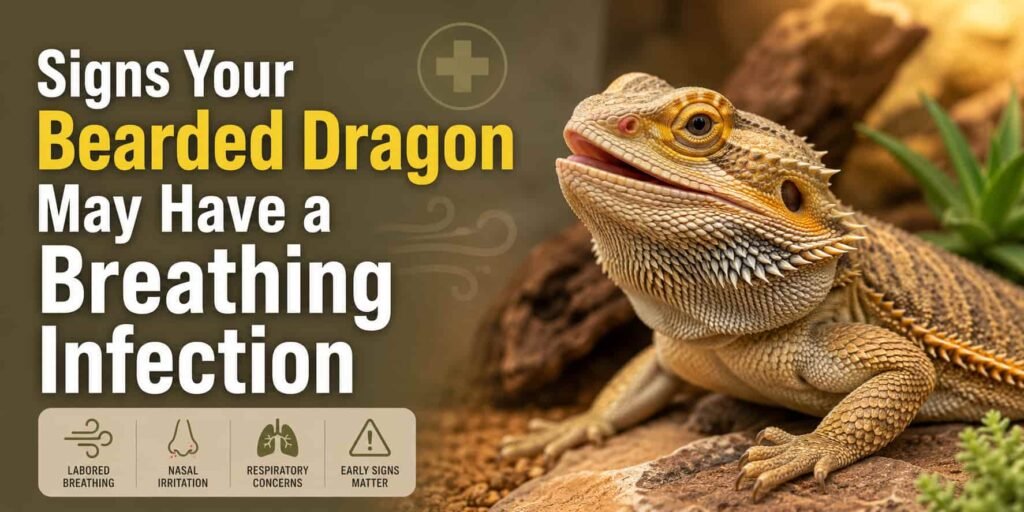
A bearded dragon sleeping or resting with its mouth open is not always dangerous. However, it becomes a concern if your beardie cannot close its mouth properly or seems to be struggling to breathe. This may mean your pet is not getting enough air through its nose and is using its mouth to breathe.
A respiratory infection in bearded dragons can become serious if it is not treated quickly. If you notice heavy breathing, wheezing, mucus, bubbling around the mouth or nose, low energy, or loss of appetite, you should contact a reptile veterinarian as soon as possible.
Common Causes of Respiratory Problems
A respiratory infection may be caused by bacteria, fungus, or a virus. Poor tank conditions are one of the most common reasons. Incorrect enclosure temperature, high humidity levels, and a lack of proper basking heat can weaken your beardie’s health.
Other causes may include a dirty enclosure, poor diet, parasites, stress, and weak immune function. Keeping the habitat clean, dry, warm, and properly set up can help reduce the risk of breathing problems.
How to Lower the Risk of Respiratory Infection in Bearded Dragons
Preventing a respiratory infection is always better than treating one later. A bearded dragon needs the right temperature, humidity, clean housing, and low stress to stay healthy. Poor care conditions can weaken the immune system and increase the risk of breathing problems.
Keep the Enclosure at the Right Temperature
Bearded dragons are cold-blooded reptiles, which means they depend on their environment to control their body temperature. Their vivarium should have a proper thermal gradient, with one cool side and one warm side.
The cool side should stay around 75–80°F, while the basking area should be about 95–105°F. This setup allows your beardie to move between warm and cool areas when it needs to thermoregulate.
Read Also Turtle Tank Placement Tips [Window Danger]Control Humidity Levels
Correct humidity levels are also very important. Bearded dragons come from hot, dry areas of Australia, so they do best in a dry enclosure. Their humidity should usually stay around 30–40%.
A hygrometer can help you measure humidity accurately. You can also use digital thermometers and a thermostat to make sure the tank conditions stay safe and stable.
Reduce Stress
Too much stress can weaken your bearded dragon’s immune health. Stress may happen if your pet is handled too often, kept in a poor enclosure setup, or exposed to loud noise and other pets. Dogs, cats, or other animals may make your beardie feel unsafe because it may see them as predators.
Clean the Habitat Regularly
A dirty enclosure can allow bacteria, waste, and germs to build up. This can increase the risk of respiratory illness and other health problems. Regular cleaning keeps the vivarium healthier and also helps reduce stress.
Remove waste, clean food and water bowls, and deep-clean the tank when needed. A clean, dry, and well-maintained habitat supports your beardie’s overall well-being.
Warning Signs of a Respiratory Infection in Bearded Dragons
A respiratory infection can make it hard for a bearded dragon to breathe normally. The main thing to watch for is any sign of breathing difficulty, especially if your beardie is keeping its mouth open for long periods or seems weak.
Sometimes, during shedding, dead skin can temporarily block the nostrils, causing your beardie to breathe through its mouth. This is usually different from a true respiratory illness because an infection often comes with other symptoms.
How to Treat a Respiratory Infection in Bearded Dragons

If you notice signs of a respiratory infection in your bearded dragon, take it to a reptile veterinarian as soon as possible. This type of illness should not be treated at home without professional help because it can become serious if the infection spreads or breathing gets worse.
Veterinary Diagnosis and Medication
The vet will first examine your beardie and may run tests to find the exact cause of the infection. A respiratory infection may be bacterial, fungal, or viral, so the treatment will depend on the cause.
Your vet may prescribe antibiotic medication, antifungal treatment, or antiviral medicine. They may also give you care instructions to help your beardie recover safely at home.
Home Care During Recovery
While your bearded dragon is healing, keep it in a clean and comfortable vivarium. If you keep more than one bearded dragon, separate the sick one and place it in quarantine until it is fully healthy again. This helps prevent the illness from spreading.
Clean the enclosure deeply to remove bacteria, waste, and germs. You may also need to raise the tank temperature by about 3–5°F, but only if your vet recommends it.
Helping With Congestion
If your beardie seems congested or has mucus, your vet may suggest gently placing a towel under the back legs so the head points slightly downward. This position may help fluid or mucus drain more easily. Do this carefully and only for a short time.
Keep Your Beardie Hydrated
Warm water soaks or a vet-approved electrolyte solution may help keep your bearded dragon hydrated, especially if it has loss of appetite. Hydration supports recovery and helps your pet regain strength.
Why Bearded Dragons Open Their Mouth During the Day
A bearded dragon opening its mouth during the day is often showing normal behavior, especially when it is basking. Bearded dragons are cold-blooded reptiles, so they depend on their environment to control their body temperature. When your beardie gets warm under the basking light, it may open its mouth to release extra heat. This is called mouth gaping, and it helps with thermoregulation.
Read Also Why Is My Ball Python Balled Up? [Stress Signs]Normal Reasons for Daytime Mouth Opening
Your beardie may also open its mouth while stretching or yawning. These actions can look unusual, but they are usually harmless if your pet is active, eating well, and breathing normally.
Sometimes, an open mouth can also be a sign of defensive behavior or aggression. If your bearded dragon opens its mouth while also showing a puffed-up beard, hissing, or a tense body posture, it may feel scared, stressed, or threatened. In this situation, avoid handling it until it calms down.
When It May Be a Health Concern
If your bearded dragon keeps its mouth open even when it is not basking, or if you notice wheezing, mucus, heavy breathing, low energy, or loss of appetite, it may have a respiratory infection. A reptile veterinarian should check your pet if these symptoms appear.
Final Thoughts on Bearded Dragons Sleeping With Their Mouth Open
A bearded dragon sleeping with its mouth open is often normal. In many cases, the jaw muscles relax during deep sleep, which can make the mouth open slightly. If your beardie is sleeping near the basking area, it may also open its mouth to release extra heat and keep its body temperature balanced. This process is called thermoregulation.However, an open mouth can be a warning sign if it comes with other symptoms. If you notice mucus bubbles, nasal discharge, mouth discharge, wheezing, heavy breathing, or your bearded dragon seems to be struggling to breathe, it may have a respiratory infection. In that case, you should contact a reptile veterinarian as soon as possible.
FAQs: Bearded Dragon Gaping While Asleep [Danger Signs]
What should I do if my bearded dragon is gaping?
If your bearded dragon is gaping while basking, it is usually normal. This helps your reptile control its body temperature and release extra heat. However, if the gaping happens often or lasts a long time, watch for warning signs like wheezing, mucus, low energy, or breathing problems. These may point to a respiratory infection. Keep the enclosure safe with proper UVB lighting, a correct temperature gradient, and healthy humidity levels. If symptoms continue, take your bearded dragon to a reptile vet.
What are the signs of calcium deficiency in bearded dragons?
Signs of calcium deficiency in bearded dragons can include weak legs, shaking, tremors, a soft jaw, trouble walking, and difficulty climbing. This problem is often linked to poor calcium intake, weak or missing UVB lighting, and an unbalanced diet. If these signs appear, your bearded dragon may be developing metabolic bone disease, so it should be checked by a reptile vet as soon as possible.
Why do lizards gape?
Lizards often gape to control their body temperature. When they warm up under a heat lamp or in a basking area, they may open their mouth to release extra heat and avoid overheating. This natural thermoregulation behavior is usually normal and does not mean the lizard is angry, sick, or trying to shout. In simple words, gaping works like a built-in cooling system for reptiles.
What food is high in calcium for bearded dragons?
Good calcium-rich foods for bearded dragons include crickets, dubia roaches, black soldier fly larvae, and other safe feeder insects. Black soldier fly larvae are especially helpful because they naturally contain more calcium than many insects. Some owners may use pinky mice for breeding females, but this should only be done carefully and not as a regular food. A healthy diet, proper UVB lighting, and calcium supplements help support strong bones, good growth, and prevent metabolic bone disease..
What diseases do bearded dragons get?
Bearded dragons can develop several common health problems, even though they are usually strong reptiles. The most common diseases include internal parasites, impaction, adenovirus, respiratory infections, and metabolic bone disease. Poor diet, incorrect UVB lighting, low calcium, wrong temperature, and poor enclosure hygiene can increase the risk of illness. Regular care, a clean habitat, and early help from a reptile vet can protect your bearded dragon’s health.ps to protect your pet.


![Why Does My Snake Pee on Me [Owner Guide]](https://reptilesinfo.com/wp-content/uploads/2026/06/Why-Does-My-Snake-Pee-on-Me-Owner-Guide.jpg)
![Are Ball Pythons Active After Eating [Must Know]](https://reptilesinfo.com/wp-content/uploads/2026/06/Are-Ball-Pythons-Active-After-Eating-Must-Know.jpg)
![Why Is My Crested Gecko Going Crazy [Stress Alert]](https://reptilesinfo.com/wp-content/uploads/2026/06/Why-Is-My-Crested-Gecko-Going-Crazy-Stress-Alert.jpg)
![Why Is My Leopard Gecko Not Moving [Stress Alert]](https://reptilesinfo.com/wp-content/uploads/2026/06/Why-Is-My-Leopard-Gecko-Not-Moving-Stress-Alert.jpg)
![Why Is My Crested Gecko’s Mouth White [Danger Signs]](https://reptilesinfo.com/wp-content/uploads/2026/06/Why-Is-My-Crested-Geckos-Mouth-White-Danger-Signs.jpg)