
![Turtle Tank Placement Tips [Window Danger]](https://reptilesinfo.com/wp-content/uploads/2026/06/Turtle-Tank-Placement-Tips-Window-Danger.jpg)
Choosing the right place for a turtle tank is an important part of keeping your pet healthy and comfortable. Many turtle owners wonder whether they can place the tank near a window where it gets natural sunlight, or whether a darker area is better.
So, can you put a turtle tank by the window? Yes, you can, but it is not always the best choice. A tank placed near a window may get too much direct sunlight, which can lead to fast algae growth. It can also make water temperature harder to control because the tank may become too hot during the day and cooler at night.
Why Window Placement Can Be Tricky
Keeping a turtle aquarium near a window may seem like a good idea because turtles need light. However, direct sunlight can cause two main problems: unstable tank temperature and extra algae buildup. Both issues can affect turtle health and make the tank harder to clean and manage.
In this guide, we will explain why temperature changes and algae growth are common problems when a turtle habitat is placed near a window. We will also share simple ways to manage these issues if you still want to keep the tank in that spot.
It is also important to remember that natural sunlight is not the same as proper UV light. Turtles need the right UVB lighting to stay healthy, support their shell growth, and absorb calcium properly. That is why a safe basking area, stable water temperature, and correct tank placement are very important for your turtle’s care.
Read Also Bearded Dragon Waving at You? [Meaning ExplainedPlacing a Turtle Tank Near a Window
Keeping a turtle tank close to a window may look like a good idea, but it can create some problems. Direct sunlight can quickly change the water temperature, making the tank too warm during the day and cooler later.
Another issue is algae growth. When too much sunlight enters the turtle aquarium, algae can grow faster, making the tank look dirty and harder to clean. For better turtle care, it is important to choose a safe tank location with stable temperature control, proper lighting, and a healthy aquatic habitat.
Keeping the Right Temperature in a Turtle Tank
Turtles need a stable and comfortable tank temperature because they are ectothermic, which means they are cold-blooded animals. They cannot control their body heat the same way humans do. Instead, they depend on their environment to stay warm or cool.
In a natural turtle habitat, turtles move between warmer and cooler areas to keep their bodies balanced. This is why a pet turtle tank should always have a safe heat source, a reliable thermostat, and digital thermometers to check both the water temperature and the basking area.
Why Sunlight Can Overheat the Tank
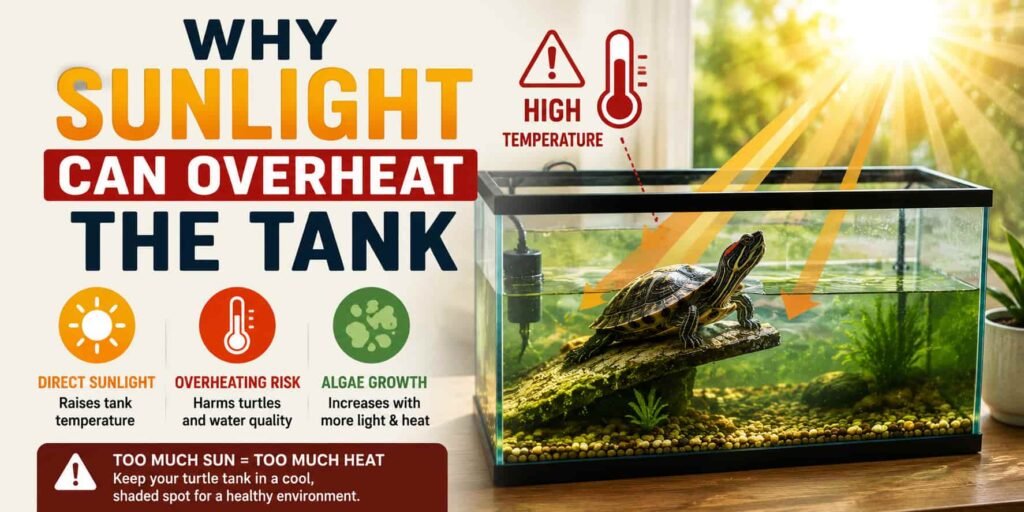
Many turtle owners do not realize how strong natural sunlight can be when it comes through a window. Even if the room does not feel too hot, sunlight can quickly increase the water temperature inside the turtle aquarium.
If the tank gets too warm, your turtle may become stressed or uncomfortable. Sudden temperature changes can also make it harder to maintain a healthy aquatic environment.
Simple Ways to Control Tank Heat
Good ventilation is important because it allows extra heat to escape from the tank. In the wild, turtles often live in deeper water, where they can swim down or hide in cooler areas. Some turtles may even move to deeper ponds during hot weather. However, a home turtle tank is usually not deep enough to give your pet the same cooling options.
Some owners use ice cubes to lower the water temperature quickly, but this can become tiring if the tank is near a sunny window. It also means you must keep checking the temperature throughout the day.
A better option is to place background paper on the side of the tank facing the window. This can help block some direct sunlight and reduce how often the water heats up. It can also make the tank feel more secure for your turtle. Since glass can confuse turtles, background paper may stop them from swimming into the glass or reacting to their reflection.
Another helpful method is adding artificial plants inside the tank. These plants can block some sunlight, create shaded areas, and help keep the turtle habitat cooler and more comfortable.
Overall, keeping a turtle tank near a window requires careful temperature control. If the tank receives too much sunlight, you must monitor the heat closely and use safe methods to prevent overheating.
Maintaining a Safe Turtle Tank Temperature
A turtle tank should always have a stable and comfortable temperature because turtles are ectothermic animals, also known as cold-blooded reptiles. This means they cannot control their body heat like humans. Instead, they depend on their environment to stay warm or cool.
In the wild, turtles move between sunny and shaded areas, or between warm and cool water, to keep their body temperature balanced. For this reason, a pet turtle habitat should include a safe heat source, a working thermostat, and accurate digital thermometers. These tools help monitor both the water temperature and the basking area.
How Window Sunlight Affects Tank Heat
Many turtle owners do not realize how quickly natural sunlight coming through a window can heat a turtle aquarium. Even if the room feels normal, direct sunlight can raise the water temperature inside the tank in a short time.
If the tank becomes too hot, your turtle may feel stressed, weak, or uncomfortable. Sudden temperature changes can also disturb the aquatic environment and make it harder to maintain healthy turtle care conditions. That is why careful tank placement, proper temperature control, and regular water monitoring are very important.
Read Also Why Is My Crested Gecko Moving in Slow Motion? [Owner’s Guide]Safe Ways to Reduce Heat in a Turtle Tank
Proper ventilation is one of the easiest ways to control tank heat. It allows extra warm air to escape and helps keep the water temperature more stable. In the wild, turtles can move into deeper water, shaded areas, or even cooler ponds when the weather becomes hot. A home turtle tank, however, is usually not deep enough to give them the same natural cooling space.
Some turtle owners add ice cubes to cool the water quickly, but this is not the best long-term solution. If the tank is near a sunny window, the water may heat up again and again. This means you would need to check the temperature many times during the day, which can become difficult and time-consuming.
A safer and easier option is to place background paper on the side of the tank that faces the window. This helps reduce direct sunlight and slows down overheating. It can also make the turtle habitat feel more secure. Since glass can confuse turtles, background paper may stop them from swimming into the glass or reacting to their own reflection.
Adding artificial plants is another useful method. These plants can create shaded areas, block some sunlight, and make the aquatic environment cooler and more comfortable for your turtle.
Overall, a turtle aquarium near a window needs careful temperature control. Regular water monitoring, good tank placement, shade, and safe cooling methods can help protect your turtle from heat stress and keep the tank environment healthy.
Why Turtles Still Need UV Light Indoors
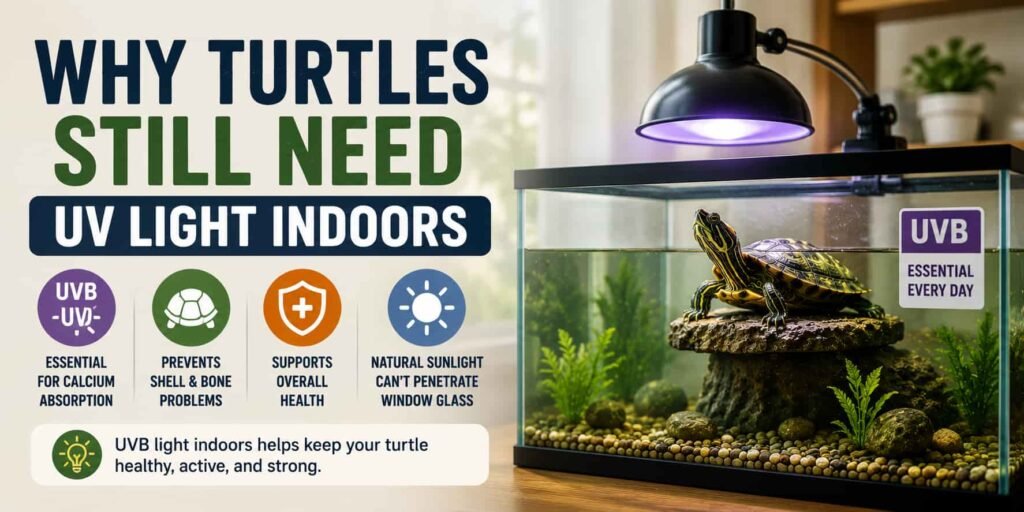
Many turtle owners think that sunlight coming through a window gives their turtle enough heat and UV light. However, this is not true. Window glass blocks most of the important UVA rays and UVB rays that turtles need for proper health.
Even if the tank looks bright and warm, your turtle may not be getting the full benefits of natural sunlight. This is why a turtle tank placed near a window still needs a proper UV lamp or UVB bulb.
Importance of UVA and UVB for Turtle Health
UVA light helps support normal body functions, including activity, appetite, and metabolism. UVB light is even more important because it helps turtles produce Vitamin D3, which allows their bodies to absorb and use calcium.
Without enough UVB lighting, a turtle may not grow properly. It can also develop serious health problems, such as weak bones, soft shell, poor shell growth, and metabolic bone disease. A lack of proper UV exposure can also weaken the immune system, making the turtle more likely to get sick.
Best Lighting Routine for a Turtle Tank
If your turtle aquarium is kept near a window, you should still use a high-quality UVB light and replace it regularly according to the product instructions. The light should usually stay on for about 12 hours during the day and turn off for 12 hours at night. This helps copy a natural day and night cycle.
Some owners use Vitamin D supplements, but they must be used carefully because too much Vitamin D can harm your turtle. A proper basking area with safe UV lighting is usually a better and more natural way to help your turtle get the right amount of UVA, UVB, Vitamin D3, and calcium support.
In short, window sunlight is not enough. A healthy turtle habitat needs proper UVB lighting, stable tank temperature, and safe basking conditions to support long-term turtle care.
Read Also Why Is My Ball Python Balled Up? [Stress Signs]Understanding Metabolic Bone Disease in Turtles
Metabolic bone disease is a serious health problem that can happen when a turtle does not get the right balance of important nutrients, especially calcium. Turtles need enough Vitamin D3 to absorb and use calcium properly. They usually produce Vitamin D3 when they receive proper UVB light from a UVB bulb or safe UV lighting.
When a turtle does not get enough UVB exposure, its body may struggle to process calcium. Over time, this can lead to weak bones, poor shell development, and other serious reptile health issues.
Common Signs to Watch For
A turtle with metabolic bone disease may show symptoms such as swollen legs, small bumps along the legs or spine, a soft jaw, or a soft turtle shell. As the condition becomes worse, the turtle may walk in an uneven or jerky way.
Other warning signs include low energy, weakness, poor movement, and loss of appetite. If your turtle becomes lethargic or refuses to eat, it may need urgent care.
When to Contact a Reptile Vet
Metabolic bone disease can become life-threatening if it is not treated properly. If you notice any signs of soft shell, swelling, weak bones, unusual walking, or appetite loss, take your turtle to a qualified reptile veterinarian as soon as possible.
Proper UVB lighting, a healthy calcium-rich diet, safe basking conditions, and regular turtle care can help reduce the risk of this disease.
Final Thoughts on Window Tank Placement
Placing a turtle tank near a window can work, but it needs extra care. Direct sunlight can cause sudden temperature changes, so you must watch the water temperature closely. Using background paper, artificial plants, proper ventilation, and a reliable thermostat can help reduce heat and keep the turtle habitat more stable. In some cases, ice cubes may be used for quick cooling, but they should not be the main solution.You also need to manage algae growth, because tanks near windows usually get dirty faster. A regular cleaning schedule is important. Remove leftover food, turtle waste, and floating algae with a small net every day.
FAQS: Turtle Tank Placement Tips [Window Danger]
What are common turtle enclosure mistakes?
A common turtle enclosure mistake is adding too many items or leaving the tank too empty. Too many decorations make cleaning difficult, while a bare tank gives your turtle no hiding spots, exploration space, or enrichment. It also reduces surfaces where beneficial bacteria can grow, which are important for keeping water quality stable along with the filters.
Is it bad to have a fish tank by a window?
Yes, placing a fish tank near a window is usually not recommended. Direct sunlight can cause fast algae growth, raise the water temperature, and make the tank harder to control. In colder weather, the water may also cool down too much. For better fish health, stable water conditions, and easier aquarium maintenance, it is best to keep the tank away from windows.
Do turtles love their owners?
Turtles do not show affection the same way dogs or cats do. However, this does not mean they are completely unaware of their owners. Many pet turtles can learn to recognize the person who feeds and cares for them. They may swim closer, become more active, or respond when their owner approaches. This behavior is more about recognition, trust, and routine than emotional love.
Do turtles have a good sense of smell?
Yes, turtles have an excellent sense of smell. They use it to find food, recognize their environment, detect danger, and support their survival. For many turtles, smell is one of the most important senses in daily life.
What Are Common Turtle Enclosure Mistakes?
A common turtle enclosure mistake is making the habitat either too crowded or too empty. Too many decorations, rocks, and accessories can make cleaning difficult and reduce water quality. On the other hand, a bare tank setup provides little opportunity for hiding, exploration, and environmental enrichment, which are important for a turtle’s well-being and natural behavior.


![Why Does My Snake Pee on Me [Owner Guide]](https://reptilesinfo.com/wp-content/uploads/2026/06/Why-Does-My-Snake-Pee-on-Me-Owner-Guide.jpg)
![Are Ball Pythons Active After Eating [Must Know]](https://reptilesinfo.com/wp-content/uploads/2026/06/Are-Ball-Pythons-Active-After-Eating-Must-Know.jpg)
![Why Is My Crested Gecko Going Crazy [Stress Alert]](https://reptilesinfo.com/wp-content/uploads/2026/06/Why-Is-My-Crested-Gecko-Going-Crazy-Stress-Alert.jpg)
![Why Is My Leopard Gecko Not Moving [Stress Alert]](https://reptilesinfo.com/wp-content/uploads/2026/06/Why-Is-My-Leopard-Gecko-Not-Moving-Stress-Alert.jpg)
![Why Is My Crested Gecko’s Mouth White [Danger Signs]](https://reptilesinfo.com/wp-content/uploads/2026/06/Why-Is-My-Crested-Geckos-Mouth-White-Danger-Signs.jpg)