
![Do Sounds Scare Leopard Geckos [Shocking Signs]](https://reptilesinfo.com/wp-content/uploads/2026/06/Do-Sounds-Scare-Leopard-Geckos-Shocking-Signs.jpg)
Different animals hear sounds in different ways. Some species have very sharp hearing, while others hear less clearly. This is important in the wild because many animals must stay alert to avoid predators, find prey, and survive in their natural habitat.
Are Leopard Geckos Sensitive to Sound?
Yes, leopard geckos are sensitive to sound. Their hearing ability helps them notice danger and detect movement around them. In the wild, this sense is useful because leopard geckos are most active at night and rely on sound, smell, and sight to stay safe and hunt small insects.
Why Sensitive Hearing Matters
For wild leopard geckos, sensitive hearing can help them avoid threats, escape danger, and locate food during nighttime activity. However, in a pet tank, this strong sense is not always helpful. Since there are usually no real predators in captivity, loud household noise can make a gecko feel uncomfortable or stressed.
Loud Environments and Gecko Stress
A noisy room, loud music, shouting, television sounds, or constant vibrations can disturb a leopard gecko’s calm environment. Too much noise, vibration, and stress may affect its normal behavior, feeding routine, sleeping pattern, and overall comfort.
In short, leopard geckos can hear sound and may become stressed in loud or chaotic surroundings. A quiet, stable, and peaceful enclosure helps them feel safer and healthier.
Read Also Do Leopard Geckos Get Bored? [Pet Owners Beware]Better Response to Familiar Sounds
A leopard gecko’s sensitive hearing can help build trust between you and your pet. In the early stages of ownership, using a calm and repeated identifiable sound, such as a soft voice, gentle call, or familiar name, can help your gecko recognize you over time.
Building Trust Through Voice
Because leopard geckos can detect sounds easily, they may learn to notice your voice, even if you are near the tank, across the room, or speaking softly from a distance. This can be useful when you want to greet your gecko, communicate with it calmly, or help it become more comfortable with your presence.
Recognizing Your Call
As your gecko becomes familiar with your voice or repeated sound, it may start reacting to it. For example, it might look toward you, come out of its hide, or become more alert when it hears your call. This response shows that your gecko is beginning to connect the sound with safety, routine, or feeding time.
Helping Your Gecko Feel Comfortable
A familiar sound can also help reduce stress, fear, and tension in your leopard gecko. It may encourage your pet to come out during feeding time and feel more secure in its enclosure. Using a gentle and consistent voice is a simple way to support bonding and create a calmer relationship with your reptile.
How Loud Noise Can Reduce Trust

A leopard gecko may lose trust if it connects you with a frightening experience, especially loud noise, sudden movement, or strong vibrations. Trust is very important when caring for a pet gecko because it helps your reptile feel safe during feeding, handling, and daily interaction.
Negative Sound Associations
If loud music, shouting, or heavy vibrations happen near the enclosure, your gecko may become scared. For example, if the room is very noisy and you try to pick up your gecko at the same time, it may begin to associate your presence with stress. Over time, this can damage the bond between you and your pet.
Signs Your Gecko Feels Unsafe
When a leopard gecko loses trust, it may hide more often, run away when you come close, refuse handling, or become nervous during feeding time. These reactions are usually signs of stress, fear, and discomfort. A calm environment helps your gecko feel more secure and makes care much easier.
Creating a Quieter Environment
To protect your gecko’s comfort, keep the tank away from speakers, televisions, heavy foot traffic, and noisy areas. You can also use sound-absorbing foam, soft room materials, or other safe noise-reducing methods around the enclosure area. Make sure nothing blocks ventilation, heat, or lighting. A quiet, stable, and peaceful habitat helps maintain trust and supports your leopard gecko’s overall health, behavior, and well-being.
Read Also Ball Pythons in One Tank? [Risk Explained]How Leopard Geckos Find Hidden Crickets
Leopard geckos are usually good at catching crickets, even when they move quickly around the tank. However, some crickets may hide behind tank accessories, inside the food bowl, near the water bowl, or inside the hide. When this happens, a leopard gecko’s hearing ability can help it detect small sounds, especially the chirping of hidden crickets.
This is important because finding crickets allows the gecko to eat properly and stay safe. Crickets can sometimes bite a leopard gecko’s skin, which may lead to stress, small wounds, or even infection if the bites are not noticed. For this reason, owners should make sure crickets do not stay hidden in the enclosure for too long.
It is also important to remember that only male crickets usually chirp. Some crickets may stay silent, hide, and come out later when you are not watching. Because of this, you should always keep track of how many live feeder insects are placed in the tank.
If your gecko is slow, weak, stressed, or struggling to catch its food, you should supervise feeding closely. Too many crickets at one time can overwhelm a leopard gecko. If the crickets begin bothering or biting your pet, remove the extra crickets from the enclosure or move your gecko to a safer space. Careful feeding helps protect your reptile’s health, comfort, and safety.
Keeping the Environment Calm and Safe
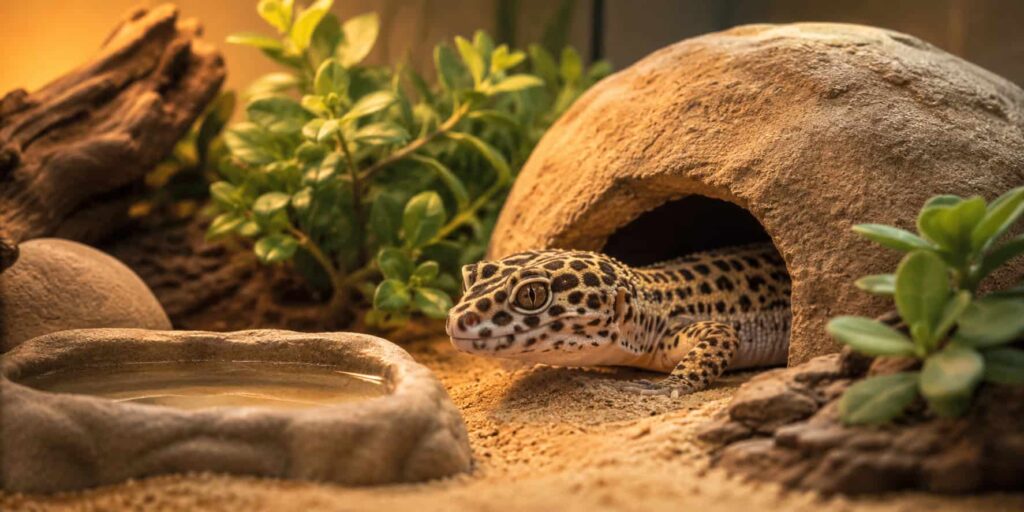
When you bring home a new pet reptile, you may need to make small changes in your daily routine to help it feel safe. One important change is keeping loud music, television volume, and other strong sounds low. Leopard geckos have sensitive hearing, so loud noise can make them feel scared, stressed, or uncomfortable.
A peaceful room is better for both the gecko and the owner. Loud sound can disturb your reptile and may also affect your own hearing over time. By keeping the area calm, you create a healthier and more comfortable living environment for your leopard gecko.
Being a responsible leopard gecko owner means understanding your pet’s needs and making the right adjustments. At first, changing your habits may feel difficult, especially if you are used to loud music or TV. However, with time, it becomes easier.
Many new reptile owners do not realize that too much noise, poor feeding habits, or an overcrowded tank can cause serious stress. To keep your leopard gecko happy and healthy, provide a quiet space, watch feeding carefully, and make sure the enclosure stays safe at all times.
Calming Sounds May Support Better Rest
A leopard gecko can become stressed when it lives in a noisy or poor environment, especially because it has sensitive hearing. However, soft and natural sounds may sometimes have a calming effect. Gentle nature sounds, such as rain, wind, or soft forest sounds, can help create a peaceful space around the tank.
Because leopard geckos can hear well, you do not need to play these sounds loudly. A low volume is usually enough. This is helpful because it keeps the room calm and does not disturb other people in the house. The enclosure may also soften outside noise, which can make the sound even more comfortable for your gecko.
Soft natural sounds can also be relaxing for humans. If you like listening to calm background sounds while resting, your gecko may also benefit from the same peaceful atmosphere. This can reduce stress, support better comfort, and make the room feel safer for your pet.
For the best results, always keep the volume low and avoid sudden loud sounds. A quiet and stable living space is better for your leopard gecko’s health, sleep routine, and overall well-being.
Final Care Advice for Sensitive Hearing
A leopard gecko’s hearing is important for survival. In the wild, good hearing helps them notice movement, detect danger, and respond to their surroundings. Because of this, owners should be careful with loud music, high television volume, shouting, or sudden noise near the tank.This does not mean your home must be completely silent. Normal household sounds are usually fine when they stay at a reasonable level. The main goal is to avoid very loud or stressful noise that could make your gecko feel unsafe.
FAQs: Do Sounds Scare Leopard Geckos? [Shocking Signs]
Do leopard geckos get scared of loud noises?
Yes, leopard geckos can get scared of loud noises because they have sensitive hearing and may see sudden sounds as a threat. If they feel stressed by handling, noisy surroundings, or nearby pets, they may hide, run away, or even bite to protect themselves. A quiet and calm environment helps them feel safe.
How can you tell if a leopard gecko is scared?
A leopard gecko may be scared if it shows stress signs such as tail waving, hiding quickly, fast breathing, hissing, squeaking, or trying to escape. It may also flatten its body, arch its back, close its eyes tightly, or act defensive. These behavioral changes usually mean your gecko feels unsafe, threatened, or uncomfortable in its environment.
Are leopard geckos sensitive to sound?
Yes, leopard geckos are sensitive to sound and vibrations. Their strong hearing helps them notice nearby movement, low-frequency noise, and sudden sounds. Since they are prey animals, loud music, shouting, or heavy bass vibrations can make them feel scared, stressed, or unsafe in their environment.
Are leopard geckos noisy at night?
Leopard geckos are usually quiet at night, but they can make small sounds such as chirping, squeaking, or hissing. These noises may happen when they feel excited, stressed, annoyed, or scared. Since they are more active during the evening and night, occasional vocalization is normal, but frequent loud sounds may mean your gecko feels uncomfortable in its environment.
Why can’t you touch day geckos?
You should avoid touching day geckos because they have very delicate skin that can tear or peel off when they are handled. This natural defense mechanism helps them escape from predators, but it can be painful and stressful for them. For safe day gecko care, handling should only be done when truly necessary.


![Why Does My Snake Pee on Me [Owner Guide]](https://reptilesinfo.com/wp-content/uploads/2026/06/Why-Does-My-Snake-Pee-on-Me-Owner-Guide.jpg)
![Are Ball Pythons Active After Eating [Must Know]](https://reptilesinfo.com/wp-content/uploads/2026/06/Are-Ball-Pythons-Active-After-Eating-Must-Know.jpg)
![Why Is My Crested Gecko Going Crazy [Stress Alert]](https://reptilesinfo.com/wp-content/uploads/2026/06/Why-Is-My-Crested-Gecko-Going-Crazy-Stress-Alert.jpg)
![Why Is My Leopard Gecko Not Moving [Stress Alert]](https://reptilesinfo.com/wp-content/uploads/2026/06/Why-Is-My-Leopard-Gecko-Not-Moving-Stress-Alert.jpg)
![Why Is My Crested Gecko’s Mouth White [Danger Signs]](https://reptilesinfo.com/wp-content/uploads/2026/06/Why-Is-My-Crested-Geckos-Mouth-White-Danger-Signs.jpg)