
![Why Does My Tortoise Sit on His Food [Shocking]](https://reptilesinfo.com/wp-content/uploads/2026/06/Why-Does-My-Tortoise-Sit-on-His-Food-Shocking.jpg)
During tortoise mealtime, you may expect your pet to enjoy fresh tortoise food, leafy greens, or favorite treats. Tortoise Sit on His Food But sometimes, a pet tortoise may take a few bites and then sit inside the food bowl. In some cases, it may not eat at all and simply rest on top of the food.
This can look strange, but it is often part of normal tortoise behavior. A tortoise may sit on its food because of territorial behavior, dominance, natural instincts, or because it likes to pee or poop in the food dish.
In most cases, this behavior is not a serious problem. However, if your tortoise is also showing loss of appetite, weakness, stress, or unusual eating habits, you should check its enclosure, diet, temperature, and overall health.
Below, we will explain the main reasons why a tortoise sits on its food, the best type of tortoise feeding bowl, and why your tortoise may not be eating properly.
Common Reasons Your Tortoise Sits on Its Food
It is quite common for a tortoise to sit inside its food bowl or water bowl. Many tortoises may also pee, poop, or rest in these bowls. Although this may look unusual, it is usually normal tortoise behavior, especially in captive tortoises.
There are a few main reasons why your pet tortoise may sit on its food.
Showing Dominance or Territorial Behavior
One possible reason is dominance or territorial behavior. This is more common when more than one tortoise lives in the same enclosure.
A stronger or more dominant tortoise may sit in the feeding bowl while eating. It may stay there until it finishes its food. After that, it may move away and allow the other tortoises to eat. This behavior can be a way of controlling access to food, space, and feeding areas.
Read Also Do Sounds Scare Leopard Geckos? [Shocking Signs]Using the Bowl as a Bathroom Area
Another common reason is that your tortoise may prefer to use its food dish or water bowl as a bathroom. Many tortoises choose one spot in their habitat to urinate or defecate, and the bowl may become that place.
This may seem unpleasant, but it can make cleaning easier. It is usually simpler to wash a food bowl than to replace dirty substrate inside the enclosure. Still, the bowl should be cleaned often to keep your tortoise’s feeding area safe, fresh, and hygienic.
How to Reduce This Bowl-Sitting Habit
You cannot train a tortoise in the same way you would train a dog or cat. However, you can reduce this habit by watching your tortoise’s daily behavior patterns.
For example, if your pet tortoise usually pees or poops in its food bowl after eating, place it in a shallow soak after mealtime. This helps keep the feeding bowl cleaner and also gives your tortoise extra hydration.
Natural Survival Behavior
In the wild, tortoises do not always eat a whole plant. They may leave part of it behind and later urinate or defecate near it. This can help return moisture and nutrients to the soil, allowing the plant to grow again.
So, if your tortoise eats some food and then sits or poops on it, this may come from its natural wild instincts. It may look strange, but it is usually normal tortoise behavior.
Choosing the Right Food Bowl for a Tortoise
The type of food bowl you use can affect how your tortoise eats. A good tortoise feeding dish should be easy to reach, safe to climb in and out of, and simple to clean.
Although it may seem like a small detail, the right bowl can make feeding time easier, cleaner, and safer for your pet tortoise.
Best Food Bowl Size for a Tortoise
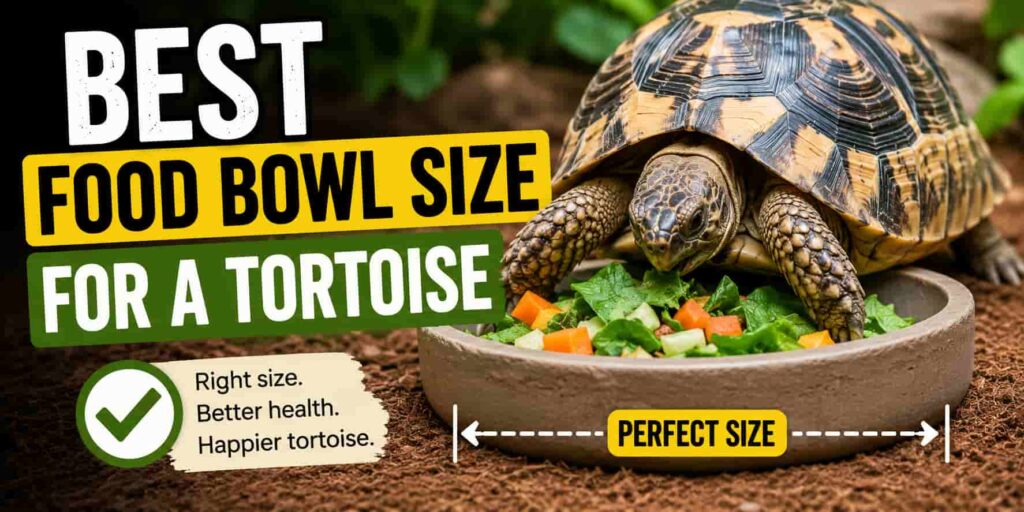
The right tortoise food bowl size depends on your pet’s age, growth stage, and body size. A hatchling tortoise or juvenile tortoise needs a smaller bowl, while an adult tortoise needs a larger and stronger feeding dish.
Choose a bowl that can hold the full tortoise meal and allows your pet to climb in and out safely. Since many tortoises like sitting in their food bowl or water bowl, the dish should be low, stable, and easy to access.
Safe Bowl Materials
A food-grade plastic bowl can work well if it is non-toxic and safe for reptiles. Stainless steel bowls are also a good option because they are strong, smooth, and easy to clean.
The best tortoise feeding bowl should be safe, durable, and simple to wash every day.
Best Place to Put the Bowl
Place the food bowl and water bowl on the cooler side of the tortoise enclosure. A proper habitat should have a temperature gradient, with a warm basking area on one side and a cooler area on the other.
Keeping the bowls away from the heat source helps prevent the food and water from becoming too warm. It also keeps your tortoise safer if it climbs into the water bowl and accidentally flips onto its back. If this happens under a heat lamp, the tortoise may overheat, become stressed, or even die.
How Often to Clean a Tortoise Food Bowl
Clean your tortoise’s food bowl and water bowl every day. Leftover food, dirty substrate, shed skin, and waste can collect quickly. If the bowls are not cleaned, harmful bacteria can grow.
A clean bowl and a hygienic tortoise habitat help support your pet’s health, safety, and overall wellbeing.
Why Your Tortoise May Not Be Eating
If your tortoise sits on its food without eating, it may be a sign that something is wrong. A small change in appetite can happen sometimes, but if your pet tortoise keeps refusing food, you should check its environment, diet, and overall health.
Read Also Do Leopard Geckos Get Bored? [Pet Owners Beware]Stress and Fear
Stress is one common reason a tortoise may stop eating. A stressed tortoise often has less energy and may lose interest in food. Long-term stress can also weaken the immune system, making your tortoise more likely to become sick.
A tortoise may feel stressed if its enclosure does not feel safe. For example, if a dog, cat, or other pet walks near the habitat, your tortoise may see it as a possible predator.
Too much handling can also cause stress. Many tortoises do not enjoy being picked up often. A lack of hides, shelters, plants, or safe tank items can also make your tortoise feel exposed and unsafe.
Poor Care or Wrong Habitat Setup
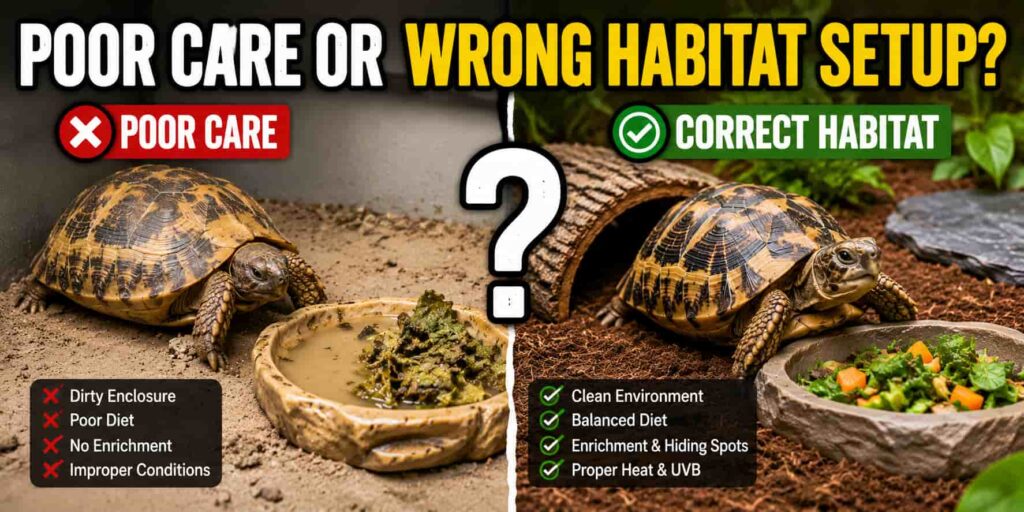
Another possible cause is improper tortoise husbandry. Husbandry means the way you care for your tortoise, including its enclosure, temperature, lighting, humidity, substrate, diet, and daily routine.
If any part of the habitat is wrong, your tortoise may feel uncomfortable and refuse to eat. For example, the enclosure may be too cold, too hot, too dry, too small, or missing important items like a basking area, UVB light, fresh water, and hiding spots.
Good tortoise care starts with the right living conditions and a balanced tortoise diet. When the habitat is safe, clean, and properly set up, your tortoise is more likely to eat normally and stay healthy.
Basic Tortoise Care Needs
A healthy tortoise needs the right enclosure, temperature, humidity, UV light, substrate, diet, and daily care. If these needs are not met, your pet tortoise may feel stressed, become weak, or stop eating.
Enclosure Space
A 10-inch tortoise should have at least 15 square feet of enclosure space. Larger tortoises need more room. As a simple rule, add one extra square foot for every inch above 10 inches. For example, a 15-inch tortoise should have about 20 square feet of space.
Temperature and Lighting
Your tortoise needs a proper temperature gradient. One side should have a warm basking area around 100°F, while the general ambient temperature should stay around 80°F.
Tortoises also need regular UVA light and UVB light. These rays help support normal body function, shell health, digestion, and overall wellbeing. Keep the heat source and UV lighting on for about 12 hours and off for about 12 hours each day to create a natural day and night cycle.
Read Also Ball Pythons in One Tank? [Risk Explained]Humidity and Substrate
Most tortoises need steady humidity of at least 70%. The right moisture level helps support hydration, shell growth, and healthy skin.
Safe substrate options include clean soil without fertilizers or pesticides, coconut fiber, and newspaper. Avoid play sand and wood chips, as they may cause irritation, injury, or digestive problems if swallowed.
Hides, Bowls, and Enclosure Items
Your tortoise should have two matching hides, one on the warm side and one on the cool side of the enclosure. It also needs safe food bowls, clean water bowls, and plants for cover. You can use real or artificial plants, background paper, rocks, and branches to make the tortoise habitat feel more natural and secure.
Food and Water
Give your tortoise fresh water every day. Its diet should mostly include safe plants, leafy greens, grasses, and weeds, with small amounts of vegetables and occasional fruits. A varied tortoise diet helps support healthy eating, digestion, and long-term health.
Parasites and Loss of Appetite
If your tortoise sits on its food but does not eat, parasites may be another possible cause. Common signs include weight loss, diarrhea, vomiting, lethargy, reduced appetite, or complete food refusal.
If you notice these symptoms, take your tortoise to a reptile vet as soon as possible. Early treatment can help prevent serious health problems.
Final Thoughts
If your tortoise sits on its food, it is usually not a major concern. This behavior may be linked to dominance, territorial behavior, natural instincts, or a habit of using the food bowl as a bathroom.However, if your pet tortoise is also not eating properly, you should check for possible causes such as stress, parasites, poor husbandry, an unsuitable enclosure, incorrect temperature, weak UVB lighting, low humidity, or an unbalanced diet.A clean feeding area, safe habitat, fresh water, and proper daily care can help your tortoise stay healthy, active, and comfortable.
FAQs: Why Does My Tortoise Sit on His Food? [Shocking]
What food is toxic to tortoises?
Tortoises should never eat avocado, rhubarb, onion, garlic, meat, or processed human food. These toxic foods can harm their digestive system, damage blood cells, or cause serious organ problems. Always give them a safe plant-based diet with healthy leafy greens, weeds, and proper calcium.
Why does my tortoise lay on his food?
A tortoise may lay on its food because of a natural instinct to protect, claim, or feel secure around it. Some tortoises may also poop near their food after eating, which can happen as part of their natural feeding behavior and survival habits.
How can you tell if a tortoise is starving?
A tortoise may seem hungry when it is simply foraging, begging, or exploring. True hunger signs include active wandering, neck stretching, searching for food, and scratching at enclosure walls. If it shows weight loss, weakness, or stops eating, check its diet, temperature, and health.
What are the signs of a sick tortoise?
A sick tortoise may show loss of appetite, extreme tiredness, sunken eyes, breathing problems, runny nose, mouth bubbles, or shell changes. Because tortoises often hide illness, any unusual behavior, weakness, or health problem should be checked quickly by a reptile vet.
Should I spray my tortoise with water?
Yes, you can gently mist or spray your tortoise with water, especially to support proper humidity and encourage drinking. However, spraying should not replace regular soaking, fresh water, or a clean water bowl. Always provide a dry, warm area so your tortoise can move away when needed.


![Why Does My Snake Pee on Me [Owner Guide]](https://reptilesinfo.com/wp-content/uploads/2026/06/Why-Does-My-Snake-Pee-on-Me-Owner-Guide.jpg)
![Are Ball Pythons Active After Eating [Must Know]](https://reptilesinfo.com/wp-content/uploads/2026/06/Are-Ball-Pythons-Active-After-Eating-Must-Know.jpg)
![Why Is My Crested Gecko Going Crazy [Stress Alert]](https://reptilesinfo.com/wp-content/uploads/2026/06/Why-Is-My-Crested-Gecko-Going-Crazy-Stress-Alert.jpg)
![Why Is My Leopard Gecko Not Moving [Stress Alert]](https://reptilesinfo.com/wp-content/uploads/2026/06/Why-Is-My-Leopard-Gecko-Not-Moving-Stress-Alert.jpg)
![Why Is My Crested Gecko’s Mouth White [Danger Signs]](https://reptilesinfo.com/wp-content/uploads/2026/06/Why-Is-My-Crested-Geckos-Mouth-White-Danger-Signs.jpg)