
![Why Is My Ball Python Balled Up [Stress Signs]](https://reptilesinfo.com/wp-content/uploads/2026/06/Why-Is-My-Ball-Python-Balled-Up-Stress-Signs.jpg)
A ball python often curls into a tight ball when it feels stressed, scared, or unsafe. This is a normal defensive behavior and is one of the main reasons this snake is called a “ball python.” When your snake balls up, it is trying to protect its head, body, and sensitive areas from a possible threat.
Is Balling Up Normal in Ball Pythons?
Yes, balling up is completely normal for a pet ball python. It does not always mean something is seriously wrong. New owners may notice this behavior more often because their snake is still getting used to a new enclosure, new smells, handling, and the surrounding environment.
Common Reasons Your Ball Python Balls Up
Your snake may curl into a ball because of fear, stress, sudden movement, loud sounds, too much handling, or an uncomfortable habitat setup. Ball pythons are naturally shy reptiles, so they may hide or curl up when they feel nervous.
How to Help Your Ball Python Feel Safe
To reduce stress in ball pythons, make sure the temperature, humidity, hiding spots, and enclosure size are suitable. Handle your snake gently and avoid forcing interaction when it looks nervous. Give it time to adjust, especially after bringing it home or moving it to a new setup
Read Also Why Is My Crested Gecko Getting Black Spots? [Health Alert]Natural Defense Response
A ball python curls into a tight ball as a natural way to protect itself. This behavior is called balling up, and it usually happens when the snake feels scared, stressed, or threatened. By hiding its head inside its coils, the snake protects the most sensitive part of its body from possible danger.
What This Behavior Means
When your pet ball python coils into a ball, it may not feel safe in its environment. It might be reacting to loud noises, sudden movement, too much handling, or an unfamiliar person. Sometimes, your snake may even see you as a possible predator until it becomes more comfortable with you.
When You Should Be Concerned
Occasional curling into a ball is normal, especially for a shy or new ball python. However, if your snake is constantly balling up, hiding, refusing food, or acting unusually defensive, it may be under too much stress. Long-term stress can affect your snake’s health, feeding behavior, and overall well-being.
How to Help Your Snake Feel Secure
Make sure your ball python has a proper reptile enclosure, safe hiding spots, correct temperature, suitable humidity, and a calm space. Handle it gently and give it time to trust you. A relaxed pet snake is more likely to explore, feed normally, and feel secure in its habitat.
Helping Your Ball Python Feel Calm
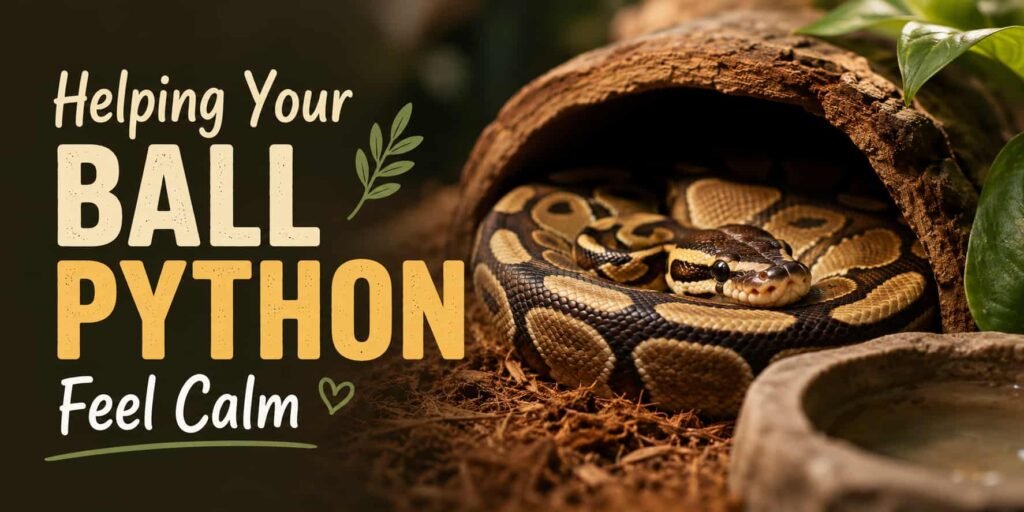
If your ball python curls into a tight ball, do not pick it up right away. This is your snake’s way of saying it feels stressed, nervous, or does not want to be handled. Unlike some other snake species that may strike or bite when they feel threatened, ball pythons are usually more docile and prefer to hide by coiling into a ball.
This calm and non-aggressive nature is one reason why ball pythons are such popular pet snakes. However, even gentle snakes need time, space, and the right environment to feel safe.
Building a Safe and Comfortable Habitat
The best way to reduce stress in ball pythons is to make sure their enclosure meets their needs. A healthy reptile habitat should feel secure, quiet, and comfortable. Your snake should have proper temperature, suitable humidity, clean bedding, and at least one good hiding spot.
A calm setup helps your pet ball python feel protected and lowers the chance of stress-related behavior, such as constant hiding, refusing food, or staying balled up for long periods. When your snake feels safe in its habitat, it is more likely to relax, explore, and behave normally.
Proper Enclosure Space
A ball python needs enough floor space to move, stretch, and feel secure. If the enclosure is too small, your snake may feel trapped or uncomfortable, which can increase stress and lead to balling up.
For a young ball python, a 10-gallon tank or similar-sized reptile cage is usually suitable. A medium-sized ball python may do well in a 15-gallon enclosure, while a larger snake often needs around a 20-gallon aquarium or more space.
The goal is to provide a safe, clean, and comfortable snake habitat where your pet can move easily without feeling exposed. A properly sized ball python enclosure helps reduce stress-related behavior, supports normal activity, and makes your snake feel more relaxed in its home.
Read Also Bearded Dragon Bites Tank Decor [Causes & Fixes]Proper Temperature Control
A ball python is a cold-blooded reptile, so it cannot control its body temperature the same way humans do. Instead, it depends on the temperature inside its enclosure, aquarium, or reptile cage to stay warm and comfortable.
The ideal temperature range for a ball python’s habitat is usually between 82°F and 90°F. To keep this safe, use a good thermometer and check the enclosure regularly. This helps prevent your snake from becoming too cold, too hot, or stressed.
Creating a Warm and Cool Side
Place the heat source, such as a reptile heat lamp or under-tank heating pad, on one side of the cage only. The warm side should stay around 88°F to 90°F. This setup creates a temperature gradient, giving your pet snake both a warm area and a cooler area.
Why Heat Balance Matters
With a proper temperature gradient, your ball python can move closer to the heat when it needs warmth and move away when it wants to cool down. This process is called thermoregulation. Good temperature control helps your snake digest food, stay active, feel secure, and avoid unnecessary stress in its habitat.
Proper Humidity for Healthy Shedding
A ball python needs the right humidity level to stay healthy and shed its skin properly. In most cases, the enclosure humidity should stay around 60% to 75%. This helps support normal shedding, comfortable breathing, and overall reptile health.
Problems Caused by Incorrect Humidity
If the humidity is too high for too long, your pet snake may develop respiratory infections, skin sores, or blisters. If the humidity is too low, your ball python may have shedding problems, such as stuck shed around the eyes, tail, or body. That is why regular humidity checks are important.
How to Maintain Good Humidity

To keep the snake habitat at a safe moisture level, lightly mist the substrate with water a few times each week. You can also provide a shed box or humidity hide. Use a plastic container with a lid, cut an entrance hole large enough for your snake, and fill about one-third of it with damp paper towels.
Keeping Moisture Inside the Enclosure
If your aquarium or reptile enclosure has a screen lid, cover about three-fourths of the lid with plastic or another safe cover. This helps hold moisture inside the cage while still allowing some airflow. A stable humidity range helps your ball python feel comfortable, shed cleanly, and avoid unnecessary stress.
Choosing the Right Substrate
The substrate is the bedding material placed at the bottom of your ball python enclosure. It helps keep the reptile habitat clean, comfortable, and safe for your pet snake.
For a simple and low-cost option, you can use paper towels or newspaper. These are easy to replace, quick to clean, and useful for monitoring waste or health problems. If you want a more natural-looking setup, aspen bedding or cypress mulch can be good choices. Cypress substrate is often preferred because it holds humidity well and is less likely to grow mold when managed properly.
Substrates to Avoid
Never use pine, cedar, sand, or small rocks in your ball python’s cage. Pine and cedar bedding can release harmful oils that may irritate your snake’s skin and breathing system. Sand and small stones are also unsafe because your snake could accidentally swallow them, which may cause digestive problems or blockage.
Cleaning the Enclosure
A clean snake habitat is important for reducing stress and keeping your ball python healthy. Spot-clean the enclosure whenever your snake passes waste, and do a deeper cleaning at least once a week. Dirty bedding can create bad smells, bacteria, and an uncomfortable environment, which may make your snake feel unsafe or stressed.
Essential Enclosure Accessories
A ball python enclosure should include a few basic accessories that help your snake feel safe, comfortable, and secure. The most important items are two hides and a sturdy water dish. The water bowl should be heavy enough that your pet snake cannot easily tip it over.
Choosing the Right Hides
Each hide box should have one entrance, be dark inside, and be large enough for your ball python to fit its whole body comfortably. Avoid hides that are too open or too exposed, because they may not give your snake the privacy it needs.
Place one hide on the warm side of the cage and the other on the cool side. This allows your snake to stay hidden while still choosing the right temperature for thermoregulation.
Creating a More Secure Habitat
Good hiding spots help reduce stress, fear, and defensive behavior in ball pythons. They give your snake a private place to rest when it feels nervous or unsafe. You can also add fake plants, extra cover, or partially cover the top of the reptile cage to make the habitat feel more natural and protected.
A well-arranged snake habitat with proper cage accessories, secure hides, and clean water helps your ball python feel calmer, safer, and more settled in its environment.
Secure the Enclosure Properly
Ball pythons are skilled at finding small openings, so their enclosure must be fully escape-proof. A secure reptile cage not only keeps your snake safely inside but also prevents other household pets, such as cats or dogs, from getting too close.
Protect Your Snake From Stress
Other animals may look like predators to your pet snake, even if they are only curious. If your ball python feels threatened, it may become stressed, hide more often, refuse food, or curl into a defensive ball. Keeping pets away from the snake habitat helps your ball python feel safer and more relaxed.
Check for Gaps and Weak Spots
Always lock the cage lid securely instead of using heavy objects to hold it down. Weights can shift, fall, or fail to keep the lid closed properly. Also, inspect the tank, aquarium, or enclosure for any small gaps, holes, or loose areas.
Even a tiny opening can become a possible escape route or allow another animal to reach inside. Cover or seal all gaps immediately to keep your ball python safe, calm, and protected in its environment.
Move Calmly Around Your Snake
When you are near your ball python’s enclosure, always move slowly and gently. Fast or sudden movements can make your pet snake feel unsafe because it may think you are a threat or predator. When a ball python feels scared, it may become stressed, curl into a ball, hide, or, in rare cases, prepare to strike.
Handle Your Ball Python Gently
If you need to pick up your ball python, lift it slowly and carefully from the cage. Avoid grabbing it quickly from above, as this can make the snake feel attacked. Calm handling helps your snake build trust and feel more secure around you.
Read Also Types of Snakes in Minnesota [Easy ID Guide]Support Your Ball Python Without Holding It Too Tightly
When handling a ball python, guide its movement instead of restraining it. In the wild, being grabbed or pinned usually means a snake is being attacked by a predator, so tight handling can make your pet snake feel scared, defensive, or unsafe.
Use Gentle and Secure Handling
Always make sure your ball python feels fully supported. Do not hold it only by the head or tail, as this can cause stress, hissing, or balling up. Instead, support the middle of its body with relaxed, open hands.
Let Your Snake Feel in Control
A good rule is: do not grip your snake tightly; let your snake rest on you and move naturally. Keep your hands calm, steady, and loose while gently guiding its body. Over time, this type of gentle handling can help your ball python feel more comfortable, build trust, and become less likely to show defensive behavior.
Keep Handling Sessions Short and Calm
If your ball python gets stressed easily, do not force it to interact with you. Short handling sessions are usually better because they help your snake slowly build trust without feeling scared or threatened.
Start with brief, gentle handling and watch your snake’s body language. If it begins to tense up, hide, hiss, strike, or ball up, place it back into its enclosure calmly. This helps your pet snake understand that handling is not dangerous.
Give Your Snake Time to Adjust
Do not expect your ball python’s behavior or temperament to change quickly. Some snakes need more time than others to feel safe around people. If your snake acts defensive or aggressive during handling, return it to its reptile habitat right away and give it a few days to relax before trying again.
Patient, gentle, and consistent snake handling can reduce stress, improve comfort, and help your ball python become more confident over time.
Final Thoughts on Ball Python Stress
Balling up is a normal defensive behavior in ball pythons, especially when they feel stressed, scared, or threatened. It is their natural way of protecting themselves, but if it happens often, it may be a sign that your pet snake does not feel fully safe or comfortable.The best way to reduce stress in ball pythons is to provide a proper reptile enclosure. Make sure the habitat size, temperature, humidity, substrate, hiding spots, and cage accessories all meet your snake’s needs. A clean, secure, and well-balanced snake habitat helps your ball python feel calm and protected.
FAQs: Why Is My Ball Python Balled Up? [Stress Signs]
How do you tell if a ball python is stressed?
A ball python may be stressed if it curls into a tight ball, especially during handling. This defensive behavior means the snake feels unsafe and wants to return to its secure hiding place. Other stress signs can include hiding too much, refusing food, trying to escape, or becoming unusually defensive.
How to reduce stress in a ball python?
To reduce stress in a ball python, provide safe hides on both the warm and cool sides of the enclosure. A snake that hides during the day but explores at night is usually showing normal behavior. However, constant hiding, refusing food, or avoiding movement may mean the temperature gradient, lighting, humidity, or hide placement needs adjustment. A calm, secure environment helps your snake feel safe and behave naturally.
Will a ball python eat if stressed?
A ball python may refuse food when it is stressed. Even though ball pythons can handle small changes in their environment, poor enclosure conditions, wrong temperature, low or high humidity, too much handling, or lack of secure hides can make them feel unsafe. When their basic care needs are not met, they may lose interest in feeding until the stress is reduced.
How to destress a snake?
To destress a snake, keep handling sessions short, calm, and gentle. Handle your snake only every few days, move slowly, and avoid forcing contact. You can offer your hand first, then lightly touch its back or side if it stays calm. After that, leave it alone so it can return to its hide, feel safe, and slowly build trust in its environment.
What happens when snakes are stressed?
When snakes are stressed, their overall health can suffer. Long-term stress may weaken the immune system, making the snake more likely to get infections, viruses, or bacterial illnesses. A stressed snake may also hide more, refuse food, act defensive, or become less active. Reducing stress helps protect its well-being, behavior, and reptile health.


![Why Does My Snake Pee on Me [Owner Guide]](https://reptilesinfo.com/wp-content/uploads/2026/06/Why-Does-My-Snake-Pee-on-Me-Owner-Guide.jpg)
![Are Ball Pythons Active After Eating [Must Know]](https://reptilesinfo.com/wp-content/uploads/2026/06/Are-Ball-Pythons-Active-After-Eating-Must-Know.jpg)
![Why Is My Crested Gecko Going Crazy [Stress Alert]](https://reptilesinfo.com/wp-content/uploads/2026/06/Why-Is-My-Crested-Gecko-Going-Crazy-Stress-Alert.jpg)
![Why Is My Leopard Gecko Not Moving [Stress Alert]](https://reptilesinfo.com/wp-content/uploads/2026/06/Why-Is-My-Leopard-Gecko-Not-Moving-Stress-Alert.jpg)
![Why Is My Crested Gecko’s Mouth White [Danger Signs]](https://reptilesinfo.com/wp-content/uploads/2026/06/Why-Is-My-Crested-Geckos-Mouth-White-Danger-Signs.jpg)