
![Black Snakes in Pennsylvania [Scary but Useful]](https://reptilesinfo.com/wp-content/uploads/2026/06/Black-Snakes-in-Pennsylvania-Scary-but-Useful.jpg)
The Eastern black snakes (Pantherophis alleghaniensis) does not always appear completely black. While many individuals have a deep, glossy black body, some may show dark blue, gray, or mixed color patterns. A common feature is a darker dorsal area on the back with a lighter white underbelly, which can help with snake identification in the wild.
Northern Black Racer Overview
The Northern black racer (Coluber constrictor) is a large black snake species found across the Eastern United States. It looks somewhat similar to other black snakes, but it is usually longer, faster, and more active.
Habitat and Range
This non-venomous snake commonly lives in humid habitats, including marshes, forests, thick vegetation, and areas near bodies of water. It may also enter human settlements while searching for food, shelter, or safe hiding places.
Size, Lifespan, and Safety
An adult Northern black racer can grow around 5 to 6 feet long. In the wild, its lifespan is usually between 10 and 20 years, depending on environmental conditions, predators, genetics, and survival chances. This snake is non-venomous and is not considered dangerous to humans.
Behavior and Conservation
The Northern black racer is mostly active during the day, but it may sometimes move at night. It often hides in trees, bushes, and dense plants to avoid predators or wait for prey. It is not aggressive and usually tries to escape when it sees people. Because it is widespread and common, its conservation status is generally stable.
Black Rat Snake Profile
The Black rat snake (Pantherophis obsoletus) is a large, skilled climbing snake known for its dark body and strong hunting ability. Most adults are black with a white underbelly, but some may show slight gray or dark blue color tones.
Habitat and Common Locations
This non-venomous snake is commonly found in forests, swamps, rocky areas, and even near human settlements. Because it is an excellent arboreal species, it can climb trees, walls, barns, and sometimes enter attics while searching for food or shelter.
Diet and Natural Pest Control
The Black rat snake mainly eats rodents, especially mice and rats. It may also feed on birds, eggs, and smaller reptiles when available. Because it helps control rodent populations, this snake is useful around farms, gardens, and green areas.
Size, Lifespan, and Safety
Most Black rat snakes grow around 5 to 6 feet, although some may reach 6 to 8 feet. Rare individuals have been reported even larger. In the wild, their lifespan is usually around 6 to 12 years, depending on habitat, food availability, predators, and environmental conditions. This species is non-venomous and is not considered dangerous to humans.
Behavior and Conservation
The Black rat snake is active, agile, and highly adaptable. It can climb easily and hunt effectively in many environments. It is usually not aggressive and often tries to escape when it encounters people. Its population remains stable across much of the Eastern and Central United States, showing its strong adaptability and resilience.
Read Also Types of Sea Turtles in Australia [Wild Facts]Eastern Hognose Snake Profile
The Eastern hognose snake (Heterodon platirhinos) is easy to recognize because of its unusual body shape and wide, flat head. Unlike many other black snakes, this species does not always appear black. Some individuals are dark or nearly black, while others may show red, brown, yellow, orange, or mixed color patterns.
Habitat and Range
This snake usually lives in dry habitats such as sandy dunes, grasslands, rocky areas, and open landscapes. Its range covers much of the Eastern United States and extends toward Texas.
Diet and Hunting Style
The Eastern hognose snake is a carnivorous reptile that mainly eats amphibians, especially toads, but it may also feed on small reptiles, snakes, mammals, and insects when needed. Its flat body helps it move quietly through rough ground, making it an effective hunter.
Size, Lifespan, and Safety
Most Eastern hognose snakes are small, usually growing around 2 feet long, though some may reach about 3 feet. In the wild, their lifespan can reach up to 20 years, but many live less than 15 years. This species is generally considered non-venomous and is not dangerous to humans.
Behavior and Protection
The Eastern hognose snake is shy and often uses burrowing to hide from predators. It is mostly diurnal, meaning it is active during the day and hides at night. When threatened, it may flatten its neck, puff up its body, hiss, or even play dead to scare away danger.
Conservation Status
In several states, the Eastern hognose snake is listed as protected or marked as a species of special concern. Its main threats include habitat loss, habitat fragmentation, human activity, and the pet trade.
Eastern Milk Snake Overview
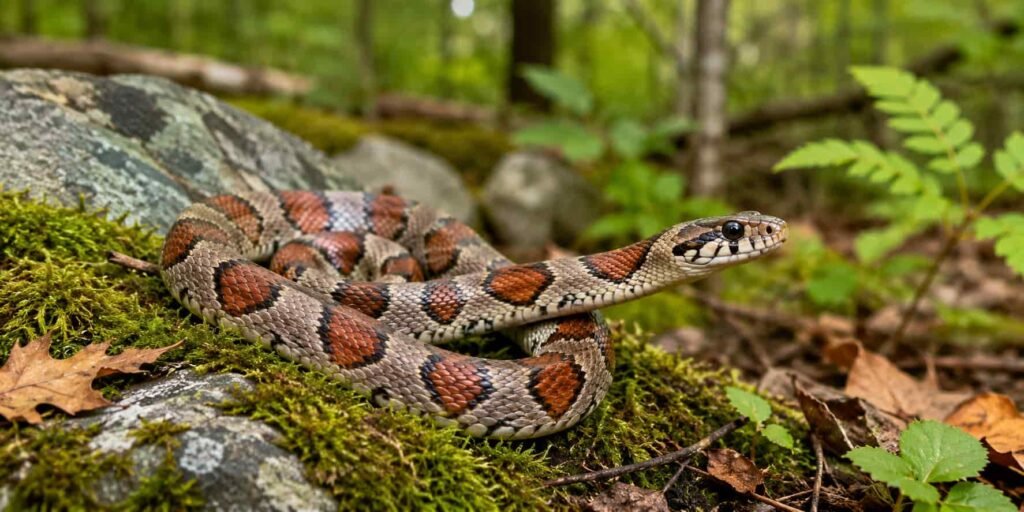
The Eastern milk snake (Lampropeltis triangulum) is a colorful non-venomous snake found in different parts of North America. Although some individuals may appear black with white stripes, most have bright body patterns made of red, brown, orange, yellow, and white blotches.
Habitat and Hiding Places
This reptile species usually lives in grasslands, woodlands, open fields, and areas with plenty of hiding spots. These shelters help protect the snake from predators, especially birds of prey that can easily notice its bright colors from above.
Diet and Feeding Habits
The Eastern milk snake is a carnivorous snake that mainly eats small rodents and reptiles. It is also an opportunistic feeder, meaning it may eat birds, smaller snakes, and other small animals when available.
Size, Lifespan, and Safety
Most milk snakes grow around 3 to 4 feet long, while some may reach nearly 5 feet. In the wild, their lifespan is usually around 3 to 5 years, but they can live much longer in captivity, sometimes up to 20 years. This species is non-venomous and does not pose a serious danger to humans.
Behavior and Defense
The Eastern milk snake is usually shy, secretive, and quick to escape when it sees people. When threatened, it may flatten its head, shake its tail, or create a warning sound to scare away danger. These actions are only defensive behaviors, as the snake is not harmful.
Conservation Status
The Eastern milk snake population is generally stable. This adaptable snake species can live near human areas, although habitat fragmentation and human activity may affect some local populations.
Read Also Bearded Dragon Bites Tank Decor [Causes & Fixes]Eastern Coachwhip Snake Profile
The Eastern coachwhip (Masticophis flagellum) is a long, fast-moving non-venomous snake known for its thin neck, narrow tail, and thicker middle body. This shape gives it a whip-like appearance. Most individuals are brown, with the front part of the body and head often showing a darker black coloration. Some may also appear mostly light brown or gray.
Habitat and Natural Range
This snake species lives in many open and dry environments, including woodlands, prairies, rocky areas, and similar landscapes across parts of the Eastern United States, Texas, and nearby regions. Its plain body color helps it blend into the ground and vegetation, giving it protection from predators.
Diet and Feeding Habits
The Eastern coachwhip is a carnivorous reptile that mainly feeds on small rodents. It may also eat birds, reptiles, amphibians, and insects when available. This makes it helpful in controlling pest populations in its natural habitat.
Size, Lifespan, and Safety
Adult coachwhip snakes commonly reach 6 to 8 feet in length, and some may grow even longer in ideal conditions. Their lifespan is usually around 10 to 12 years, though some may live longer. This species is non-venomous, and its bite is not dangerous to humans.
Behavior and Defense
The Eastern coachwhip is mostly active during the day and is known for its speed, alertness, and agility. It usually avoids people, but if it feels trapped or threatened, it may strike or bite in self-defense. Even then, it is not considered harmful because it does not have venom.
Conservation Importance
The Eastern coachwhip population is generally stable and faces no major immediate threat. However, public awareness is important because this reptile plays a useful role in the ecosystem by feeding on rodents, insects, and other small animals.
Eastern Garter Snake Profile
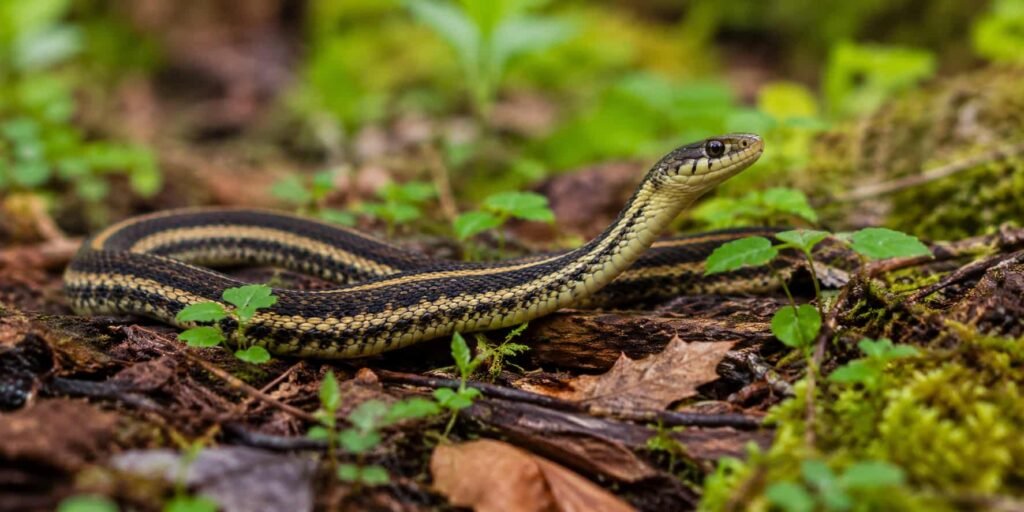
The Eastern garter snake (Thamnophis sirtalis) is a common and easy-to-recognize snake species known for the long stripes running along its body. Many individuals are black or dark gray with a clear white or yellow stripe from head to tail. Some adults also have two side stripes, while others may show red, yellow, brown, or greenish color patterns.
Habitat and Range
This reptile usually lives in grasslands, open fields, lightly wooded forests, and areas near water sources. These places provide good cover, shelter, and enough prey. The species is common in the eastern United States and Canada, but it may also be found in Texas and nearby regions.
Diet and Feeding Habits
The Eastern garter snake has a varied carnivorous diet. It may eat amphibians, small reptiles, small mammals, birds, and larger insects, especially when young or when other food is limited.
Size, Lifespan, and Safety
Most garter snakes grow around 2 to 3 feet long, although some can reach about 4 feet. Their lifespan in the wild is usually around 4 to 6 years, but a few may live up to 8 years in better conditions. This snake is generally harmless to humans and is not considered dangerous.
Behavior and Defense
The Eastern garter snake is usually shy and prefers to escape when it sees people or feels threatened. When stressed, it may release a strong foul odor to scare away predators. It is also one of the first snake species to become active in spring after hibernation.
Conservation Status
The Eastern garter snake population is generally stable across its natural habitat. However, future risks may come from human activity, habitat loss, and land development, so protecting its environment remains important.
Northern Water Snake Profile
The Northern water snake (Nerodia sipedon) is a common non-venomous snake found across the northern United States and Canada, especially in central and eastern regions. Although it can look dark, it is not usually fully black. Most individuals have earthy brown, gray, or tan coloration with visible banded patterns. This snake has a strong, muscular body and a relatively small head.
Aquatic Habitat and Range
As its name suggests, the Northern water snake lives close to freshwater habitats such as marshes, rivers, streams, ponds, and lakes. These areas provide shelter, hunting space, and easy access to aquatic prey.
Diet and Feeding Habits
This water snake mainly eats animals found in or near water, including fish, amphibians, crustaceans, and small aquatic reptiles. It may rarely catch land animals that come close to the water’s edge.
Size, Lifespan, and Safety
Most Northern water snakes grow around 3 to 4 feet long, though some may reach about 5 feet in ideal conditions. Their lifespan in the wild is usually around 8 to 10 years. This species is non-venomous and does not pose a serious danger to humans.
Behavior and Defense
The Northern water snake is mostly active during the day and rests under cover at night. It is an excellent swimmer and can move quietly through water to avoid predators or catch prey. When threatened, it usually tries to escape. If cornered, it may release a strong foul odor or bite in self-defense, but its bite is not venomous.
Conservation and Human Impact
The Northern water snake population is generally stable, but some local groups may decline because of habitat loss, habitat fragmentation, pollution, and human activity. Many are also harmed because people mistake them for venomous snakes, even though they are harmless and play an important role in the aquatic ecosystem.
Timber Rattlesnake Profile
The Timber rattlesnake (Crotalus horridus) is a well-known venomous snake found in the United States. It has a strong body, a clear rattle at the end of its tail, and bold color patterns. Its body may show shades of black, brown, yellow, gray, or white, but fully black individuals are not common.
Habitat and Natural Range
This rattlesnake species often lives in woodlands, rocky areas, and places near water sources. These habitats provide shelter, hunting areas, and protection from predators.
Diet and Feeding Habits
The Timber rattlesnake is a carnivorous reptile that feeds on small mammals, birds, lizards, amphibians, and sometimes other snakes. It plays an important role in controlling small animal populations in its ecosystem.
Venom, Size, and Lifespan
This snake has hemotoxic venom, which can cause pain, swelling, bleeding, and tissue damage after a bite. Although fatal bites are uncommon, any bite from this venomous snake should be treated as a medical emergency. Adult Timber rattlesnakes usually grow around 3 to 5 feet, but some older snakes may reach about 6 feet. In good conditions, their lifespan can reach 20 to 30 years or more.
Read Also Bearded Dragon Euthanasia – Avoid Mistakes Every Owner Makes [Tips]Behavior and Safety
The Timber rattlesnake is not usually aggressive, but it may bite if it feels trapped or threatened. It often gives a warning by using its rattle before striking. This snake is mostly active during the day, but in very hot weather, it may become more active at night to avoid overheating.
Conservation Status
The Timber rattlesnake population is declining in some areas because of habitat loss, habitat fragmentation, road deaths, and human activity. It is listed as vulnerable, threatened, or protected in many states, making conservation and public awareness important for its survival.
Queen Snake Profile
The Queen snake (Regina septemvittata) is a small non-venomous snake known for its smooth, shiny scales and clean body markings. Its scales can give it a slightly pearly look, while the head is covered with firm, glossy plates for extra protection. Most individuals are dark gray, brown, or nearly black, often with a lighter white underbelly or pale side stripes running along the body.
Habitat and Range
This semi-aquatic reptile is usually found near clean water sources such as streams, marshes, rivers, and wetland edges. Its range includes parts of the Eastern United States and Canada, including areas around Ontario, Georgia, and Texas. It may also live near woodlands and fields close to water.
Diet and Feeding Habits
The Queen snake has a specialized carnivorous diet. It mainly feeds on freshly molted crayfish, especially when their soft shells have not hardened yet. It may also eat small fish, tadpoles, snails, and other small aquatic animals when available.
Size, Lifespan, and Safety
Adult Queen snakes are usually small, growing around 2 to 3 feet long and weighing much less than many larger snake species. In the wild, their lifespan is often around 5 to 10 years, while some may live longer in captivity. This species is non-venomous and does not pose a serious threat to humans.
Behavior and Defense
The Queen snake is mostly active during the day and usually avoids conflict. When it feels threatened, it prefers to escape into water or nearby cover. If cornered, it may release a strong foul odor to discourage predators.
Conservation Status
The Queen snake population is considered a species of special concern in some areas. Major threats include habitat loss, habitat fragmentation, water pollution, natural predators, and the illegal pet trade. Protecting clean waterways is important for the survival of this useful aquatic snake species.
Final Thoughts on Black Snakes in Pennsylvania
The black snakes in Pennsylvania show how diverse and valuable the state’s reptile wildlife can be. Many of these snake species help the ecosystem by controlling rodents, insects, lizards, and other small animals. Some may even reduce the number of harmful pests around farms, gardens, forests, and wetland areas.Most of these snakes are non-venomous and prefer to avoid people. They usually escape, hide, or use simple defensive behavior when they feel threatened. However, any venomous snake, such as the Timber rattlesnake, should always be treated with caution and observed from a safe distance.If you see a black snake in Pennsylvania, the best response is to stay calm, give it space, and avoid handling it. These snakes are an important part of the natural environment, and leaving them alone helps protect both people and wildlife.
FAQS: Black Snakes in Pennsylvania [Scary but Useful]
What liquids do snakes hate?
Snakes usually avoid strong-smelling natural repellents such as clove oil, cinnamon oil, cedar oil, and eugenol. These liquids can disturb a snake’s sense of smell and taste, encouraging it to move away without harm.
Are there poisonous snakes in Pennsylvania?
Yes, Pennsylvania has venomous snakes, including the Eastern copperhead. It is one of the state’s main venomous snake species and is sometimes called the upland moccasin because it usually lives in dry, wooded, or rocky highland habitats.
What is a silent killer snake?
The common krait is often called the silent killer snake because its powerful neurotoxic venom can cause muscle paralysis, breathing problems, and serious medical danger. It is considered one of the most lethal venomous snakes in Thailand.
Do snakes see at night?
Yes, some snakes can detect prey at night using special heat-sensing organs, which help them sense warm-blooded animals in darkness. However, not all snake species can create a thermal image, so night vision ability depends on the type of snake.
Can snakes hear human voice?
Yes, snakes can detect some human voices, especially loud talking, shouting, or screaming. They do not hear like humans, but they can sense sound vibrations, airborne sounds, and movement through their body and inner ear. Normal conversation may also be heard, but it depends on the sound level, distance, and snake species.


![Why Does My Snake Pee on Me [Owner Guide]](https://reptilesinfo.com/wp-content/uploads/2026/06/Why-Does-My-Snake-Pee-on-Me-Owner-Guide.jpg)
![Are Ball Pythons Active After Eating [Must Know]](https://reptilesinfo.com/wp-content/uploads/2026/06/Are-Ball-Pythons-Active-After-Eating-Must-Know.jpg)
![Why Is My Crested Gecko Going Crazy [Stress Alert]](https://reptilesinfo.com/wp-content/uploads/2026/06/Why-Is-My-Crested-Gecko-Going-Crazy-Stress-Alert.jpg)
![Why Is My Leopard Gecko Not Moving [Stress Alert]](https://reptilesinfo.com/wp-content/uploads/2026/06/Why-Is-My-Leopard-Gecko-Not-Moving-Stress-Alert.jpg)
![Why Is My Crested Gecko’s Mouth White [Danger Signs]](https://reptilesinfo.com/wp-content/uploads/2026/06/Why-Is-My-Crested-Geckos-Mouth-White-Danger-Signs.jpg)